

TP & SL Tool: Risk Reward Ratio Calculator RRR MT4 | Prop Firm Protector: Trade Assist Prop Firm Plus TF Expert MT4 | Money Management + DrawDown Protector: Trade Panel Prop Firm Drawdawn Limiter Pro MT4 |Get a free Expert Advisor license via Telegram and WhatsApp
In addition, establishing precise rules for risk management, including position sizing and trading approaches for forex and other markets, improves capital protection and overall trading efficiency.
What Is a Trading Plan?
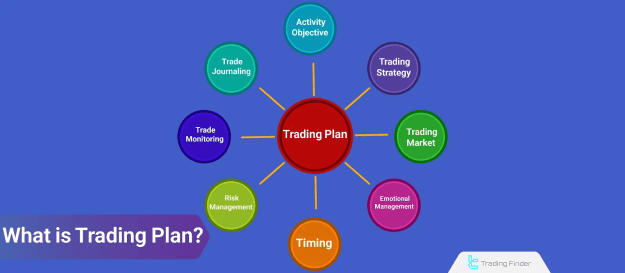
A trading plan serves as a comprehensive roadmap for trading. It integrates various elements such as trading objectives, capital and risk management, emotional control, trading strategy, and trading times.
These rules create a structured framework that governs all trading operations, ensuring consistency and discipline.
Components of a Trading Plan
An effective trading plan covers all aspects of trading to guide traders in their daily operations systematically.
The main components of a trading plan include:
- Trading Goals: Define objectives and expected returns over specific periods (daily, monthly, annually).
- Trading Strategy: Choose a strategy that aligns with personal skills and objectives.
- Market Selection: Identify the most suitable markets for the selected strategy.
- Emotional Management: Establish rules to control emotional responses and avoid impulsive decisions during market fluctuations.
- Trading Hours: Specify optimal trading times, such as the overlap between the London and New York sessions.
- Risk and Capital Management: Allocate capital effectively and set maximum permissible losses for different timeframes.
- Trade Monitoring: Predefine trade management actions to minimise stress during active trades.
- Journaling Method: Determine key factors to record for each trade to enable performance evaluation and improvement.
Benefits of Having a Trading Plan
Market volatility can induce emotional reactions that impair decision-making. A structured trading plan ensures that decisions are objective and consistent regardless of market conditions.
Key benefits of a trading plan include:
- Reduced Emotional Influence: Preparation for various market scenarios limits emotional interference.
- Enhanced Capital and Risk Management: Clear rules support effective management of trading capital and risk exposure.
- Improved Strategy Performance: Consistent adherence to a trading plan increases the success rate of trading strategies.
- Organised Trading Process: A defined structure creates a disciplined and efficient trading approach.
- Long-Term Evaluation: Allows for systematic review and adjustment of trading performance over time.
- Prevention of Impulsive Decisions: Well-established rules prevent confusion and emotional trading mistakes that may lead to losses.
The Importance of a Trading Plan
Financial markets often experience sharp and unpredictable price movements. Traders lacking a plan may react emotionally, exposing their accounts to unnecessary risks.
A well-developed trading plan outlines pre-determined actions for each situation to manage risks effectively and maximise returns. Additionally, clearly defined objectives within a plan reduce the risk of overtrading.
How to Create a Trading Plan
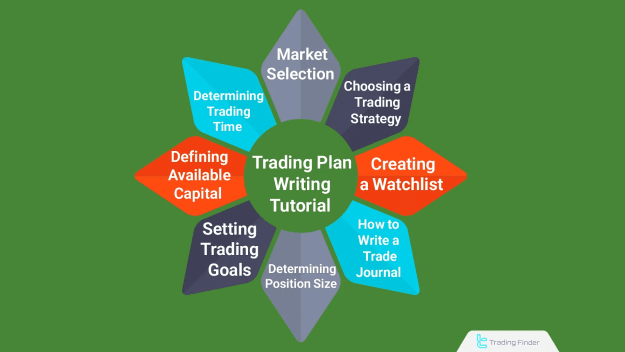
Creating an effective trading plan requires analysing market conditions, assessing available capital, and defining achievable trading goals.
Steps to Create a Trading Plan:
- Select the market to trade.
- Define preferred trading hours.
- Determine the capital available for trading.
- Establish specific trading goals.
- Define position sizing rules.
- Identify the components to record in trade journals.
- Prepare a watchlist of tradable assets.
- Choose an appropriate trading strategy.
Example of a Trading Plan
For instance, consider a trader with a $1,000 trading account using the ICT strategy. A simple trading plan for this setup may include:
- Market: Forex market
- Trading Hours: Overlap of London and New York sessions
- Capital: $1,000
- Trading Goal: 0.5% profit per week
- Journaling Factors: Entry rationale, trade outcome, and emotional state during the trade
- Watchlist: EUR/USD, USD/JPY, GBP/USD
- Position Size: 0.5% risk per trade based on total capital
Difference Between Trading Plan and Trading Strategy
Although both are essential, a trading plan differs from a trading strategy in scope and purpose.
Key differences include:
- Trading Strategy: Defines trade entry and exit conditions and position sizing for individual trades; can be adjusted after each trade; focuses on achieving profit per trade.
- Trading Plan: Covers the entire trading process, including capital management, market selection, strategy selection, and trading times; reviewed periodically rather than after each trade; aims to ensure consistent long-term performance.
Key Principles for Using a Trading Plan
To maximise the effectiveness of a trading plan, traders must follow specific principles.
Important considerations include:
- Regular Updates: Revise the trading plan periodically to reflect changes in market conditions.
- Error Correction: Identify and correct deficiencies based on performance reviews.
- Strict Adherence: Make adjustments outside active trading hours and ensure strict compliance during trading.
- Market Alignment: Adapt the trading plan to suit the characteristics and requirements of the chosen market.
Common Mistakes in Developing a Trading Plan
Mistakes in designing a trading plan can adversely affect trading outcomes and reduce profitability.
Frequent errors include:
- Setting Unrealistic Goals: Establishing targets that exceed practical possibilities may cause frustration and lead to discontinuation.
- Poor Risk Management: Taking excessive risks can quickly deplete trading accounts.
- Lack of Component Integration: Failure to align different elements within the trading plan reduces its effectiveness and coherence.
Conclusion
A trading plan is a systematic set of guidelines encompassing all trading activities in financial markets. It defines objectives, market choices, strategies, trading times, and risk management measures, providing pre-defined actions for execution under varying market conditions to support consistent and disciplined trading.