

Understanding the difference between these fees is a fundamental part of Forex Education , as similar structures are often found across both forex and crypto markets. Most exchanges differentiate between these two by offering lower Maker Fees to encourage market liquidity, while Taker Fees are generally higher due to their impact on existing liquidity.
TP & SL Tool: Risk Reward Ratio Calculator RRR MT4 | Prop Firm Protector: Trade Assist Prop Firm Plus TF Expert MT4 | Money Management + DrawDown Protector: Trade Panel Prop Firm Drawdawn Limiter Pro MT4 |Get a free Expert Advisor license via Telegram and WhatsApp
What Are Maker and Taker Fees?
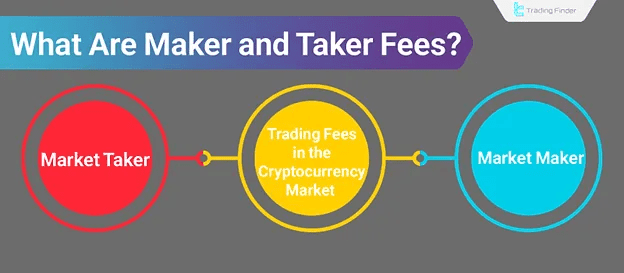
Maker and Taker Fees represent two distinct charges in a crypto exchange's fee structure. They are defined by whether the trader adds or removes liquidity from the market.
What Is a Maker Fee?
A Maker Fee is charged to a trader who adds liquidity to the order book. This typically occurs under the following circumstances:
- The trader places a limit order that is not executed immediately.
- The order remains open until another trader fulfills it.
- Such orders are posted to the book and wait for a match.
Because these orders contribute to liquidity, exchanges often offer discounted Maker Fees as an incentive.
In essence, you are considered a Maker when your order does not instantly match an existing order on the exchange.
What Is a Taker Fee?
A Taker Fee applies to traders who remove liquidity by immediately fulfilling an existing order from the order book. This occurs when:
- A trader places a market order, or
- A limit order that matches instantly with an existing order.
These orders are executed on the spot, thus reducing available liquidity.
Traders who execute such orders are referred to as Takers and are typically charged a higher fee.
Difference Between Maker and Taker Orders
The distinction between Maker and Taker orders lies in the timing and behavior of execution.
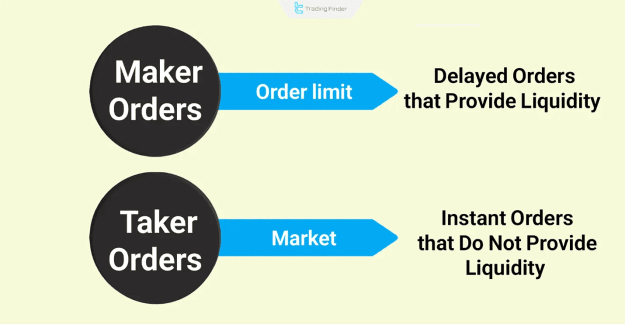
- Maker Orders
- Are usually limit orders
- Do not execute immediately
- Add liquidity to the market
- Typically attract lower fees
- Taker Orders
- Are often market orders
- Are executed instantly
- Remove liquidity from the market
- Generally incur higher fees
Who Are Market Makers and Market Takers?
Understanding the role of each participant is crucial to grasping the fee structure:
- Market Makers
- Submit limit orders that are not immediately executed
- Provide liquidity to the market
- Help build a stable trading environment
- Market Takers
- Place orders that match existing ones instantly
- Consume liquidity
- Often act in fast-moving or high-volatility conditions
Conclusion
In cryptocurrency trading, transaction fees are determined by the type of order placed. The classification is based on whether the trade adds to or takes from market liquidity.
- If your order is added to the order book and waits to be filled, a Maker Fee is applied.
- If your order is matched instantly with an existing order, you are charged a Taker Fee.
While fee structures vary between platforms, Taker Fees are generally higher due to their impact on liquidity, whereas Maker Fees are kept lower to encourage a healthy and liquid market environment.