

Prop Firm DrawDown Protector : Prop Firm Capital Protection Expert MT5 |Forex Money Management: Forex Trade Management Expert MT5 | ICT Concepts Indicator MT5 |Smart Money Concepts Expert MT5 | Smart Money Trap Scanner | Get a free Expert Advisor license via Telegram and WhatsApp
Identifying POIs in Higher Timeframes
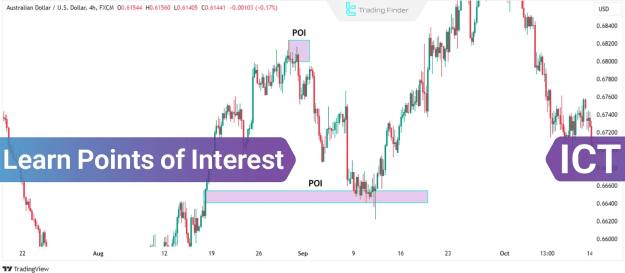
Higher timeframes are essential for establishing the overarching market bias. The goal is to pinpoint key areas that act as price magnets or pivotal turning points. The five primary elements to focus on are:
- Significant Highs and Lows: These are critical levels that, when broken, can signal a change in market structure. Analyzing which highs and lows have been violated and which remain as potential targets helps forecast future price direction.
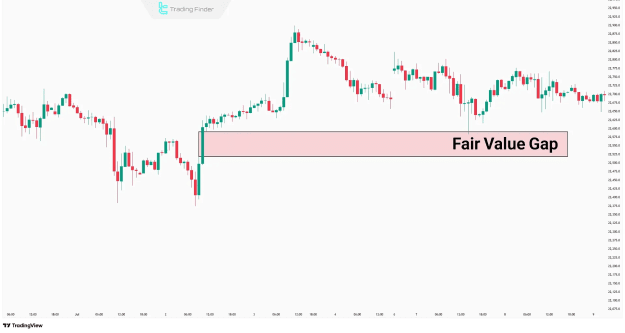
- Fair Value Gaps (FVG): An FVG is a form of market inefficiency that occurs during rapid price movements. These gaps often serve as areas for price to retrace to before continuing the trend. They are a core tool for identifying potential reversal or continuation zones.
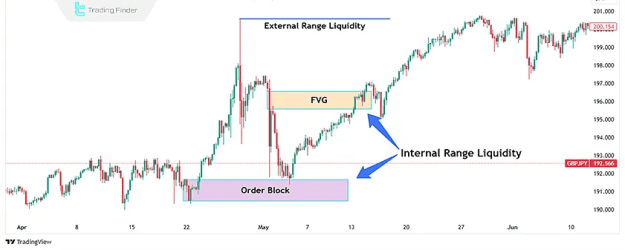
- Order Blocks (OB): Order Blocks represent zones where large financial institutions have entered the market. These are powerful areas for potential price reversals and are often used as entry or exit points by professional traders. Price reactions within these blocks can provide crucial confirmation for a trade.
- Optimal Trade Entry (OTE): This setup uses the Fibonacci retracement tool to identify a high-probability entry zone, typically between the 61.8% and 79% levels of a significant price move. It helps traders pinpoint the most opportune moment to enter a trade within a discount or premium zone.
- Internal and External Range Liquidity: Internal range liquidity is found within a current price range and can act as a target for reversals or continuations. External range liquidity, located beyond the current range (e.g., previous swing highs or lows), is often targeted during major breakouts or trend reversals.
Utilizing POIs for Trade Entries in Lower Timeframes
Once higher timeframe POIs are identified, the focus shifts to lower timeframes to find precise entry points. The process involves a systematic approach to refine the trade setup.
Step-by-Step Entry Confirmation
- Evaluate High and Low Breaks: When price reaches a higher timeframe POI, the first step is to assess how it reacts to local highs and lows. A break of these levels can signal strength or weakness, providing an initial clue for a potential trade entry.
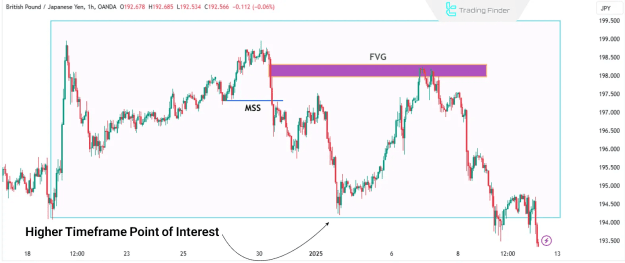
- Look for Fair Value Gaps: In lower timeframes, smaller FVGs are often created as price moves toward a higher timeframe POI. These gaps can be used as refined entry zones, as price frequently returns to "fill" them.
- Identify Local Order Blocks: Lower timeframe Order Blocks provide even greater precision. A reaction to an Order Block at a higher timeframe POI can be a powerful confirmation signal for a reversal or continuation.
- Observe Market Structure Shifts: A shift in market structure on a lower timeframe is a high-probability indicator of a trend change. This is often seen as a quick return of price after a high or low is broken, frequently accompanied by high volume.
- Use the OTE Tool: After a clear move is identified on a lower timeframe, the OTE setup can be applied to find optimal entry, stop-loss, and take-profit levels. This allows for staged entries and better risk management.
Conclusion
The ICT methodology for financial market analysis hinges on a top-down approach. By first identifying key POIs on higher timeframes to establish the market's probable direction, traders can then drill down to lower timeframes. This two-step process allows for the identification of high-probability entry points by leveraging concepts such as market structure, price gaps, Order Blocks, and liquidity. Mastering these concepts provides a robust framework for forecasting future price movements and making informed trading decisions.