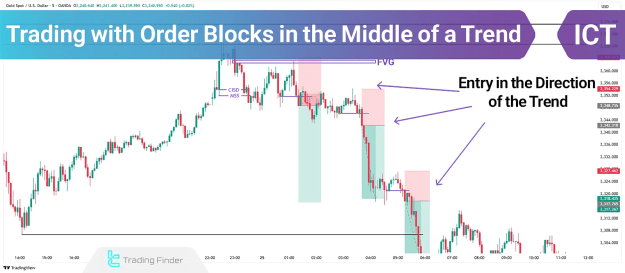


By combining multi-timeframe analysis with Smart Money Concepts (SMC), traders gain forex education insights to identify precise entry points while minimizing risk.
Step-by-Step Guide to Trading Mid-Trend with Order Blocks
TP & SL Tool: Risk Reward Ratio Calculator RRR MT4 | Prop Firm Protector: Trade Assist Prop Firm Plus TF Expert MT4 | Money Management + DrawDown Protector: Trade Panel Prop Firm Drawdawn Limiter Pro MT4 |Get a free Expert Advisor license via Telegram and WhatsApp
1. Higher Timeframe Analysis for Trend Confirmation
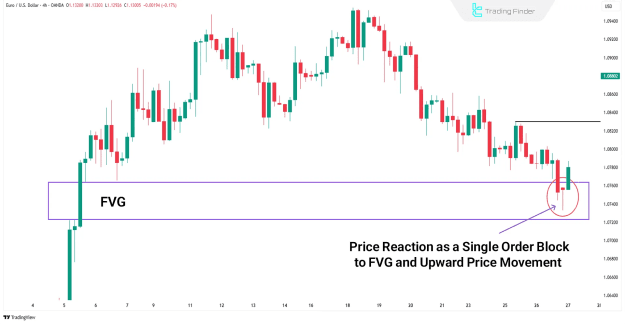
- Identify Order Blocks (OB) where price has previously reversed, indicating institutional accumulation/distribution.
- Look for Fair Value Gaps (FVG)—unfilled price imbalances that often act as support/resistance.
- Confirm the trend direction using Break of Structure (BOS) and Change of Character (CHOCH).
Example: On the 4H chart, price reacts to an OB+FVG zone, forming a higher low (HL) before continuing the uptrend.
2. Switching to Lower Timeframes for Entry Precision
- Move to a 15M or 5M chart to locate retracement structures.
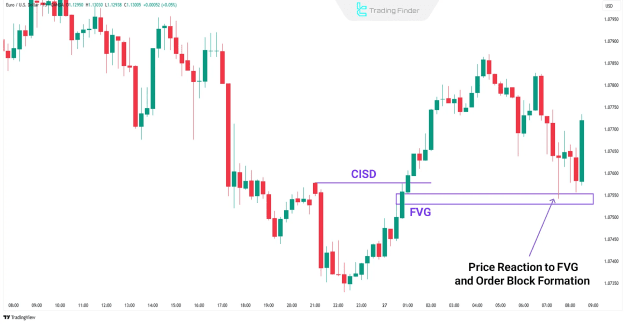
- Watch for price reactions at FVGs, forming bullish/bearish Order Blocks with rejection candles (wicks).
- A valid Higher Low (HL) in an uptrend (or Lower High (LH) in a downtrend) confirms continuation.
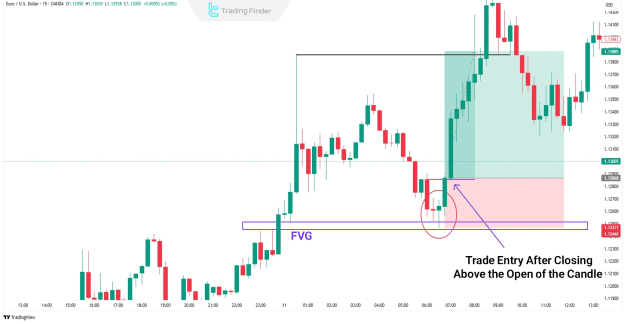
Example: On the 15M chart, price retraces into an FVG, forms a bullish OB with a long wick, then resumes the trend.
3. Trade Entry Confirmation Signals
Two key ICT confirmation methods for mid-trend entries:
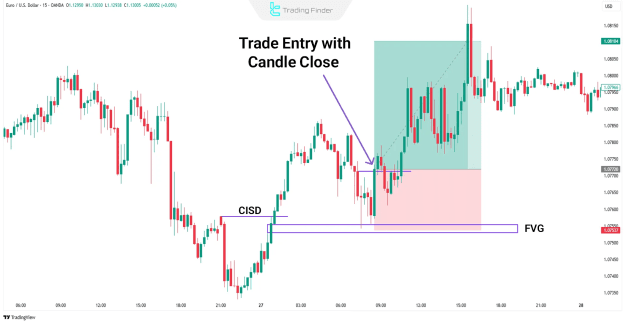
A. Early Trend Entry (After Initial Pullback)
- Change in State of Delivery (CISD) occurs—price shifts from bearish to bullish momentum.
- Price retests an FVG and forms a higher low.
- A candle closes above the open of the initial bearish candle, confirming reversal.
B. Mid-Trend Entry (During Continuation)
- After a confirmed BOS, price pulls back into an FVG or OB zone.
- A bullish candle closes above the last bearish candle’s open, signaling continuation.
- Entry is taken with a tight stop loss below the OB/FVG.
Advantages & Limitations of ICT Order Block Trading
 Advantages
High-probability entries using institutional liquidity zones (OB + FVG).
Small stop losses placed behind OB/FVG, improving risk-reward ratios.
Multi-timeframe alignment reduces false signals.
Works on lower timeframes (M1-M15) for scalping and intraday trading.
Limitations
Requires advanced ICT knowledge (SMT, BOS, CISD).
False breaks can occur in low-liquidity or ranging markets.
Misidentifying OB/FVG leads to premature stop-outs.
Common Mistakes in ICT Order Block Trading
- Entering without structural confirmation (ignoring BOS/CHOCH).
- Overlooking higher timeframe context, leading to counter-trend entries.
- Placing stops arbitrarily instead of behind OB/FVG.
- Ignoring liquidity zones, resulting in poor trade location.
Risk Management & Profit Targets
- Stop Loss: Behind the OB/FVG low (for buys) or high (for sells).
- Take Profit:
- First TP at nearest swing high/low (1:1 RR).
- Second TP at next liquidity zone (1:2+ RR).
Key Takeaways for Successful ICT Trend Trading
Only re-enter mid-trend after confirmation (OB+FVG reaction + candle close).
Align higher & lower timeframes to filter false signals.
Use SMT concepts (liquidity grabs, BOS, CISD) for validation.
Works in both bullish & bearish trends (reverse logic for shorts).
Final Thoughts
The ICT Order Block + FVG strategy provides a systematic way to enter trends after the initial move. By waiting for confirmed retracements and using institutional liquidity concepts, traders can improve accuracy while maintaining favorable risk-reward ratios.
This approach is best suited for experienced traders familiar with ICT methodologies, as it requires precision in identifying OB/FVG zones and patience for confirmations.