

TP & SL Tool: Risk Reward Ratio Calculator RRR MT5 | Prop Firm Protector: Trade Assist Prop Firm Plus TF Expert MT5 | Money Management + DrawDown Protector: Trade Panel Prop Firm Drawdawn Limiter Pro MT5 |Get a free Expert Advisor license via Telegram and WhatsApp
What Is Currency Correlation?
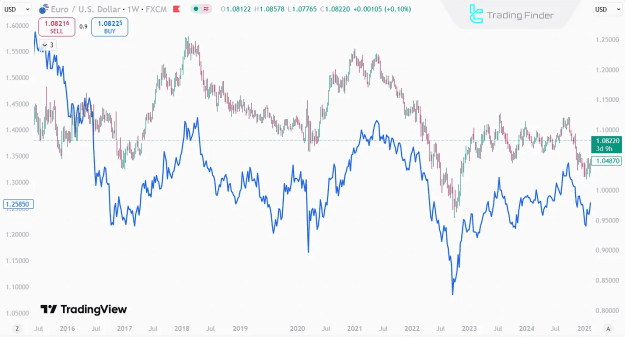
In forex markets, currencies like AUD and NZD often move similarly because they share common economic drivers. This synchronization—or divergence—between currency pairs defines their correlation.
Example:
When AUD/USD trends upward, NZD/USD frequently follows due to their strong positive correlation.
The Nature of Currencies and Their Correlations
Currencies can be categorized based on their market behavior:
- Risk-On Currencies (AUD, NZD, CAD): Strengthen during market optimism.
- Risk-Off Currencies (JPY, USD, CHF): Gain demand in uncertain or bearish conditions.
- Neutral Currencies (EUR, GBP): Exhibit mixed tendencies.
Market Scenario:
In risk-off environments, USD/CAD may rise while CAD/CHF declines, demonstrating a negative correlation.
The Correlation Coefficient Explained
The correlation coefficient quantifies the relationship between two assets, ranging from -1 to +1:
- +1: Perfect positive correlation (identical movements).
- 0: No correlation (independent price action).
- -1: Perfect negative correlation (opposite movements).
Example:
NZD/USD and AUD/USD had a correlation coefficient of +0.94 in February 2025, indicating near-identical trends.
Risk Management and Currency Correlation
Ignoring correlations can lead to unintended risk exposure.
Example of Overexposure:
Selling both EUR/USD and GBP/USD simultaneously amplifies risk, as both pairs often move in sync. A single fundamental shift (e.g., strong U.S. data) could trigger losses in both positions.
Key Insight:
Opening 1 lot each in EUR/USD and GBP/USD is akin to trading 2 lots of a single correlated pair, doubling risk.
Hedging Strategies Using Currency Correlations
Traders can mitigate risk by leveraging correlations and market sentiment:
- Risk-Off Hedge: Long safe-havens (e.g., CHF, gold) while balancing with risk-on assets.
- Diversification: Avoid overlapping positions in highly correlated pairs.
Conclusion
Mastering currency correlation enhances hedging, risk control, and swing trading strategies. Key takeaways:
- Positively correlated pairs move similarly—trading both increases exposure.
- Negatively correlated pairs move oppositely—useful for hedging.
- Monitor correlations dynamically, as they shift with market conditions.
By integrating correlation analysis, traders optimize portfolio resilience and strategic precision.