

TP & SL Tool: Risk Reward Ratio Calculator RRR MT5 | Prop Firm Protector: Trade Assist Prop Firm Plus TF Expert MT5 | Money Management + DrawDown Protector: Trade Panel Prop Firm Drawdawn Limiter Pro MT5 |Get a free Expert Advisor license via Telegram and WhatsApp
Why Understanding MSS is Crucial
Accurately identifying an MSS allows traders to:
- Detect early signs of trend reversals
- Optimize entry points and stop-loss placement
- Avoid stop hunts by aligning with major liquidity zones
- Integrate with other ICT trading concepts for higher-probability setups
Key Characteristics of Market Structure Shift (MSS)
To effectively recognize an MSS, traders must understand its defining features:
1. Break of Swing High or Swing Low
- Swing High: A peak where price stops rising and reverses downward (resistance).
- Swing Low: A trough where price stops falling and reverses upward (support).
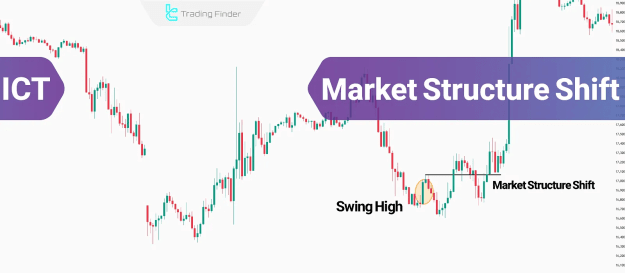
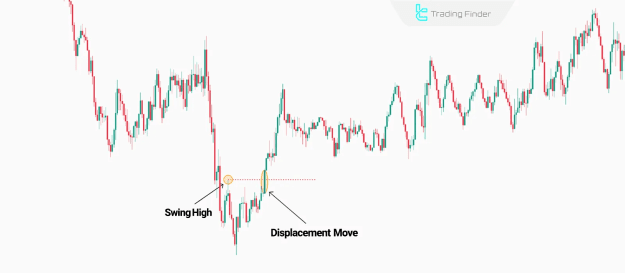
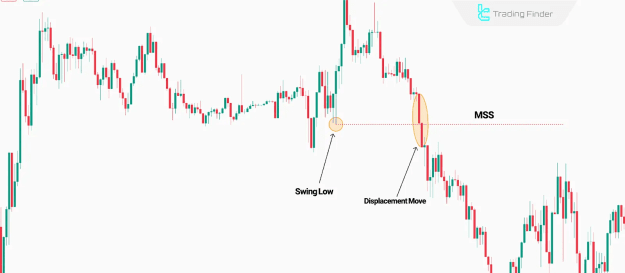
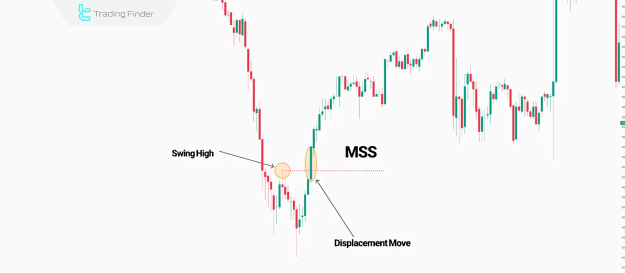
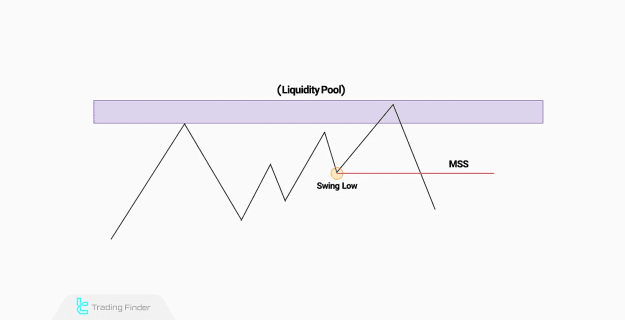
An MSS occurs when the latest swing high or low is broken with a strong, impulsive move.
2. Aggressive Displacement Move
A displacement move is a rapid, high-momentum price shift, often indicating large liquidity entering the market. This confirms the validity of an MSS.
3. Liquidity Grabs & Stop Hunts
MSS formations frequently follow liquidity grabs, where price sweeps key levels to trigger stops before reversing.
How to Identify Market Structure Shift (MSS)
The confirmation of an MSS depends on the prevailing trend:
Bullish Trend MSS
- Price breaks below the last swing low with a strong displacement move.
- Indicates a potential shift from bullish to bearish momentum.
Bearish Trend MSS
- Price breaks above the last swing high with a strong displacement move.
- Signals a possible shift from bearish to bullish momentum.
Trading Strategy Using Market Structure Shift (MSS)
A structured approach to trading MSS involves three key steps:
Step 1: Determine the Daily Bias (D1 & H4 Analysis)
- Identify swing highs, swing lows, and liquidity zones on higher timeframes.
- Establish whether the market is bullish or bearish.
Step 2: Spot MSS in Lower Timeframes (M5, M15)
- Look for a break of structure (swing high/low) with a displacement move.
- Confirm with volume or order flow analysis.
Step 3: Entry Confirmation Techniques
- Order Block Retest: Enter after price retests the last valid order block post-MSS.
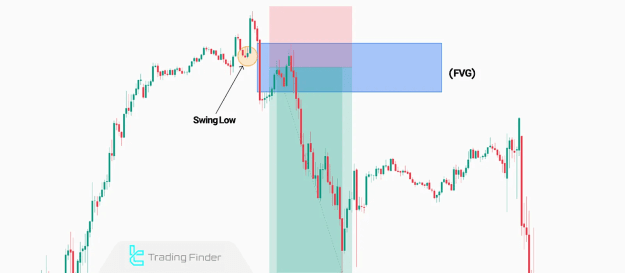
- Fair Value Gap (FVG) Fill: Trade the pullback into an FVG zone.
- Liquidity Grab Confirmation: Enter after a liquidity sweep and reversal.
MSS vs. Traditional Trend Reversals
While both signal trend changes, MSS differs in key ways:
- Speed: MSS is sudden and aggressive, while traditional reversals develop gradually.
- Liquidity Influence: MSS often follows liquidity manipulation (stop hunts).
- Timeframe Preference: MSS is best traded on lower timeframes (M5, M15).
Enhancing MSS with Other ICT Concepts
MSS becomes even more powerful when combined with other ICT methodologies:
1. Liquidity Pools
- MSS gains validity if it follows a liquidity sweep.
- Liquidity pools indicate where stop orders cluster, increasing reversal potential.
2. Fair Value Gaps (FVG)
- After an MSS, price often retraces into an FVG before continuing.
- FVGs provide optimal entry zones for high-probability trades.
Conclusion
The Market Structure Shift (MSS) is a cornerstone of ICT trading, offering traders a clear signal of potential trend reversals. By recognizing the break of swing highs/lows with a displacement move, traders can align their strategies with institutional liquidity flows.
Integrating MSS with concepts like liquidity pools and FVGs enhances trade accuracy, making it a vital tool for both short-term and swing traders. Mastering MSS allows traders to anticipate market turns and capitalize on high-probability setups effectively.