

TP & SL Tool: Risk Reward Ratio Calculator RRR MT4 | Prop Firm Protector: Trade Assist Prop Firm Plus TF Expert MT4 | Money Management + DrawDown Protector: Trade Panel Prop Firm Drawdawn Limiter Pro MT4 |Get a free Expert Advisor license via Telegram and WhatsApp
Understanding Liquidity in ICT
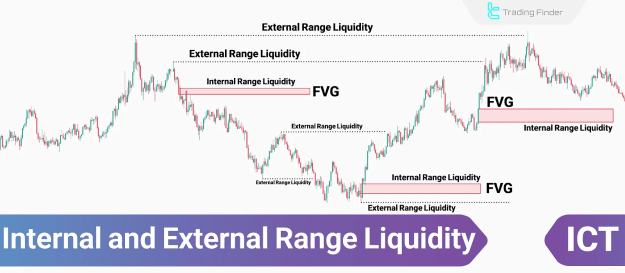
Price does not move randomly or solely based on traditional technical indicators. Instead, it follows a purposeful algorithmic path aimed at collecting liquidity. ICT classifies liquidity as:
- Internal Range Liquidity (IRL): Fair Value Gaps (FVGs) located within a defined price range.
- External Range Liquidity (ERL): Old Highs and Old Lows, which act as targets for stop runs and breakout orders.
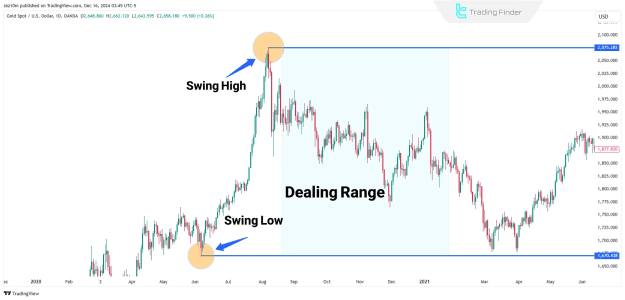
What Is a Dealing Range in ICT?
A Dealing Range refers to the distance between a Swing High and a Swing Low. This range represents a single leg of price movement, within which various market structures and liquidity pools are formed, including:
- Fair Value Gaps (FVGs)
- Order Blocks
- Internal and External Liquidity Levels
Internal Range Liquidity (IRL)
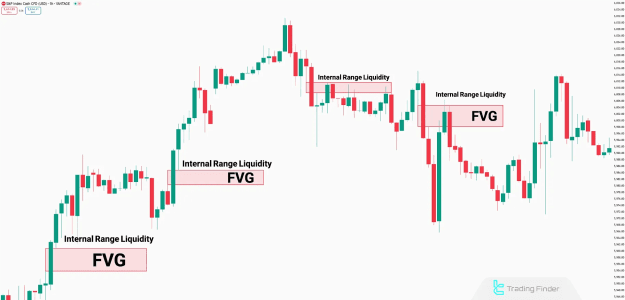
Internal Range Liquidity (IRL) represents imbalances created within the dealing range. These are commonly referred to as Fair Value Gaps (FVGs). Each FVG acts as a liquidity pocket that the algorithmic nature of the market seeks to revisit and fill.
Characteristics of IRL:
- Formed inside a swing leg or dealing range
- Often revisited as part of liquidity engineering
- Serve as potential entry or continuation zones
External Range Liquidity (ERL)
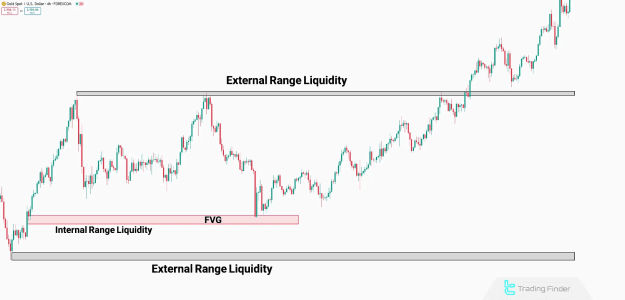
External Range Liquidity (ERL) consists of the levels located above previous highs and below previous lows. These zones are frequently misinterpreted by retail traders as support or resistance, but in ICT logic, they are liquidity magnets that draw price movement.
Characteristics of ERL:
- Located at Old Highs and Old Lows
- Target stop-loss clusters of retail traders
- Used to trigger breakout or reversal algorithms
Price Movement According to ICT
In the ICT model, price moves algorithmically toward liquidity. This movement follows a repetitive cycle:
- Price seeks IRL to fill imbalances and collect orders
- After collecting internal liquidity, price targets ERL
- Upon reaching ERL, price may reverse to revisit an IRL
This cyclical interaction between IRL and ERL underpins market direction and liquidity-based strategies.
Applications of IRL and ERL in Trading
Traders who understand how to identify and utilize internal and external liquidity can significantly enhance their market analysis and precision.
Identifying Daily Bias:
- Analyze monthly, weekly, and daily timeframes
- Determine the direction based on the proximity to ERL or IRL
- Use liquidity levels to predict market intent
Precise and Optimized Trading:
- Focus on sub-4H charts for execution
- Use FVGs (IRL) for high-probability entry points
- Target Old Highs/Lows (ERL) for take profit levels
- Place stop losses beyond opposing liquidity zones
Conclusion
The ICT approach redefines traditional technical analysis by focusing solely on liquidity. Through Internal Range Liquidity (IRL) and External Range Liquidity (ERL), traders can understand where the market is likely to move and why.
- IRL = Fair Value Gaps (FVGs) = Internal imbalance zones
- ERL = Old Highs and Old Lows = External liquidity targets
By mastering the relationship between IRL and ERL, traders align with institutional flow, enabling more precise entries and exits. The market’s constant effort to balance between these zones forms the foundation of ICT trading strategies.