

TP & SL Tool: Risk Reward Ratio Calculator RRR MT5 | Prop Firm Protector: Trade Assist Prop Firm Plus TF Expert MT5 | Money Management + DrawDown Protector: Trade Panel Prop Firm Drawdawn Limiter Pro MT5 |Get a free Expert Advisor license via Telegram and WhatsApp
Understanding the ICT Weekly Range Expansion Model
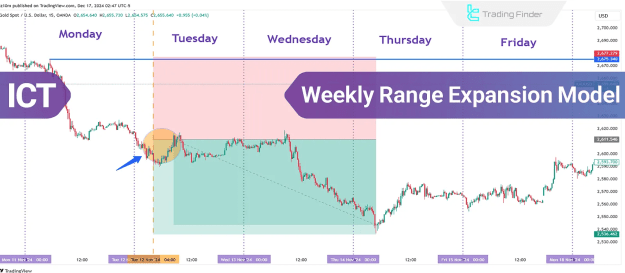
The ICT Weekly Range Expansion Model is a short-term trading strategy designed to identify and capitalize on price expansions within a weekly trading cycle. This model leverages key market concepts such as Fair Value Gaps (FVG), Liquidity Pools, and Old Highs/Lows to predict potential price movements.
Applicable across various financial markets—including Forex, stocks, and cryptocurrencies—this model helps traders align their positions with the dominant weekly trend for optimal execution.
Key Components of the ICT Weekly Range Expansion Model
The model operates based on three primary PD Arrays:
- Fair Value Gap (FVG) – Price zones created due to rapid market movements, where price often returns to fill the imbalance.
- Old Highs/Lows – Key liquidity zones where price tends to react, serving as potential reversal or target points.
- Liquidity Pool – Areas where stop orders cluster, attracting price movement for liquidity grabs.
By analyzing these elements, traders can anticipate where price is likely to expand during the week.
Step-by-Step Implementation of the ICT Weekly Range Expansion Model
Step 1: Determine the Weekly Market Direction
- Analyze the weekly chart to identify the prevailing trend.
- Check for Fair Value Gaps (FVGs) and liquidity sweeps.
- A bullish bias is confirmed if price makes higher highs and reclaims key support.
- A bearish bias is confirmed if price makes lower lows and rejects key resistance.
Step 2: Identify the Range Expansion Setup
- Early in the week (Monday), observe the initial price range.
- The expansion phase typically occurs from Tuesday to Thursday.
- Use lower timeframes (e.g., daily chart) to confirm the expansion setup.
Step 3: Execute the Trade
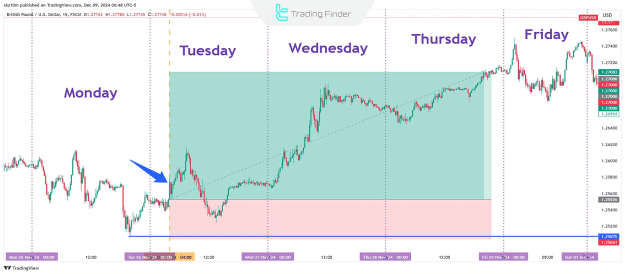
- For a bullish bias: Enter buy positions on Tuesday at 4:00 AM (New York Time).
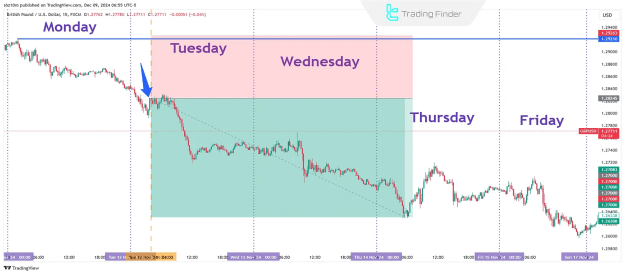
- For a bearish bias: Enter sell positions at the same time.
- Hold trades until Thursday, when the expansion phase typically concludes.
How to Trade a Bullish Weekly Expansion?
- Confirm Bullish Bias – Look for sell-side liquidity sweeps or price entering a discount zone.
- Identify Targets – Price typically moves toward buy-side liquidity or premium zones.
- Check Market Structure – Confirm a bullish Market Structure Shift (MSS) on the daily chart.
- Execute the Trade – Enter long positions from Tuesday to Thursday.
How to Trade a Bearish Weekly Expansion?
- Confirm Bearish Bias – Watch for buy-side liquidity sweeps or price entering a premium zone.
- Identify Targets – Price typically moves toward sell-side liquidity or discount zones.
- Check Market Structure – Confirm a bearish Market Structure Shift (MSS) on the daily chart.
- Execute the Trade – Enter short positions from Tuesday to Thursday.
Critical Considerations for the ICT Weekly Range Expansion Model
- Accurate Weekly Bias Determination – Always assess liquidity zones and PD Arrays (Premium/Discount) before confirming direction.
- Timeframe Alignment – Use the daily chart to validate the weekly bias through MSS (Market Structure Shifts).
- Optimal Entry Timing – The best entries usually occur on Tuesday, when the expansion phase begins.
- Strategic Stop-Loss Placement – Use tight stop losses to manage risk effectively.
Common Mistakes to Avoid
- Misidentifying Weekly Bias – Ignoring liquidity zones and FVGs leads to incorrect trend assumptions.
- Poor Entry Timing – Entering too early (before confirmations) or too late (after expansion) reduces profitability.
- Neglecting Lower Timeframes – Failing to check MSS on the daily chart can result in false signals.
- Overlooking Economic Events – High-impact news can disrupt weekly trends; always check the economic calendar.
Conclusion
The ICT Weekly Range Expansion Model is a powerful strategy for traders seeking to capitalize on short-term price movements. By combining market structure analysis, liquidity identification, and precise timing, this model enhances trading precision and efficiency.
Whether trading Forex, stocks, or cryptocurrencies, mastering this approach can significantly improve your weekly trading performance. Always remember to validate setups, manage risk, and stay disciplined in execution.