



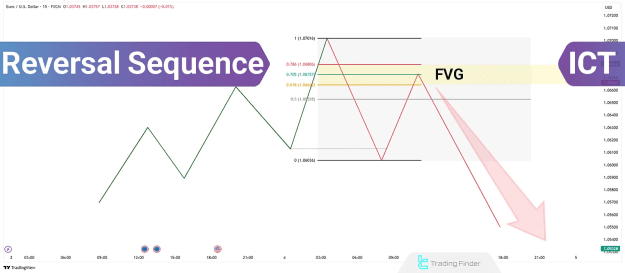
The Reversal Sequence Strategy , inspired by the ICT (Inner Circle Trader) methodology, is a concept rooted in advanced Forex Education . It is designed to capture high-probability trade entries before major market movements. This approach can be applied to various financial markets, including the Forex Market, cryptocurrencies, and indices, and is suitable for trading within all Kill Zones.
TP & SL Tool: Risk Reward Ratio Calculator RRR MT5 | Prop Firm Protector: Trade Assist Prop Firm Plus TF Expert MT5 | Money Management + DrawDown Protector: Trade Panel Prop Firm Drawdawn Limiter Pro MT5 |Get a free Expert Advisor license via Telegram and WhatsApp
What Is the Reversal Sequence Setup?
The Reversal Sequence Strategy is unique in that it does not rely on Market Structure Shifts (MSS) or Breaks of Structure (BOS) to confirm trade entries. Instead, it emphasizes the importance of liquidity levels, Fair Value Gaps (FVGs), Order Blocks, and Optimal Trade Entry (OTE) Levels for identifying high-probability setups.
This method is grounded in analyzing Higher Time Frame (HTF) zones, where price often initiates significant reversals. Focusing on HTF liquidity levels allows traders to anticipate and execute trades at the earliest stage of a directional change.
Key Components of the Reversal Sequence Strategy
Identifying Key Highs or Lows
The first step involves recognizing major highs or lows on the higher time frame. Price often approaches these zones rapidly. Traders must identify these levels and prepare for potential reversals upon price interaction.
Fair Value Gap (FVG)
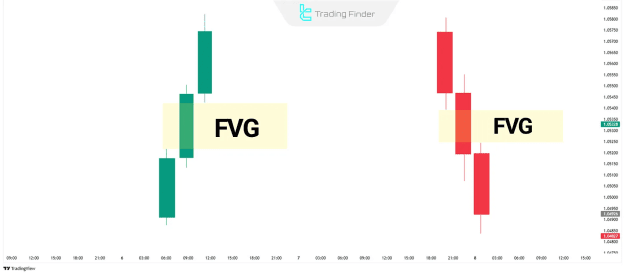
A Fair Value Gap is a three-candle pattern where the third candle’s body fails to overlap with the first. These gaps are frequently revisited by price and serve as important zones for trade entries.
Price Inversion
Price Inversion occurs when an FVG is filled and the price stabilizes in that area, transforming it into a support or resistance level. This phenomenon acts as a reversal confirmation zone.
Order Blocks
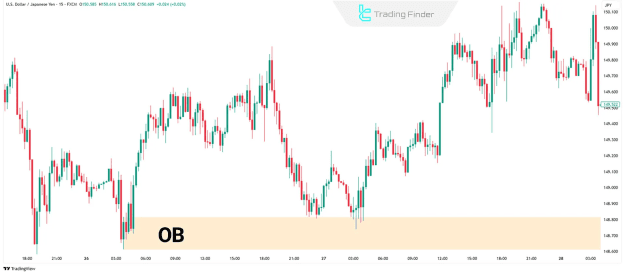
Order Blocks are areas where institutional participants, such as banks and hedge funds, have placed large buy or sell orders. These zones are often revisited and can be used as strategic entry points for trades.
Breaker Blocks
A Breaker Block is formed when price creates a new high or low, followed by a reversal. This structure mimics an Order Block but includes a prior liquidity event, enhancing its reliability as an entry point.
OTE Levels
Optimal Trade Entry (OTE) Levels are derived from Fibonacci retracement, with the 70.5% level being particularly significant. These levels help traders re-enter the market in alignment with the developing trend.
Stages of Price Reversal in the Reversal Sequence Strategy
Understanding the progression of a price reversal is essential for timely and confident trade execution. The Reversal Sequence Setup follows these five key stages:
1. Liquidity Sweeps and Stop Hunts
In this initial phase, the price takes out a notable high or low, triggering stop orders and initiating a rapid reversal. This action is known as a Liquidity Sweep and is typically the first sign of a potential change in direction.
2. Transition Through Premium and Discount Zones
Using Fibonacci retracement, traders determine Premium (overbought) and Discount (oversold) zones. These zones provide a framework for entering trades based on whether price is in a value-rich area, often combined with signals from Order Blocks and FVGs.
3. Price Inversion and FVG Closure
Following liquidity absorption, the price revisits the initial breakout zone and fills the FVG. If price consolidates or reacts favorably within this gap, it suggests that the area has become a new support or resistance level, strengthening the reversal bias.
4. Change in the State of Delivery (CISD)
In this stage, a strong impulsive candle breaks previous structural boundaries, and price sustains above or below this level. This shift marks a Change in the State of Delivery (CISD) and indicates that new institutional orders are driving a fresh trend.
5. Final Confirmation: Breaker Block or FVG
The final stage involves confirmation of the reversal through the formation of a Breaker Block or by the closing and validation of a new FVG. This offers conclusive evidence to enter the trade with high conviction.
Bullish Setup Using the Reversal Sequence Strategy
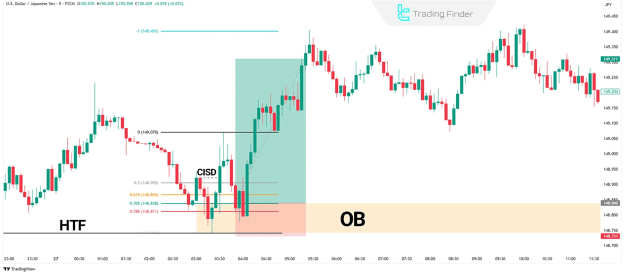
On a USD/JPY 5-minute chart, price approaches a significant HTF liquidity zone and executes a liquidity sweep. Upon forming an Order Block and confirming a Change in the State of Delivery (CISD), the trader waits for price to return to the Order Block.
When price interacts with this level and aligns with OTE criteria, a buy trade may be initiated.
Bearish Setup Using the Reversal Sequence Strategy
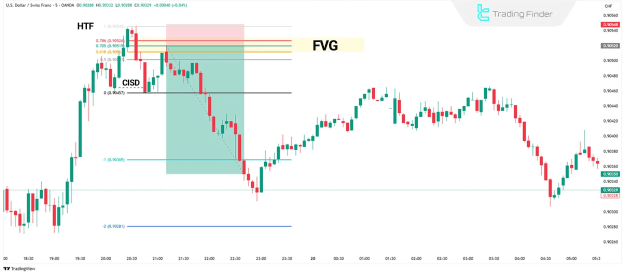
On the USD/CHF chart, price taps into an HTF resistance area and triggers stop orders. After forming a bearish Fair Value Gap and confirming a CISD, the price retraces to the FVG.
Once price validates this zone through rejection or consolidation and aligns with the OTE zone, a sell trade can be executed.
Conclusion
The Reversal Sequence Strategy in the ICT framework enables traders to anticipate market reversals without relying on traditional confirmation methods like MSS or BOS. By incorporating liquidity analysis, Fair Value Gaps, Order Blocks, Breaker Blocks, and OTE levels, this strategy offers refined and early entry points with improved risk-to-reward potential across all market types and trading sessions.
TP & SL Tool: Risk Reward Ratio Calculator RRR MT5 | Prop Firm Protector: Trade Assist Prop Firm Plus TF Expert MT5 | Money Management + DrawDown Protector: Trade Panel Prop Firm Drawdawn Limiter Pro MT5 |Get a free Expert Advisor license via Telegram and WhatsApp
What Is the Reversal Sequence Setup?
The Reversal Sequence Strategy is unique in that it does not rely on Market Structure Shifts (MSS) or Breaks of Structure (BOS) to confirm trade entries. Instead, it emphasizes the importance of liquidity levels, Fair Value Gaps (FVGs), Order Blocks, and Optimal Trade Entry (OTE) Levels for identifying high-probability setups.
This method is grounded in analyzing Higher Time Frame (HTF) zones, where price often initiates significant reversals. Focusing on HTF liquidity levels allows traders to anticipate and execute trades at the earliest stage of a directional change.
Key Components of the Reversal Sequence Strategy
Identifying Key Highs or Lows
The first step involves recognizing major highs or lows on the higher time frame. Price often approaches these zones rapidly. Traders must identify these levels and prepare for potential reversals upon price interaction.
Fair Value Gap (FVG)
A Fair Value Gap is a three-candle pattern where the third candle’s body fails to overlap with the first. These gaps are frequently revisited by price and serve as important zones for trade entries.
Price Inversion
Price Inversion occurs when an FVG is filled and the price stabilizes in that area, transforming it into a support or resistance level. This phenomenon acts as a reversal confirmation zone.
Order Blocks
Order Blocks are areas where institutional participants, such as banks and hedge funds, have placed large buy or sell orders. These zones are often revisited and can be used as strategic entry points for trades.
Breaker Blocks
A Breaker Block is formed when price creates a new high or low, followed by a reversal. This structure mimics an Order Block but includes a prior liquidity event, enhancing its reliability as an entry point.
OTE Levels
Optimal Trade Entry (OTE) Levels are derived from Fibonacci retracement, with the 70.5% level being particularly significant. These levels help traders re-enter the market in alignment with the developing trend.
Stages of Price Reversal in the Reversal Sequence Strategy
Understanding the progression of a price reversal is essential for timely and confident trade execution. The Reversal Sequence Setup follows these five key stages:
1. Liquidity Sweeps and Stop Hunts
In this initial phase, the price takes out a notable high or low, triggering stop orders and initiating a rapid reversal. This action is known as a Liquidity Sweep and is typically the first sign of a potential change in direction.
2. Transition Through Premium and Discount Zones
Using Fibonacci retracement, traders determine Premium (overbought) and Discount (oversold) zones. These zones provide a framework for entering trades based on whether price is in a value-rich area, often combined with signals from Order Blocks and FVGs.
3. Price Inversion and FVG Closure
Following liquidity absorption, the price revisits the initial breakout zone and fills the FVG. If price consolidates or reacts favorably within this gap, it suggests that the area has become a new support or resistance level, strengthening the reversal bias.
4. Change in the State of Delivery (CISD)
In this stage, a strong impulsive candle breaks previous structural boundaries, and price sustains above or below this level. This shift marks a Change in the State of Delivery (CISD) and indicates that new institutional orders are driving a fresh trend.
5. Final Confirmation: Breaker Block or FVG
The final stage involves confirmation of the reversal through the formation of a Breaker Block or by the closing and validation of a new FVG. This offers conclusive evidence to enter the trade with high conviction.
Bullish Setup Using the Reversal Sequence Strategy
On a USD/JPY 5-minute chart, price approaches a significant HTF liquidity zone and executes a liquidity sweep. Upon forming an Order Block and confirming a Change in the State of Delivery (CISD), the trader waits for price to return to the Order Block.
When price interacts with this level and aligns with OTE criteria, a buy trade may be initiated.
Bearish Setup Using the Reversal Sequence Strategy
On the USD/CHF chart, price taps into an HTF resistance area and triggers stop orders. After forming a bearish Fair Value Gap and confirming a CISD, the price retraces to the FVG.
Once price validates this zone through rejection or consolidation and aligns with the OTE zone, a sell trade can be executed.
Conclusion
The Reversal Sequence Strategy in the ICT framework enables traders to anticipate market reversals without relying on traditional confirmation methods like MSS or BOS. By incorporating liquidity analysis, Fair Value Gaps, Order Blocks, Breaker Blocks, and OTE levels, this strategy offers refined and early entry points with improved risk-to-reward potential across all market types and trading sessions.
Attached Image(s) (click to enlarge)
Attached File(s)
