

TP & SL Tool: Risk Reward Ratio Calculator RRR MT4 | Prop Firm Protector: Trade Assist Prop Firm Plus TF Expert MT4 | Money Management + DrawDown Protector: Trade Panel Prop Firm Drawdawn Limiter Pro MT4 |Get a free Expert Advisor license via Telegram and WhatsApp
Pros and Cons of Lower Timeframe Optimization
Advantages
- Tighter entries with reduced stop-loss distance.
- Higher trade accuracy due to refined zone identification.
- Better liquidity utilization, targeting hidden liquidity pools.
Disadvantages
- Increased stop-loss triggers due to market noise.
- Requires advanced analysis skills for proper execution.
- Higher frequency of false breakouts in volatile conditions.
Step-by-Step Process to Improve Risk-Reward Ratio
Step 1: Identify Key Zones on Higher Timeframes
Begin by analyzing higher timeframes (HTF) such as the 1-hour or 4-hour chart to locate:
- Order Blocks (OB)
- Fair Value Gaps (FVG)
- Liquidity zones
These zones act as potential entry areas, setting the foundation for lower timeframe confirmation.
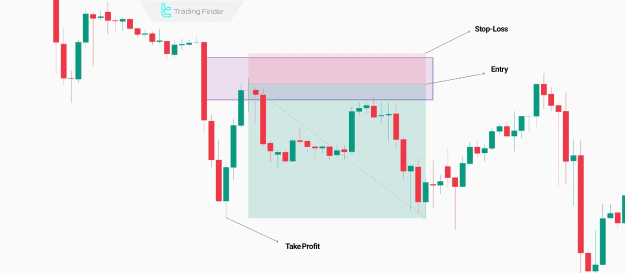
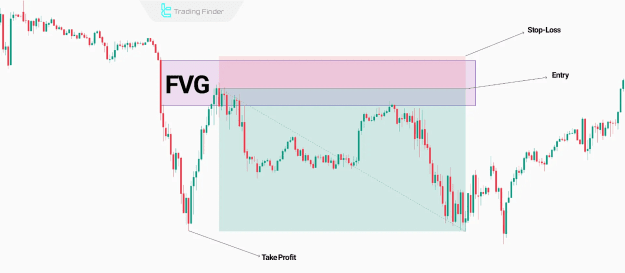
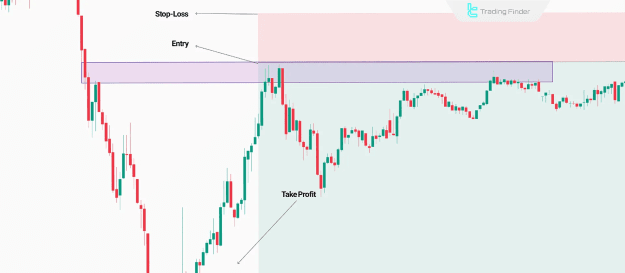
Example: In an FVG-based setup, the stop-loss is placed above the FVG-forming candle, while take-profit targets liquidity below the previous low.
Step 2: Refine Entry Points on the 15-Minute Timeframe
Switch to the 15-minute chart to:
- Confirm Break of Structure (BOS)
- Assess liquidity sweeps
- Narrow down the optimal entry zone
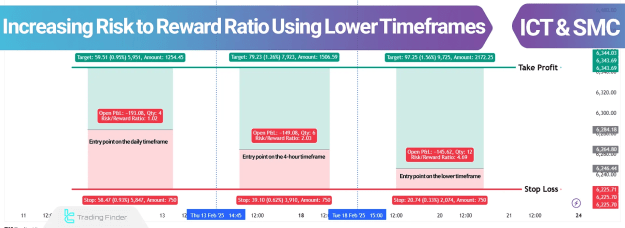
This step increases precision, reducing stop-loss distance while maintaining the original HTF profit target.
Step 3: Finalize Entry on the 5-Minute Timeframe
For maximum precision, use the 5-minute chart to:
- Pinpoint exact entry triggers
- Set tighter stop-loss levels
- Further improve RRR
Caution: Excessively tight stops may lead to early stop-outs due to lower timeframe volatility.
Key Takeaways
- Multi-timeframe analysis (HTF → LTF) refines entries and enhances RRR.
- Order Blocks & FVGs serve as high-probability entry zones.
- Smaller stop-losses improve RRR but require careful execution.
By combining higher timeframe context with lower timeframe precision, traders can optimize entries, minimize risk, and maximize reward potential—while staying aligned with ICT and Smart Money principles.