

TP & SL Tool: Risk Reward Ratio Calculator RRR MT4 | Prop Firm Protector: Trade Assist Prop Firm Plus TF Expert MT4 | Money Management + DrawDown Protector: Trade Panel Prop Firm Drawdawn Limiter Pro MT4 |Get a free Expert Advisor license via Telegram and WhatsApp
Elliott Wave Theory divides market movements into two primary phases:
- Impulse Waves (trend-confirming movements)
- Corrective Waves (trend-retracing movements)
Inspired by the Dow Theory, Elliott's framework helps traders recognize recurring patterns and make informed trading decisions.
What Are Elliott Waves?
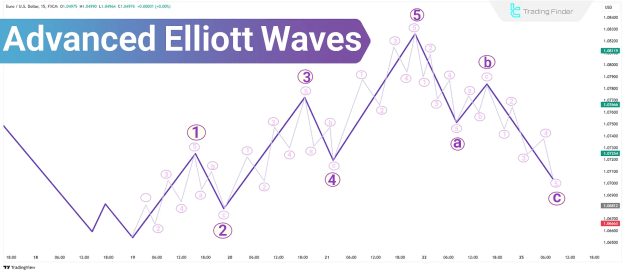
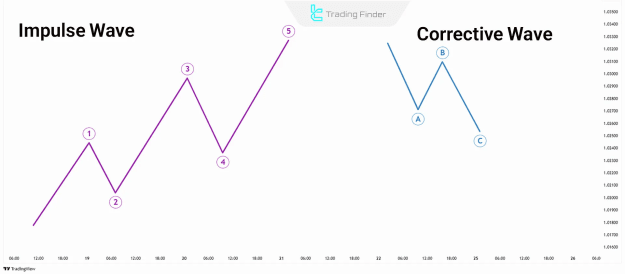
Elliott Wave Theory suggests that market trends unfold in a five-wave impulse pattern, followed by a three-wave corrective pattern.
- Impulse Waves (1-5) – Move in the direction of the main trend.
- Corrective Waves (A-B-C) – Move against the main trend.
These patterns appear across all timeframes, from short-term charts to long-term trends, and smaller waves often nest within larger ones.
By combining Elliott Waves with Fibonacci retracements and Dow Theory principles, traders can forecast market movements and identify high-probability trading opportunities.
Fibonacci Relationships in Elliott Waves
Since Elliott Waves are rooted in Fibonacci sequences, traders use key Fibonacci levels to determine wave targets:
- Wave 2 typically retraces 50%, 61.8%, 76.4%, or 85.4% of Wave 1.
- Wave 3 often extends to 161.8% of Wave 1.
- Wave 4 usually retraces 14.6%, 23.6%, or 38.2% of Wave 3.
- Wave 5 is commonly 1.236 to 1.618 times Wave 4 or equal to Wave 1.
Characteristics of Impulse Waves
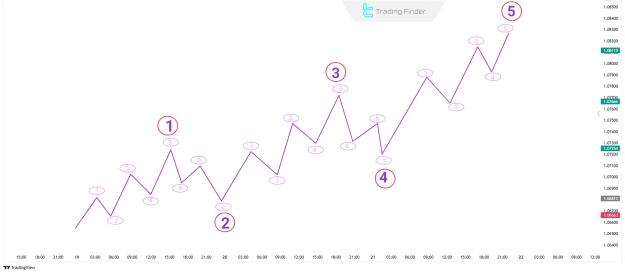
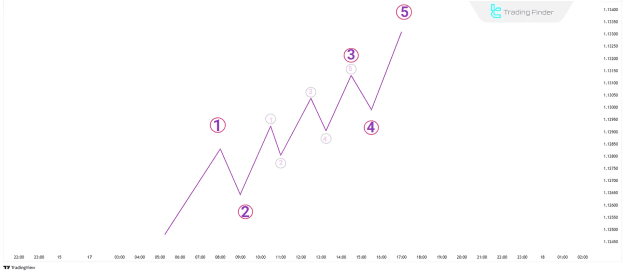
Impulse waves consist of five sub-waves (three advancing, two correcting) in the direction of the trend.
Wave 1 – The Initial Trend Reversal
- Marks the start of a new trend.
- Often overlooked due to low trading volume.
Wave 2 – The First Correction
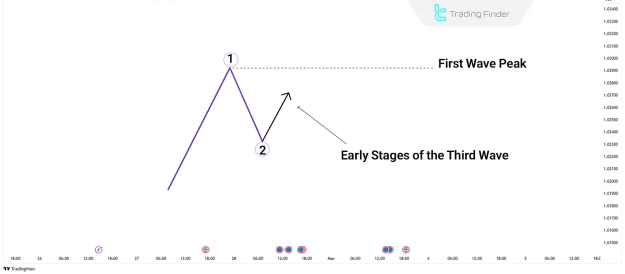
- Retraces part of Wave 1 (usually less than 61.8%).
- Lower volume compared to Wave 1.
Wave 3 – The Strongest Wave
- Typically the longest and most powerful wave.
- Extends to at least 161.8% of Wave 1.
- High trading volume confirms trend strength.
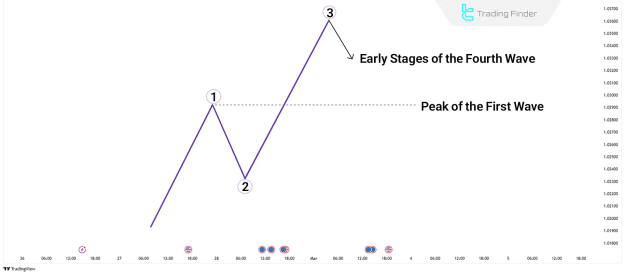
Wave 4 – The Consolidation Phase
- Corrects Wave 3 but does not overlap Wave 1.
- Often retraces 23.6% to 38.2% of Wave 3.
Wave 5 – The Final Push
- Last wave in the trend direction.
- Often driven by retail traders entering late.
Types of Impulse Waves
1. Standard Impulse Wave
- Follows the classic 5-wave structure.
- Wave 3 is never the shortest.
2. Impulse with Extension
- One of the waves (usually Wave 3) extends further.
- Common in forex and stock markets.
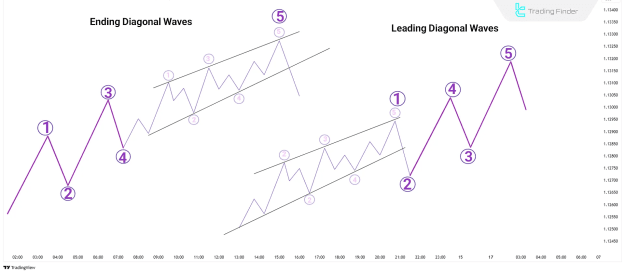
3. Diagonal Waves
- Appears as a wedge-shaped pattern.
- Two types:
- Leading Diagonal (start of trend)
- Ending Diagonal (end of trend)
Characteristics of Corrective Waves
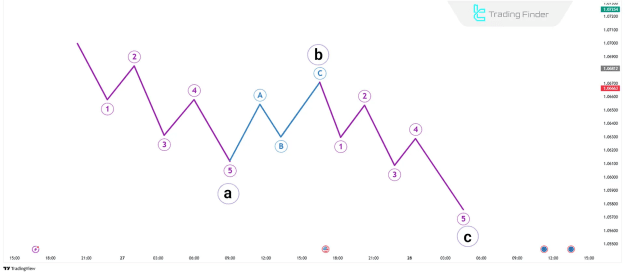
Corrective waves (A-B-C) move against the main trend and consist of three sub-waves.
Wave A – The First Pullback
- Begins the correction phase.
- Often mistaken for a minor retracement.
Wave B – The False Recovery
- Retraces part of Wave A.
- Creates a bull/bear trap before Wave C.
Wave C – The Final Correction
- Strongest corrective wave.
- Often extends beyond Wave A.
Types of Corrective Patterns
1. Zigzag (5-3-5 Structure)
- Sharp, deep corrections.
- Wave B retraces 50%-76.4% of Wave A.
- Wave C often equals or exceeds Wave A.
2. Flat (3-3-5 Structure)
- Sideways correction.
- Three variations:
- Regular Flat (neutral correction)
- Expanded Flat (strong Wave C)
- Running Flat (failed Wave C)
3. Triangle (3-3-3-3-3 Structure)
- Consolidation before a breakout.
- Forms in Wave 4 or Wave B.
4. Complex Corrections (Double or Triple Combinations)
- Multiple corrective patterns linked by Wave X.
- Common in ranging markets.
Conclusion
The Elliott Wave Theory provides a structured approach to analyzing market trends by identifying impulse and corrective waves. When combined with Fibonacci levels, traders can enhance their price prediction accuracy and optimize entry/exit points.
By mastering these patterns, traders gain a deeper understanding of market psychology and improve their technical analysis skills.