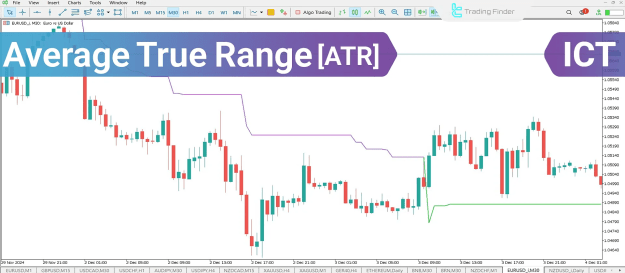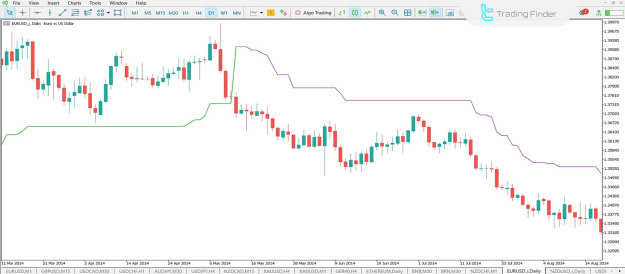


By understanding ATR, traders gain valuable insights into volatility—a crucial aspect of Forex Education—enabling better risk management and strategic trade adjustments in dynamic currency markets.
Practical ATR Trading Applications :
ATR Indicator for MetaTrader4
ATR Indicator for MetaTrader5
How to Calculate ATR Values
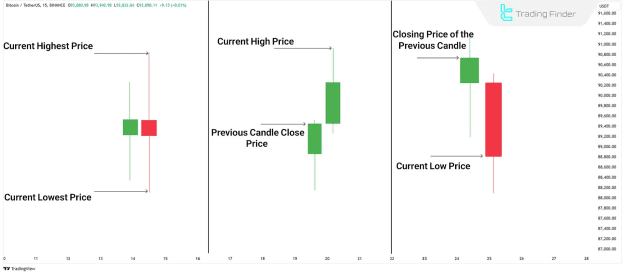
To comprehend ATR, you must first understand True Range (TR), which represents the greatest price movement within a given timeframe. TR is determined by comparing three key measurements:
- Current High vs. Current Low – The difference between the highest and lowest price of the current period.
- Previous Close vs. Current High – The absolute difference between the prior period's closing price and the current high.
- Previous Close vs. Current Low – The absolute difference between the prior period's closing price and the current low.
The True Range is the largest value among these three calculations. The Average True Range is then derived by taking the moving average (typically over 14 periods) of these TR values.
Why ATR Matters in Trading
The ATR indicator plays a crucial role in technical analysis for several reasons:
1. Measuring Market Volatility
ATR provides a clear picture of market volatility—higher ATR values indicate strong price movements, while lower ATR values suggest a stable or ranging market.
2. Identifying Market Conditions
- High ATR often occurs during major news events or market shocks.
- Low ATR typically reflects consolidation or low trading activity.
3. Enhancing Risk Management
Traders use ATR to adjust position sizes and set stop-loss levels based on current volatility, reducing risk in highly unstable markets.
4. Predicting Future Price Movements
While ATR doesn’t forecast direction, it helps estimate potential price swings, allowing traders to prepare for sudden market shifts.
Advantages of Using ATR
- Accurate Volatility Measurement – Unlike standard range indicators, ATR accounts for gaps and extreme price movements.
- Universal Applicability – Works across all markets, including stocks, forex, and cryptocurrencies.
- Improved Trade Adjustments – Helps optimize entry and exit points by reflecting real-time volatility.
Limitations of ATR
- No Directional Bias – ATR only measures volatility, not trend direction.
- Requires Additional Tools – Best used alongside trend-following indicators like Moving Averages or MACD.
Conclusion
The Average True Range (ATR) is an essential tool for assessing market volatility and refining trading strategies. Since it doesn’t predict price direction, combining ATR with trend analysis indicators enhances decision-making and risk management.
By integrating ATR into your trading approach, you can better navigate volatile markets and optimize trade execution.