



In forex education, understanding Rejection Blocks is essential for identifying high-probability reversal zones.
These critical price areas form when the market tests but fails to break through key levels, typically occurring at significant highs or lows after liquidity absorption. Forex traders study these blocks to pinpoint strategic entry and exit points, as they often indicate where institutional players are entering or exiting positions.
By recognizing rejection patterns, traders can better anticipate market reversals while implementing proper risk management through precise stop placement at these key rejection zones. This fundamental concept helps traders align with professional market behavior and improve their trading performance.
TP & SL Tool: Risk Reward Ratio Calculator RRR MT4 | Prop Firm Protector: Trade Assist Prop Firm Plus TF Expert MT4 | Money Management + DrawDown Protector: Trade Panel Prop Firm Drawdawn Limiter Pro MT4 |Get a free Expert Advisor license via Telegram and WhatsApp
How Rejection Blocks Work in ICT Trading
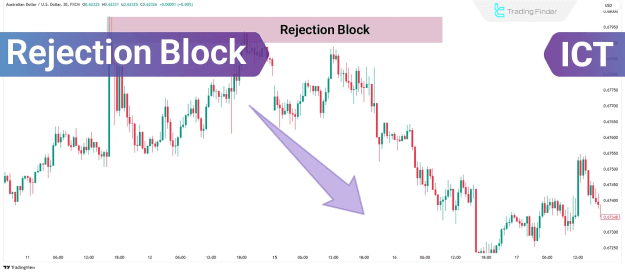
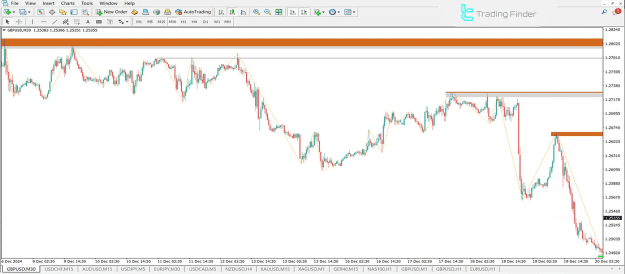
Rejection Blocks form when price retests previous highs or lows, absorbs liquidity, and then reverses—leaving behind long wicks on the candlestick chart. These wicks act as visual markers, signaling strong rejection and potential trend reversals.
Types of Rejection Blocks
1. Bullish Rejection Block
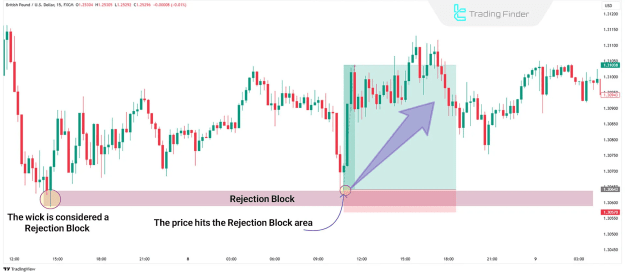
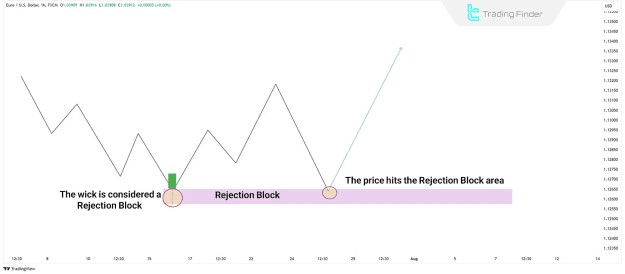
A Bullish Rejection Block appears when price tests a previous low, absorbs sell-side liquidity, and reverses upward.
How to Trade a Bullish Rejection Block:
These critical price areas form when the market tests but fails to break through key levels, typically occurring at significant highs or lows after liquidity absorption. Forex traders study these blocks to pinpoint strategic entry and exit points, as they often indicate where institutional players are entering or exiting positions.
By recognizing rejection patterns, traders can better anticipate market reversals while implementing proper risk management through precise stop placement at these key rejection zones. This fundamental concept helps traders align with professional market behavior and improve their trading performance.
TP & SL Tool: Risk Reward Ratio Calculator RRR MT4 | Prop Firm Protector: Trade Assist Prop Firm Plus TF Expert MT4 | Money Management + DrawDown Protector: Trade Panel Prop Firm Drawdawn Limiter Pro MT4 |Get a free Expert Advisor license via Telegram and WhatsApp
How Rejection Blocks Work in ICT Trading
Rejection Blocks form when price retests previous highs or lows, absorbs liquidity, and then reverses—leaving behind long wicks on the candlestick chart. These wicks act as visual markers, signaling strong rejection and potential trend reversals.
Types of Rejection Blocks
1. Bullish Rejection Block
A Bullish Rejection Block appears when price tests a previous low, absorbs sell-side liquidity, and reverses upward.
How to Trade a Bullish Rejection Block:
- Identify the Block: Look for a candle with a long lower wick near a key support level.
- Entry Trigger: If price revisits below the candle’s body (to hunt stops), consider a long trade.
- Stop Loss: Place the stop loss 10-20 pips below the Rejection Block.
2. Bearish Rejection Block
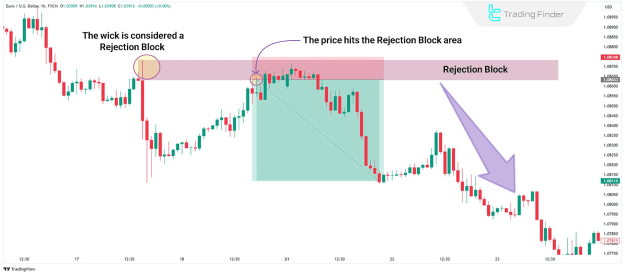
A Bearish Rejection Block occurs when price tests a prior high, absorbs buy-side liquidity, and reverses downward.
How to Trade a Bearish Rejection Block:
- Identify the Block: Spot a candle with a long upper wick near a resistance level.
- Entry Trigger: If price retests above the candle’s body (to hunt stops), consider a short trade.
- Stop Loss: Place the stop loss 10-20 pips above the Rejection Block.
Key Features of Rejection Blocks
- Long Wicks: Indicate strong rejection at key levels.
- Liquidity Sweep: Price absorbs liquidity before reversing.
- Forms at Major Levels: Often found at significant highs/lows.
- Price Weakness Signal: Shows inability to sustain a breakout.
Why Are ICT Rejection Blocks Reliable?
Rejection Blocks are highly dependable because:
- They often appear at deep retracement levels (80%-90% Fibonacci).
- They act as final reversal zones even if other structures (Order Blocks, FVGs) fail.
- They allow tight stop losses with high reward potential.
Conclusion
Trading with Rejection Blocks is a powerful ICT strategy for spotting reversals at critical levels. By combining tight risk management with high-probability setups, traders can enhance their performance in both trending and ranging markets.
Attached Image(s) (click to enlarge)
Attached File(s)
