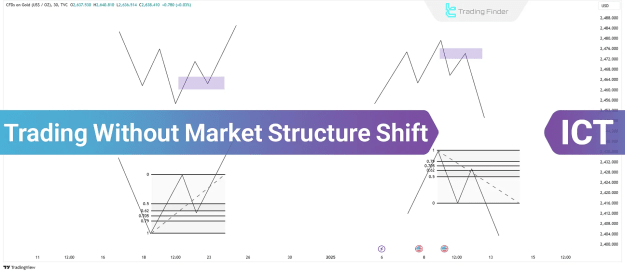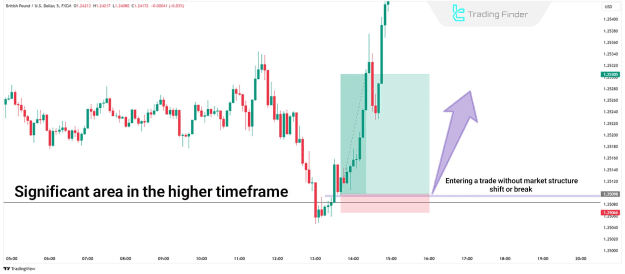


This approach relies on higher timeframe analysis and price behavior to identify high-probability entries without requiring a confirmed market structure change.
Key Components of the Strategy
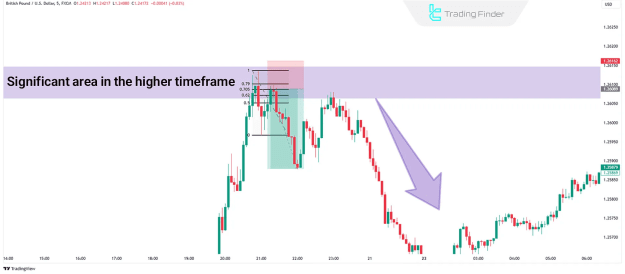
1. Higher Timeframe Points of Interest (POI)
Identifying critical levels on higher timeframes (e.g., 15M, 1H, 4H) is essential. These include:
- Previous highs and lows
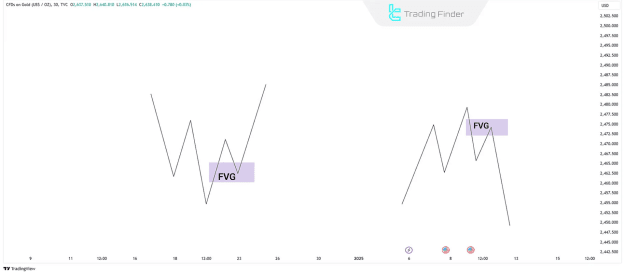
- Fair Value Gaps (FVG)
- Order Blocks
- Liquidity zones
When price approaches these POIs, traders should anticipate potential reversals or strong continuation moves.
2. Liquidity Raid & Strong Price Reactions
A liquidity raid occurs when price breaks a short-term high/low but quickly reverses into the prior range. This often leads to:
- Strong impulsive moves
- Long wicks (Hammer/Shooting Star patterns)
- Balanced Price Range (BPR) or Box setups
These reactions signal potential reversal or continuation zones, allowing traders to enter using ICT concepts like Optimal Trade Entry (OTE), FVG, or Order Blocks.
How to Trade Without MSS or MSB
Step 1: Identify Higher Timeframe POIs
- Analyze key levels on 15M/1H/4H charts.
- Watch for FVG clusters, Order Blocks, or swing points.
- Mark zones where price is likely to react.
Step 2: Monitor Liquidity Raids
- Look for false breaks of short-term highs/lows.
- A quick rejection with strong momentum indicates a potential trade setup.
- Use lower timeframes (1M/5M) for precise entries.
Step 3: Execute Using ICT Tools
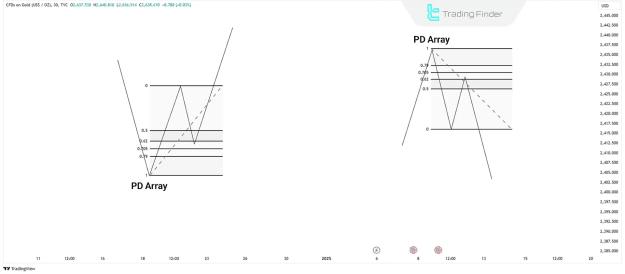
- OTE (Optimal Trade Entry): Enter near the 62%–79% retracement of the recent move.
- FVG (Fair Value Gap): Trade into unfilled FVGs for continuation plays.
- Order Blocks: Look for rejection or absorption at key order blocks.
Example of Trading Without MSS
Scenario 1: Using OTE for Entries
- Price breaks a short-term high, then pulls back into the range.
- The retracement forms an OTE zone (62%-79% Fib level).
- Entry is taken at OTE with confirmation from lower timeframe structure.
Scenario 2: Trading FVG Continuation
- Price leaves an unfilled FVG after a liquidity raid.
- The next leg enters the FVG, providing a continuation opportunity.
- Stop loss is placed below the FVG for risk management.
Advantages of This Approach
- Reduces dependency on MSS/MSB confirmation.
- Captures early entries before major reversals.
- Works in trending and ranging markets.
- Combines multiple ICT concepts for high-probability setups.
Conclusion
The ICT-style "Trading Without Market Structure Shift" strategy enables traders to enter markets before traditional confirmation signals. By focusing on higher timeframe POIs and liquidity raids, traders can avoid missed opportunities and execute with precision.
This method is ideal for traders who want to reduce lag in their entries while maintaining a structured, rule-based approach. By integrating OTE, FVG, and Order Blocks, traders can enhance their decision-making and improve trade accuracy.