



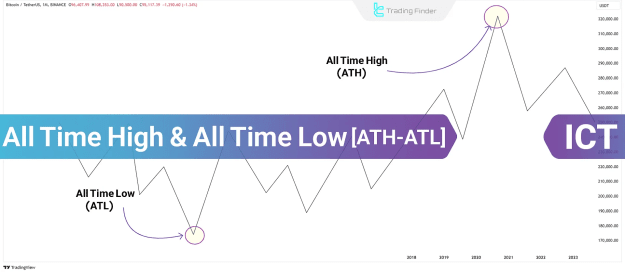
The All-Time High (ATH) represents the highest price level an asset or currency has ever achieved in its trading history. This milestone signifies peak market valuation and, in the context of forex education, is closely linked to investor sentiment and broader market dynamics.
Key Aspects of ATH
Key Aspects of ATH
- Market Excitement – When an asset hits a new ATH, it often triggers heightened trading activity, reflecting strong bullish sentiment.
- Psychological Resistance – Many traders view ATH as a potential selling point, which can lead to profit-taking and temporary pullbacks.
- Uptrend Confirmation – Technical analysts use ATH levels to assess sustained upward momentum and predict future price movements.
Example of ATH in Trading
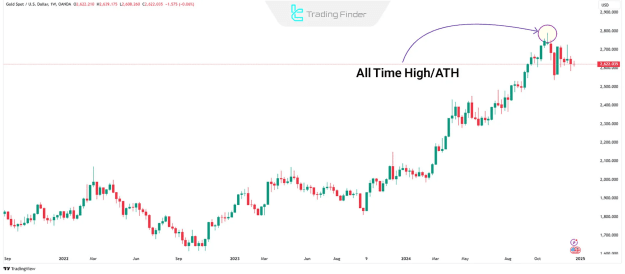
A weekly XAU/USD (Gold vs. US Dollar) chart illustrates an ATH, marking the highest historical price for gold.
What Is All-Time Low (ATL)?
The All-Time Low (ATL) indicates the lowest price ever recorded for an asset or currency, typically occurring during periods of extreme bearish sentiment or early-stage trading.
Key Aspects of ATL
- Minimum Market Value – ATL reflects the lowest valuation point, often seen during market crashes or an asset’s initial launch phase.
- Buying Opportunity – Investors may consider ATL levels as potential entry points for long-term investments if a recovery is anticipated.
- Strong Support Level – Historically, ATL acts as a critical support zone, with prices rarely breaching this level again.
Example of ATL in Trading
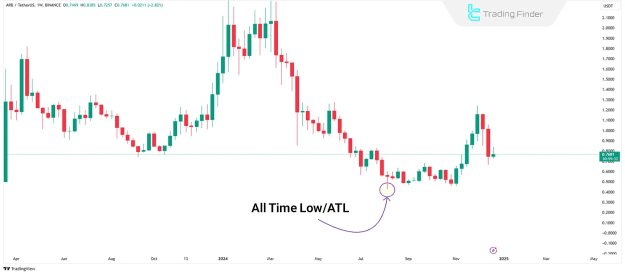
The ARB/USDT cryptocurrency chart demonstrates an ATL, showing the token’s lowest-ever trading price.
Conclusion
Both ATH and ATL serve as crucial reference points in financial markets:
- All-Time High (ATH) – Represents peak valuation and acts as a resistance level, often driven by market optimism.
- All-Time Low (ATL) – Marks the lowest price level, offering potential buying opportunities and serving as a key support zone.
Understanding these concepts helps traders and investors make informed decisions based on historical price behavior.
Attached Image(s) (click to enlarge)
Attached File(s)
