

How Is a Fair Value Gap (FVG) Formed?
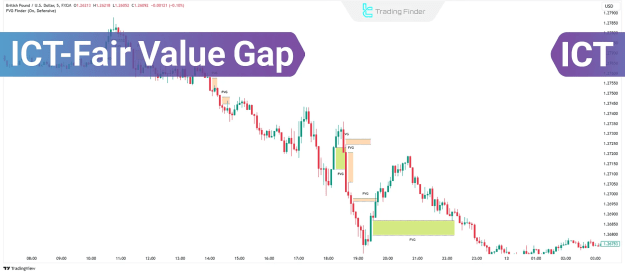
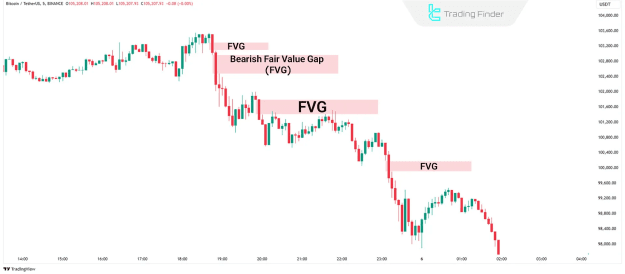
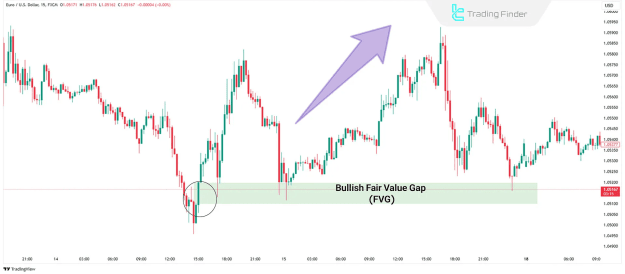
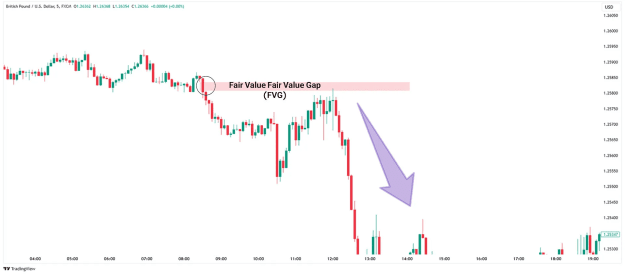
A Fair Value Gap forms within a three-candle price pattern when the price fails to retrace the range between the first and third candles. This skipped zone reflects a lack of equilibrium between buyers and sellers—commonly referred to as "unfilled orders" or "inefficiencies."
- The second candle typically has a large body, showing strong momentum.
- The gap between the first and third candles highlights market imbalance.
- Price often returns to this zone later to “fill the gap,” restoring equilibrium.
Types of Fair Value Gaps (FVG)
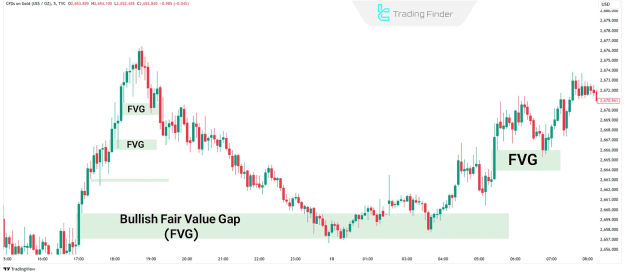
Bullish Fair Value Gap (FVG)
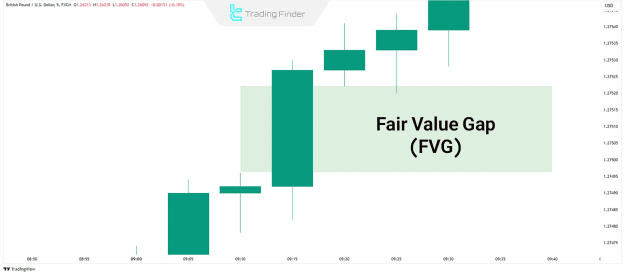
A bullish FVG emerges during an uptrend when:
- The second candle has a dominant bullish body.
- A visible price gap exists between the high of the first candle and the low of the third candle.
Key Characteristics:
- Indicates strong buying pressure.
- Often appears in discount zones, below the market’s fair value.
- Price tends to revisit this area before resuming its upward trend.
Bearish Fair Value Gap (FVG)
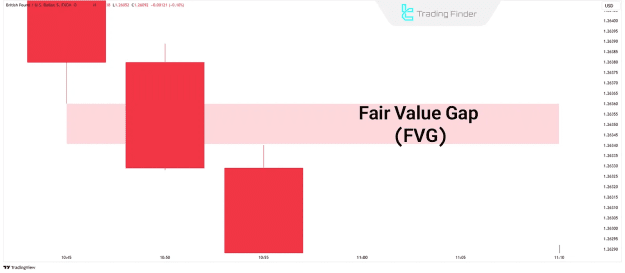
A bearish FVG is observed in a downtrend when:
- The second candle has a strong bearish body.
- A gap exists between the low of the first candle and the high of the third candle.
Key Characteristics:
- Reflects intense selling pressure.
- Often found in premium zones, above the market’s fair value.
- Used to anticipate potential short setups when the price returns to the gap.
How Does a Fair Value Gap (FVG) Work?
The Fair Value Gap operates on the principle of price rebalancing. These gaps act like magnets, pulling the price back to the area of imbalance before resuming the original trend.
- Based on ICT (Inner Circle Trader) methodology.
- Offers strategic points for trade entries and exits.
- Aligns with institutional trading logic, revealing order flow inefficiencies.
ICT Strategy: How to Trade Fair Value Gaps (FVG)
Step 1: Identify the Trend
- Uptrend: Higher highs and higher lows.
- Downtrend: Lower highs and lower lows.
Step 2: Define Premium and Discount Zones
- In a downtrend, target FVGs in premium zones for short positions.
- In an uptrend, target FVGs in discount zones for long positions.
Step 3: Locate the Dominant Candle
- Large-bodied candle with minimal wicks.
- In an uptrend: A strong bullish candle.
- In a downtrend: A strong bearish candle.
Step 4: Confirm the Gap Structure
- The bodies of the first and third candles should not overlap the second candle.
- This confirms a true Fair Value Gap.
Step 5: Mark the FVG Zone
- Uptrend: Gap = High of the first candle to low of the third candle.
- Downtrend: Gap = Low of the first candle to high of the third candle.
Step 6: Enter the Trade
Bullish Setup:
- Wait for price to return to the discount FVG.
- Confirm entry with price rejection or market structure shift.
- Enter a long trade targeting higher highs.
Bearish Setup:
- Wait for price to revisit the premium FVG.
- Look for bearish confirmation.
- Enter a short trade aiming for lower lows.
Best Timeframes for FVG Trading
- Higher Timeframes (4H, Daily): To establish market structure and directional bias.
- Lower Timeframes (5-min, 15-min): To refine entries and improve precision.
Combining these timeframes ensures alignment with the broader market while executing with accuracy.
Most Effective Markets for FVG Strategy
Originally developed for indices such as the Nasdaq and S&P 500, the FVG strategy has proven equally effective in the forex market. Today, it is widely applied across:
- Forex pairs
- Commodities
- Cryptocurrencies
- Stock indices
Its flexibility and precision make it a vital component of modern price action trading.
Conclusion
Fair Value Gaps (FVGs) are a powerful tool in forex education, enabling traders to recognize and act upon institutional order flow imbalances. By learning how to identify, analyze, and trade FVGs within the ICT framework, traders gain access to high-probability setups grounded in market logic.
Consistent application of FVG analysis can improve timing, accuracy, and ultimately, trading performance across all market conditions.