
-
US inflation hits 3-year high in May as Middle East conflict raises prices of gas, energy products

US consumer inflation increased at its fastest pace in three years in May as the Middle East conflict raised the price of gasoline and other energy products, giving more ammunition for the Federal Reserve to keep interest rates unchanged into 2027. The Consumer Price Index increased 4.2 per cent in the 12 months through May, the largest gain since April 2023, the Labor Department's Bureau of Labor Statistics said on Wednesday (Jun 10). The CPI advanced 3.8 per cent year-on-year in April. Prices increased 0.5 per cent on a monthly basis after climbing 0.6 per cent in April. Economists polled by Reuters had forecast ... (full story)
- Comments / Top
- Subscribe
-
- Older Stories
 From cnbc.com|6 hr ago|14 comments
U.S. President Donald Trump said Wednesday that Iran has taken too long to negotiate a peace deal and will now have to “pay the price.” “Iran’s Military is a complete and total ...
 From bls.gov|6 hr ago|98 comments
The Consumer Price Index for All Urban Consumers (CPI-U) increased 0.5 percent on a seasonally adjusted basis in May, after rising 0.6 percent in April, the U.S. Bureau of Labor Statistics reported today. Over the last 12 months, the all items index increased 4.2 percent before seasonal adjustment. The index for energy rose 3.9 percent in May, after rising 3.8 percent in April and 10.9 percent in March. The energy index accounted for over sixty percent of the monthly all items increase. The index for shelter also increased in May, rising 0.3 percent. The food index increased 0.2 percent over the month as the food at home index rose 0.1 percent and the food away from home index increased 0.3 percent. The index for all items less food and energy rose 0.2 percent in May. Indexes that increased over the month include communication, airline fares, medical care, personal care, and recreation. Conversely, the indexes for motor vehicle insurance, household furnishings and operations, and new vehicles were among the major indexes that decreased in May. The all items index rose 4.2 percent for the 12 months ending May, after rising 3.8 percent for the 12 months ending April. The all items less food and energy index rose 2.9 percent over the year, following a 2.8-percent increase over
 Consumer prices rose 4.2% annually in May, highest in three years Inflation accelerated in May as rising energy costs contributed to pain for consumers, though underlying pressures were less intense. The consumer price index, a broad gauge of goods and services costs across the U.S. economy, rose at a seasonally adjusted 0.5% for the month, putting the annual inflation rate at 4.2%, the Bureau of Labor Statistics reported Wednesday. Both numbers were in line with the Dow Jones consensus. Inflation climbed above 4% for the first time in three years, though the increase met expectations amid concerns over how much the surge in energy prices would impact the economy. The level was the highest since April 2023 and above the 3.8% level from April. However, stripping out volatile food and energy prices, the so-called core CPI accelerated 0.2% for the month and 2.9% from a year ago. While the annual rate was in line with the forecast, the monthly gain was below the 0.3% estimate. The core CPI rose 0.21% in May, very close to where forecasts had it, and this pushed the 12-month measure up to 2.9%. This is the first time since Dec. 2022 where the 12-month core CPI reading was higher than the year-earlier reading. pic.twitter.com/EGPwk1NfKZ Americans' Real Wages Are Shrinking As CPI Tops 4% For First Time In 3 Years With expectations of a 4%-plus print, all eyes are on this morning's CPI report as we move past April's shutdown-related distortions. Headline CPI rose 0.5% MoM (as expected) in May, lifting prices 4.2% YoY (also as expected). The first 4%-plus print since April 2023... chart |Core Goods prices deflated in May while Energy remains a notable contributor... chart This is the first deflationary print for goods prices in a year... • Household furnishings and Supplies -0.042% • Transportation Commodities less motor oil: -0.49% • Medical Care Commodities -0.54% chart Core CPI rose less than expected (+0.2% MoM vs +0.3% MoM exp), lifting prices by 2.9% YoY (as expected), up from April's 2.8% YoY and the highest since Sept 2025...
 From @finsquawk_|6 hr ago|22 comments
US-IRAN TALKS STILL CONTINUE: FOX NEWS TRUMP TO KEEP EXERTING MAXIMUM PRESSURE TO GET A DEAL DONE: FOX
-
- Newer Stories
 From bankofcanada.ca|5 hr ago|10 comments
The Bank of Canada today held its target for the overnight rate at 2.25%, with the Bank Rate at 2.5% and the deposit rate at 2.20%. The conflict in the Middle East is now in its fourth month. The resulting increases in energy prices and disruptions in global supply chains are weighing on global economic growth and pushing up inflation. At the same time, the US administration continues to propose new tariffs and trade policy uncertainty remains elevated. In the United States, economic growth remains solid, supported by consumption and AI‑related investment. In the euro area, growth is subdued, with higher energy prices weighing on activity. China’s economic growth continues to be supported by strong exports. Canadian financial conditions have loosened since the April Monetary Policy Report. Global equity markets have been buoyant and bond yields remain volatile. The Canadian dollar has weakened against the US dollar and other currencies. In Canada, GDP edged down by 0.1% in the first quarter, weaker than expected at the time of the April MPR. Consumer spending grew 1.4% but government spending unexpectedly declined. Housing activity also declined and business investment remained weak. Exports fell while imports rose strongly as inventories were rebuilt. Employment was up in May, but looking through monthly volatility, employment in Canada is little changed since the start of the year. The unemployment rate continues to fluctuate in the 6 ½%-7% range with the most recent reading at 6.6% in May. Recent data suggests that growth will resume in the second quarter but, even with some rebound, the economy is expected to remain in excess supply. As expected, CPI inflation rose in GOVERNING COUNCIL IS CONTINUING TO LOOK THROUGH MIDDLE EAST WAR'S NEAR-TERM IMPACT ON HEADLINE INFLATION - BOC || THERE HAS BEEN LIMITED EVIDENCE SO FAR OF A BROAD-BASED PASS-THROUGH OF HIGHER ENERGY PRICES TO OTHER CONSUMER PRICES - BOC ECONOMIC ACTIVITY IN CANADA HAS BEEN WEAK AND UNCERTAINTY ABOUT U.S. TRADE POLICY PERSISTS - BOC || GOVERNING COUNCIL WILL NOT LET HIGHER ENERGY PRICES BECOME PERSISTENT INFLATION - BOC || EVEN WITH SOME REBOUND, ECONOMY IS EXPECTED TO REMAIN IN EXCESS SUPPLY - BOC
 From bankofcanada.ca|5 hr ago
Good morning. I’m pleased to be here with Senior Deputy Governor Carolyn Rogers to discuss today’s monetary policy decision. Governing Council maintained the policy interest rate at 2.25%. Since our April decision, the economic impact of the ongoing conflict in the Middle East has increased. Higher energy prices and disruptions in global supply chains are weighing on global growth and pushing up inflation. At the same time, the US administration continues to propose new tariffs and trade policy uncertainty remains elevated. Against this backdrop, the Canadian economy has remained soft and inflation has increased. Monetary policy continues to be focused on ensuring higher energy prices do not turn into persistent inflation, while helping the economy adjust to headwinds. We are committed to keeping inflation low and stable over time. Let me expand on what we’re seeing since the April Monetary Policy Report and the monetary policy implications. The conflict in the Middle East is slowing economic activity in the Gulf region and in many oil-importing countries, and sending inflation higher worldwide. At the same time, AI-related investment is boosting growth in the United States and some Asian economies, and equity markets have been buoyant. In Canada, GDP edged down 0.1% in the first quarter, weaker than expected at the time of the April Report. Consumer spending grew by 1.4% but there was an unexpected pullback in government spending. Housing activity also declined and business investment remained weak. While the labour market strengthened in May and the unemployment rate fell to 6.6%, there has been a lot of volatility in the monthly job numbers. When you look through the bumpiness, employment in Canada is little cha BOC: There has been limited evidence so far of a broad-based pass-through of higher energy prices to other consumer prices. Bank of Canada monetary policy remains aimed at preventing higher energy costs from becoming lasting inflation: Governor Tiff Macklem For now, holding rates steady balances risks: Macklem Economic weakness and rising inflation create challenge for monetary policy: Macklem
 From youtube.com/bankofcanadaofficial|4 hr ago
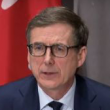
Governor Tiff Macklem discusses key issues involved in the Governing Council’s deliberations about the monetary policy decision. The Governor and Senior Deputy Governor then ...
- Story Stats
- Jun 10, 8:36am | 5 hr ago Posted byFundamental Analysis2,148
- Linked events:
- 6 traders viewing now

