
-
A Central Bank. And Bitcoin.

Good morning. Today, I want to talk about a strange combination: A central bank. And Bitcoin. Most people do not put these two things together. I do. In monetary policy, a central bank must be conservative. But it must think ahead. When I became Governor of the Czech National Bank in mid-2022, inflation in my country was close to 20 percent. Twenty percent. It was a serious moment. When I took office, I said we would bring inflation back to 2 percent within two years. And we did. Not with magic. With discipline. I said this clearly: Even before COVID, money was too cheap for too long. For too long, the system ... (full story)
- Comments / Top
- Subscribe
-
- Older Stories
 From @financialjuice|Apr 29, 2026|38 comments
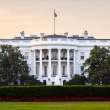
White House Official: Trump and oil companies discussed steps to continue the Iran blockade for months if needed.
 From cnbc.com|Apr 29, 2026|8 comments
In what could be Jerome Powell’s final meeting as Federal Reserve chair, he is expected to lead his fellow policymakers toward another cautious pause, with stubborn inflation and ...
 From census.gov|Apr 29, 2026
The U.S. Census Bureau and the U.S. Department of Housing and Urban Development jointly announced the following new residential construction statistics for March 2026: ...
-
- Newer Stories
 From bankofcanada.ca|Apr 29, 2026|12 comments
The Bank of Canada today held its target for the overnight rate at 2.25%, with the Bank Rate at 2.5% and the deposit rate at 2.20%. The evolving conflict in the Middle East is causing heightened volatility and US trade policy continues to reshape global trade patterns. Both are ongoing sources of uncertainty. The Bank’s April outlook assumes tariffs remain unchanged and the global benchmark price of oil declines to US$75 per barrel by mid 2027. The Iran war has led to sharply higher energy prices and transportation disruptions, diminishing growth prospects in oil-importing countries and boosting inflation worldwide. In the United States, growth is still expected to be solid over the projection horizon, boosted by AI-related investment and consumption growth. China’s economy is being supported by robust exports. In the euro area, higher prices for oil and natural gas will weigh on economic activity. Financial conditions have been volatile, reflecting daily developments in the Middle East and shifting market expectations for inflation and interest rates. Bond yields are modestly higher since January while equity markets, which weakened sharply at the outset of the war, have recovered. Since the start of the war, the US dollar has appreciated against most major currencies. The Canada-US exchange rate has been relatively stable. BOC FORECAST SEES OIL PRICES FALLING TO $75/BARREL BY MID-'27 || FEW SIGNS OIL SPIKE HAS FED THROUGH TO BROADER PRICES #OOTT
 BoC leaves interest rate steady at 2.25% The Bank of Canada (BoC) announced on Wednesday that it decided to leave its overnight rate unchanged at 2.25%, maintaining the Bank Rate at 2.5% and the deposit rate at 2.20%. "The Iran war has led to sharply higher energy prices and transportation disruptions, diminishing growth prospects in oil-importing countries and boosting inflation worldwide," the bank stated in the report. "The global economy is expected to grow by about 3% in 2026, 2027 and 2028. Projections for inflation over the next year are revised up because of the jump in energy prices." The central bank's statement added that its April forecast projects GDP growth of 1.2% in 2026, rising to 1.6% in 2027 and 1.7% in 2028 "as growth in exports and business investment resumes along a lower trajectory."
 From bankofcanada.ca|Apr 29, 2026|3 comments
Before the outbreak of the war in the Middle East, the Canadian economy was evolving as expected. Since the war began, oil prices have risen, pushing inflation up, and the outlook has become more uncertain. Economic growth in Canada has been broadly consistent with the outlook in the January Report. Consumer and government spending are supporting gross domestic product (GDP), while US tariffs and related trade uncertainty are weighing on exports and investment. Inflation had been slowing as expected before the oil price shock occurred. The war in the Middle East is already affecting the economy. The immediate impact has been higher gasoline prices, pushing up consumer price index inflation to 2.4% in March. The outlook is highly conditional on key assumptions, including that tariffs remain unchanged and that oil prices gradually decline from US$90 in the second quarter of 2026 to US$75 per barrel by mid‑2027 (see the Tariff and other assumptions section). BOC: NOMINAL NEUTRAL INTEREST RATE IS ESTIMATED TO BE IN THE RANGE OF 2.25% TO 3.25%, UNCHANGED FROM JANUARY. BOC'S GOV. MACKLEM: IMPACT OF THE MIDDLE EAST WAR ON OVERALL CANADIAN GROWTH IS EXPECTED TO BE SMALL. BC: MOST MEASURES OF ANNUAL WAGE GROWTH ARE BETWEEN 3% AND 3.5%. ...
 From bankofcanada.ca|Apr 29, 2026|3 comments
Good morning. I’m pleased to be here with Senior Deputy Governor Carolyn Rogers to discuss our quarterly Monetary Policy Report and today’s decision. The Governing Council maintained the policy interest rate at 2.25%. We’ve held the policy rate at this level since October. We have three key messages. First, Canada is being buffeted by global events and geopolitical uncertainties, but our economy is growing and is expected to continue to grow. Second, after more than a year with inflation close to the 2% target, higher global energy prices are pushing inflation up. The surge in gasoline prices combined with still-elevated food price inflation is squeezing more Canadians. Third, monetary policy is focused on ensuring the jump in energy prices does not turn into persistent inflation, while helping the economy adjust to global headwinds. We are committed to keeping inflation low and stable over time. Let me expand on the economic outlook, the risks and the implications for BOC: MAY HIKE IF OIL PRICES STAY HIGH, CAUSE ONGOING INFLATION #OOTT BoC's Gov. Macklem: There may still be a need to adjust the policy rate depending on how risks evolve. BoC's Gov. Macklem: If higher energy prices start leading to ongoing generalized inflation, we may need consecutive rises in policy rate. BoC's Gov. Macklem: If the US imposes… BOC'S GOV. MACKLEM: MONETARY POLICY WILL DEPEND IMPORTANTLY ON USMCA TRADE TALKS, MIDDLE EAST WAR, AND IMPACTS OF US TARIFFS AND ENERGY PRICES. ... BOC'S GOV. MACKLEM: UNCERTAINTY IS UNUSUALLY ELEVATED; MONETARY POLICY MAY NEED TO BE NIMBLE. ...

