



Stop hunting is a market phenomenon where institutional traders and market makers deliberately push prices to trigger retail traders' stop-loss orders. This strategy allows large players to exploit liquidity and manipulate price movements for their benefit. Understanding this tactic is a crucial aspect of Forex education, as it helps traders develop strategies to avoid being caught in these liquidity-driven moves and improve their overall market awareness.
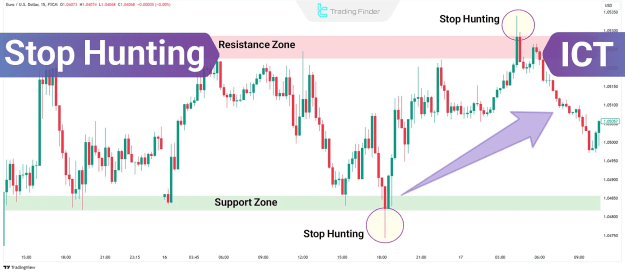
A key characteristic of stop hunting is when price briefly spikes beyond a key level (creating a wick or shadow) before sharply reversing toward the intended profit target. This tactic is also referred to as "stop-loss hunting."
Why Do Market Makers Engage in Stop Hunting?
Institutional traders execute stop hunting for several strategic reasons:
1. Liquidity Extraction
Stop-loss zones are high-order-density areas. By triggering these orders, smart money absorbs liquidity, facilitating smoother execution of large trades.
2. Reducing Spread Costs
Market makers use stop hunting to generate sufficient market liquidity, allowing them to enter or exit positions with minimal slippage and tighter spreads.
3. Inducing Retail Trader Panic
Sudden price movements force retail traders into emotional decision-making, increasing market volatility—a scenario that benefits institutional players.
How Does Stop Hunting Work?
The stop-hunting process follows a structured approach:
A key characteristic of stop hunting is when price briefly spikes beyond a key level (creating a wick or shadow) before sharply reversing toward the intended profit target. This tactic is also referred to as "stop-loss hunting."
Why Do Market Makers Engage in Stop Hunting?
Institutional traders execute stop hunting for several strategic reasons:
1. Liquidity Extraction
Stop-loss zones are high-order-density areas. By triggering these orders, smart money absorbs liquidity, facilitating smoother execution of large trades.
2. Reducing Spread Costs
Market makers use stop hunting to generate sufficient market liquidity, allowing them to enter or exit positions with minimal slippage and tighter spreads.
3. Inducing Retail Trader Panic
Sudden price movements force retail traders into emotional decision-making, increasing market volatility—a scenario that benefits institutional players.
How Does Stop Hunting Work?
The stop-hunting process follows a structured approach:
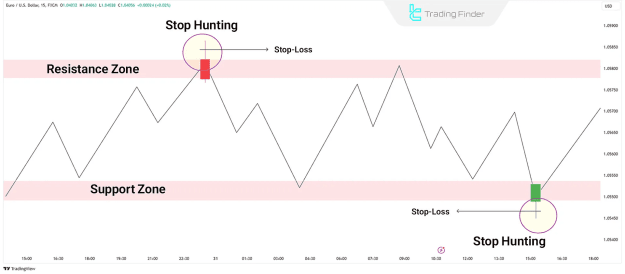
- Identifying Stop-Loss Clusters – Market makers locate areas where retail traders commonly place stop-loss orders, such as below support, above resistance, or near psychological price levels (e.g., round numbers).
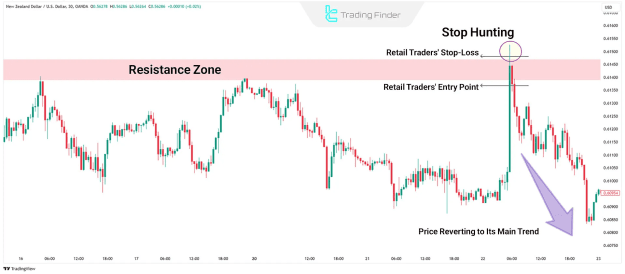
- Triggering Stop-Losses – Large sell/buy orders push price into these zones, activating a cascade of stop-loss executions.
- Price Reversal – Once liquidity is absorbed, price often reverses direction, leaving retail traders at a disadvantage.
How to Identify Stop Hunting on Charts
Recognizing stop-hunting patterns can help traders avoid false breakouts and capitalize on reversals. Key signs include:
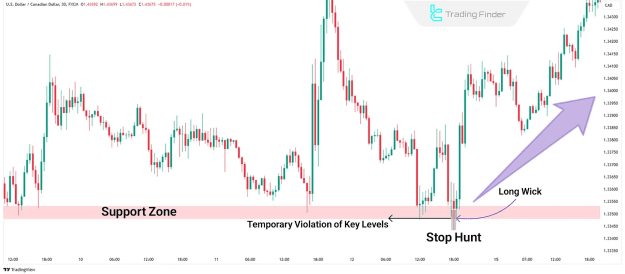
- Long Wicks/Shadows – Price briefly spikes beyond a level before sharply reversing.
- False Breakouts – Temporary breaches of support/resistance that quickly invalidate.
- Abrupt Volatility Spikes – Rapid, exaggerated price moves followed by immediate pullbacks.
Conclusion
Stop hunting is a prevalent tactic used by institutional traders to manipulate market liquidity and exploit retail traders. By understanding its mechanics and identifying key signs, traders can better navigate these manipulative moves and refine their risk management strategies.
Utilizing technical analysis tools and maintaining disciplined trading psychology are essential in mitigating the risks associated with stop hunting.
Attached Image(s) (click to enlarge)
Attached File(s)
