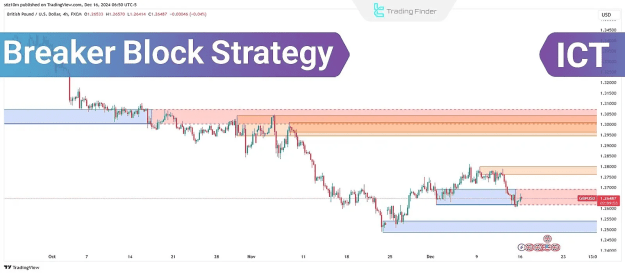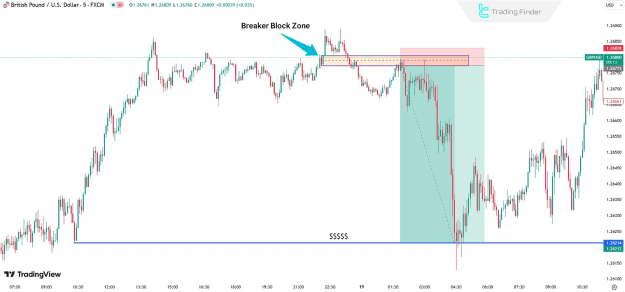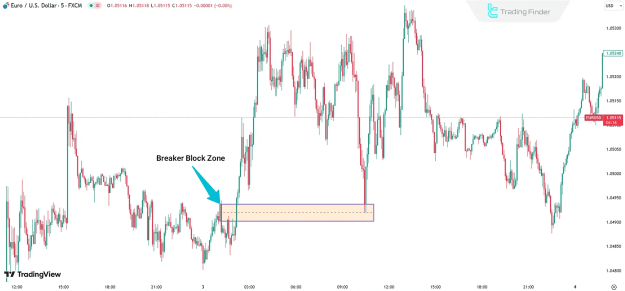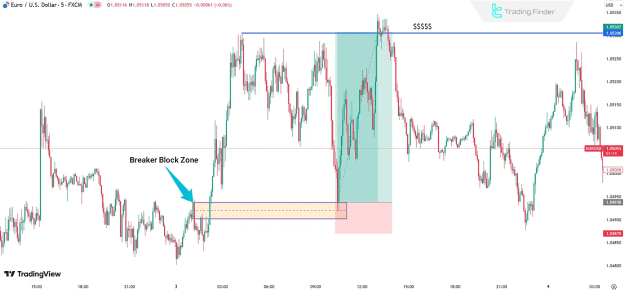


Breaker Block and Order Block Indicator:
Breaker Block and Order Block Indicator MT4
Breaker Block and Order Block Indicator MT5
What is a Breaker Block?
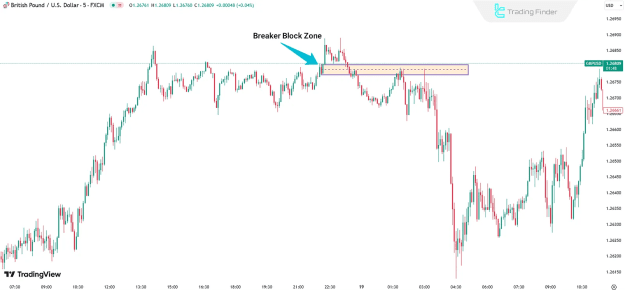
A Breaker Block forms when price breaks an existing Order Block, converting it into a new support or resistance zone for potential retracements. This shift typically follows:
- A liquidity sweep (price absorbing liquidity beyond key levels)
- A confirmed Market Structure Shift (MSS) (trend reversal signal)
Types of Breaker Blocks
Breaker Blocks are classified into two categories:
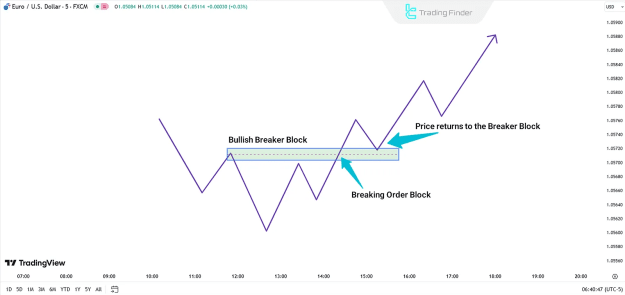
1. Bullish Breaker Block
- A bearish Order Block (OB-) is broken by an upward price movement.
- The broken OB transitions into a support zone, aiding further bullish momentum.
Schematic of a Bullish Breaker Block
(Insert visual representation of a Bullish BB formation)
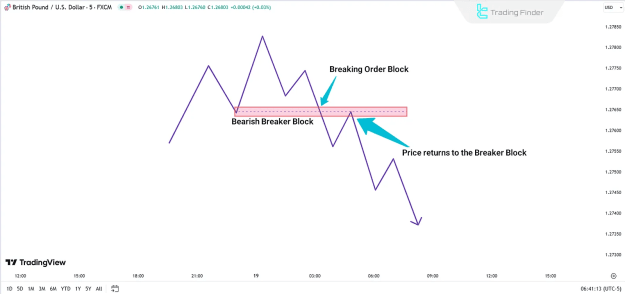
2. Bearish Breaker Block
- A bullish Order Block (OB+) is broken by a downward price movement.
- The broken OB transitions into a resistance zone, reinforcing further bearish continuation.
Schematic of a Bearish Breaker Block
(Insert visual representation of a Bearish BB formation)
Key Principles for Identifying Breaker Blocks
To validate a Breaker Block, traders must assess:
- Liquidity Sweep – Price must first capture liquidity beyond a key zone before reversing.
- Order Block Break – Price must close beyond the OB’s boundary (above for bearish OB, below for bullish OB).
- Market Structure Shift (MSS) – A confirmed trend reversal must occur (e.g., higher highs/lows in bullish MSS or lower highs/lows in bearish MSS).
Step-by-Step Trading Strategy Using Breaker Blocks
Step 1: Determine the Market’s Overall Trend
- Use higher timeframes (D1, H4) to confirm the dominant trend.
- Align BB trades with the prevailing market direction for higher accuracy.
Step 2: Wait for a Liquidity Sweep
- Price should target and absorb liquidity (stop hunts) before reversing.
- Look for wick formations or sudden spikes indicating liquidity absorption.
Step 3: Identify the Order Block Break
- A Bullish BB forms when price closes above a bearish OB.
- A Bearish BB forms when price closes below a bullish OB.
Step 4: Enter the Trade
- Bullish BB Entry: Wait for price to retest the BB as support with MSS/CHoCH confirmation.
- Bearish BB Entry: Wait for price to retest the BB as resistance with MSS/CHoCH confirmation.
Trade Management (Bullet Points)
Bullish Breaker Block (BB)
- Entry: Price retests BB as support with confirmation (MSS/CHoCH).
- Stop Loss (SL): Placed below the BB zone.
- Take Profit (TP): Target the next liquidity pool (opposite-side liquidity).
Bearish Breaker Block (BB)
- Entry: Price retests BB as resistance with confirmation (MSS/CHoCH).
- Stop Loss (SL): Placed above the BB zone.
- Take Profit (TP): Target the next liquidity pool (opposite-side liquidity).
Best Timeframes & Markets for Breaker Blocks
Recommended Timeframes
- Higher TFs (D1, H4) for trend analysis.
- Lower TFs (M5, M15) for precise entries.
Suitable Markets
- Forex (Major & Minor Pairs)
- Cryptocurrencies (BTC, ETH, etc.)
- Futures & Indices
Advantages & Limitations of the BB Strategy
Advantages
- High-Probability Zones – BBs highlight key liquidity areas.
- Multi-Market Applicability – Works across Forex, Crypto, and Futures.
- Enhanced Precision – Combined with MSS, improves trade accuracy.
Limitations
- Requires Experience – Proper identification demands skill.
- False Signals in Volatility – Choppy markets may produce invalid BBs.
Breaker Block vs. Order Block: Key Differences
Order Block (OB)
- Function: Acts as a reversal or continuation zone
- Confirmation: Requires price reaction at the OB level
Breaker Block (BB)
- Function: Forms after an OB break, flipping its role (support → resistance or resistance → support)
- Confirmation: Needs OB break + Market Structure Shift (MSS) confirmation
Conclusion
The Breaker Block strategy is a powerful ICT-based approach for identifying high-probability reversal zones. By mastering liquidity sweeps, OB breaks, and MSS confirmations, traders can enhance their precision in entry and exit points.
This method is highly effective across multiple markets and timeframes, making it a valuable tool for advanced price action traders.