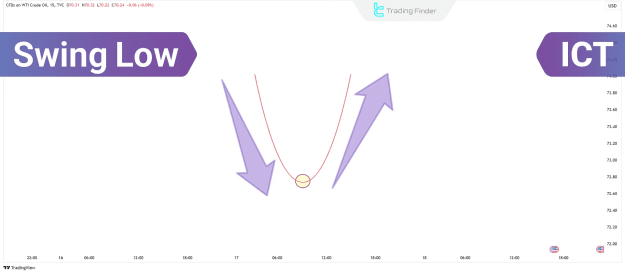


The opposite of a Swing Low is a Swing High, which forms when the price reaches a new peak before reversing downward. Recognizing these patterns is crucial for forex traders seeking to identify trend reversals and continuation signals in the currency markets.
The Structure of a Swing Low
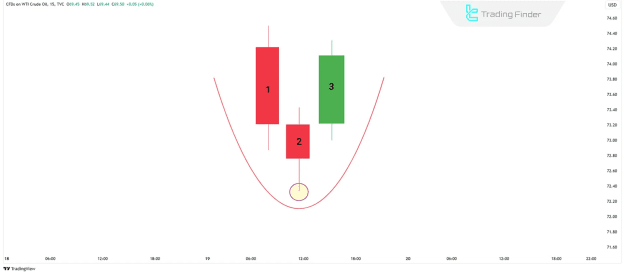
A Swing Low consists of three key candlesticks:
- First Candle – Has a higher low than the middle candle.
- Second (Middle) Candle – Forms the lowest point of the pattern.
- Third Candle – Has a higher low than the middle candle, confirming the reversal.
This structure resembles a "V" shape, where the middle candle marks the lowest point before the price begins its upward movement.
How to Identify a Swing Low in Forex?
To accurately identify a Swing Low in forex trading, follow these steps:
- Locate the lowest low – Find the candlestick with the lowest price point on the chart.
- Check the left candle – Ensure its low is higher than the middle candle.
- Check the right candle – Confirm that its low is also higher than the middle candle.
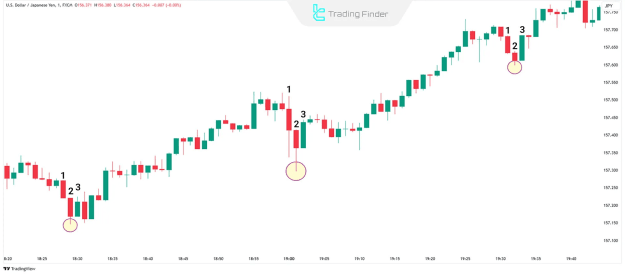
If both adjacent candles have higher lows than the middle candle, it is a valid ICT Swing Low, signaling a potential bullish reversal in the forex market.
How to Trade Forex Using the Swing Low Strategy
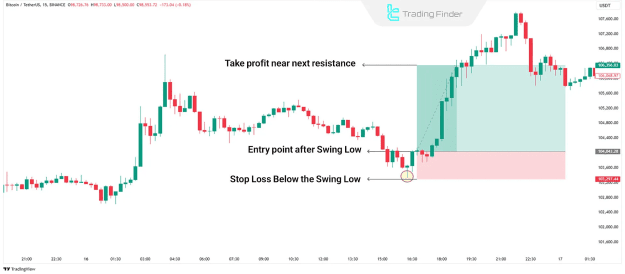
To effectively trade forex using the ICT Swing Low strategy, follow these steps:
1. Identify the Swing Low on the Forex Chart
Look for a point where the price reaches a low and starts moving upward, typically near key support zones in major currency pairs like EUR/USD or GBP/JPY.
2. Confirm the Uptrend and Resistance Breakout
In an uptrend, a breakout above resistance after a Swing Low formation generates a strong buy signal for forex traders.
3. Set a Stop Loss
Place the stop loss just below the Swing Low to protect against false breakouts, a critical risk management technique in forex trading.
4. Set a Take Profit Target
Aim for the next resistance level to secure profits from the expected upward movement in the currency pair.
Key Applications of Swing Low in Forex Trading
The Swing Low pattern is crucial for analyzing trend strength and potential reversals in forex markets. Key applications include:
- Higher Swing Lows indicate a strong bullish trend, suggesting continuation opportunities.
- Lower Swing Lows suggest a bearish trend, signaling potential downtrend continuation.
- The distance between Swing Lows helps assess momentum shifts in major forex pairs.
Additionally, Swing Lows often act as critical support levels, where institutional traders may enter long positions.
Where Do ICT Swing Lows Form in Forex?
Swing Lows typically appear in major support zones, where buying pressure prevents further declines:
- In a downtrend, they may lead to a short-term retracement before further downside.
- In an uptrend, they confirm bullish continuation toward higher price levels.
Understanding these formations helps forex traders align with smart money concepts and high-probability trade setups.
Conclusion
The Swing Low is a fundamental concept in forex technical analysis and ICT trading, helping traders identify optimal entry and exit points. By mastering this pattern, forex traders can improve their ability to spot trend reversals and continuations, enhancing their overall trading performance.
For traders pursuing forex education, recognizing and applying Swing Lows is essential for developing a structured trading approach in the dynamic currency markets.