

Prop Firm DrawDown Protector : Prop Firm Capital Protection Expert MT4 | Forex Money Management: Forex Trade Management Expert MT4 |ICT Concepts Indicator MT4 | Smart Money Concepts Expert MT4| Smart Money Trap Scanner | Get a free Expert Advisor license via Telegram and WhatsApp
Types of Trading Styles
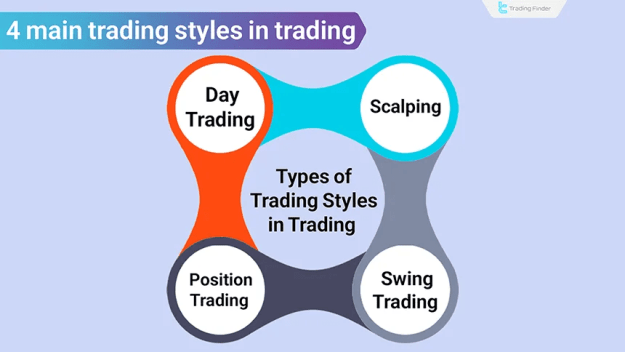
The four main trading styles in financial markets differ across several dimensions, including trade duration, required capital, analytical approach, and frequency.
Types of Trading Styles in Forex:
- Scalping
- Day Trading
- Swing Trading
- Position Trading
1. Scalping Trades
This style involves executing trades at very high speed, with open durations lasting only a few seconds or, at most, a few minutes. Scalping demands:
- High precision and real-time risk control.
- Uninterrupted order execution to minimize the effect of price slippage and sudden volatility.
Scalpers target small market fluctuations (micro-movements), analyzing market structure, liquidity depth, and volume behavior on extremely low timeframes to pinpoint high-probability entries and exits.
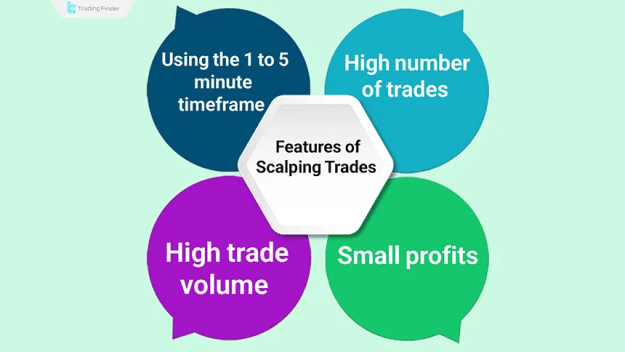
Features of Scalping Trades
- High frequency and number of trades.
- Small profits per trade, but high overall trading volume.
- Suitable for individuals with high skill and experience.
Advantages and Disadvantages of Scalping
- Advantages: Every small movement becomes an opportunity, not dependent on market direction, fast outcome, no overnight holding risk, and reduced risk per trade.
- Disadvantages: Requires high experience, incurs high costs (commission/spread) due to frequency, demands strong emotional control, requires continuous chart monitoring, and has a high impact from spreads.
2. Day Trading
In Day Trading, positions remain open from a few minutes up to several hours, but are always closed by the end of the trading day, avoiding overnight holding risk. Day traders:
- Rely heavily on technical analysis to identify entry, take-profit, and stop-loss levels by examining price patterns.
- Evaluate volume behavior, trend strength, and liquidity zones to align decisions with the intraday market structure.
- Manage risk based on the day's volatility to minimize the impact of unexpected events.
Features of Day Trading
- Trading in the direction of the daily trend.
- Trade duration between a few minutes and several hours.
- Primary reliance on technical analysis and multi-timeframe analysis.
- Closing all trades by the end of the trading day.
Advantages and Disadvantages of Day Trading
- Advantages: Trading with the primary daily trend, reduced trading costs and spread impact, and no overnight holding risk.
- Disadvantages: High risk of misidentifying the daily trend, requires high skill in technical analysis and correct understanding of economic data, and requires continuous chart monitoring.
3. Swing Trading
Swing trades have a longer duration, typically lasting from a few days to several weeks. This style often targets corrective moves within major and long-term trends.
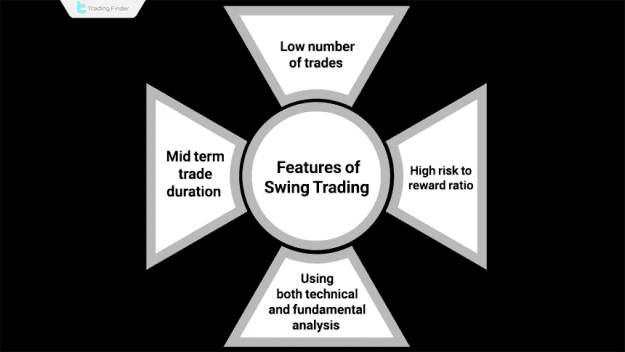
- Both technical and fundamental analysis are used almost equally.
- Selecting an accurate entry zone, along with stop-loss and take-profit placement based on the overall market structure, is extremely important.
- Analytical consistency plays a larger role due to the extended trade duration.
Features of Swing Trading
- Low trade frequency but high risk-to-reward ratio.
- Duration ranges from several days to several weeks.
Advantages and Disadvantages of Swing Trading
- Advantages: No need for daily chart monitoring, high risk-to-reward ratio, reduced trade risk, and saves time.
- Disadvantages: Long trade duration, risk of holding trades over holidays, cost of holding trades (swaps/financing fees), and requires strong skill in both technical and fundamental analysis.
4. Position Trading
This style targets long-term trends (months or years) and relies primarily on the fundamental analysis of different assets.
- Long-term trends are identified through analysis of economic news, financial reports, and macro market dynamics.
- Technical analysis is mainly used for identifying precise entry points.
- Traders ignore short-term market noise, focusing on the stability of fundamental drivers.
Features of Position Trading
- Long trade duration (weeks to years).
- Targeting the primary long-term trend.
- High risk-to-reward ratio.
- Strong dependence on fundamental analysis.
Advantages and Disadvantages of Position Trading
- Advantages: Saves time, high risk-to-reward ratio, minimal short-term price-noise risk, and minimal impact of spread.
- Disadvantages: Requires large capital, requires high patience to realize results, high cost of holding long-term positions, and requires deep understanding of fundamental analysis.
Trading Styles Based on Type of Analysis
In addition to time-based categories, trading style can be defined by the primary analysis method employed:
News Trading
- Style: Entries and exits are executed based on the timing of important economic news releases.
- Characteristic: The intense volatility creates short-term, high-risk, high-reward opportunities. Requires timing skill and rapid decision-making.
- Advantages: Opportunity for fast profit, ability to trade in low-volatility markets, no need for long holding.
- Disadvantages: High risk of slippage, sudden market shocks, unpredictable volatility, requires extremely fast decision-making.
Price Action Styles
- Style: Decisions are made solely on price behavior, market structure, and movement patterns, without reliance on complex indicators.
- Focus: Candlesticks, liquidity, and shifts in supply and demand in key zones.
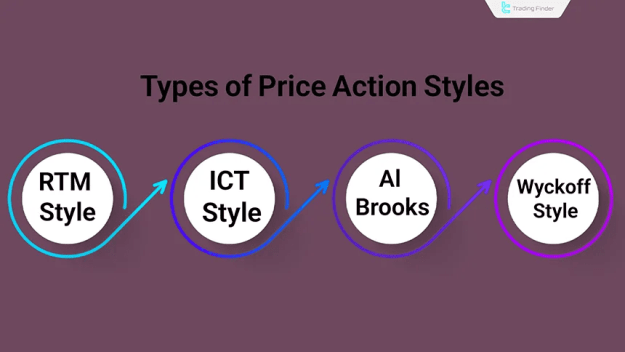
Types of Price Action Styles
- RTM Trading Style: Focuses on order blocks, decision zones, Fair Value Gaps (FL), and fake breakouts for precise entries.
- ICT Trading Style: Focuses on liquidity, Kill Zones, order blocks, IPDA models, and multi-timeframe analysis.
- Al Brooks Price Action: Detailed candlestick interpretation, micro-trend analysis, and evaluation of buying/selling pressure.
- Wyckoff Method: Study of market cycles, including accumulation, distribution, supply tests, and structural breaks.
Advantages and Challenges of Price Action Styles
- Advantages: No dependence on indicators, direct analysis of price, ability to identify precise entries, suitable for all timeframes/styles.
- Disadvantages: Requires extensive experience to understand market structure, possibility of misinterpreting price patterns, requires strong focus and continuous analysis time, strong dependence on market psychology.
Comparison of Trading Styles Based on Timeframe
Here is the breakdown of the different trading styles based on their typical timeframes and trade holding durations:
- Scalping
- Suitable Timeframe: 1 minute (1m) – 5 minutes (5m)
- Trade Holding Duration: A few seconds to a few minutes
- Day Trading
- Suitable Timeframe: 15 minutes (15m) – 1 hour (1h)
- Trade Holding Duration: A few minutes to a few hours
- Swing Trading
- Suitable Timeframe: 4 hours (4h) – Daily
- Trade Holding Duration: A few days to a few weeks
- Position Trading
- Suitable Timeframe: Daily – Weekly
- Trade Holding Duration: A few weeks to a few months
Guide to Choosing a Trading Style
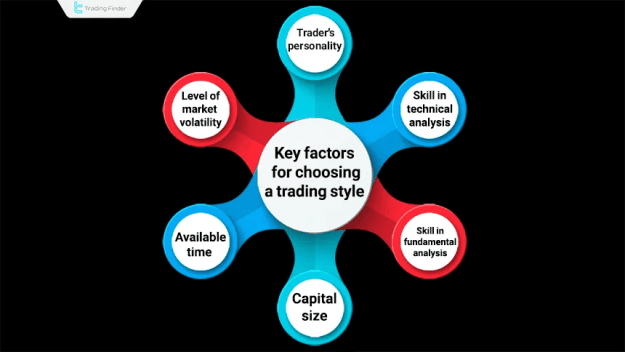
Choosing the correct trading style must involve evaluating several interdependent factors:
Main Factors for Choosing a Trading Style:
- Trader Personality and Risk Tolerance: Must align with the style's required speed, patience, and stress management capacity.
- Capital Size: Position trading requires larger capital; scalping/day trading are suitable for smaller accounts due to tighter stops.
- Skill Level and Available Time: Styles like scalping require continuous monitoring and high skill; swing/position trading are suitable for limited time.
Risk Management Tips in Different Trading Styles
- Scalping: Use small stop-losses, avoid holding trades, monitor spread carefully.
- Day Trading: Trade with the daily trend, use fixed stop-losses, avoid low-liquidity hours.
- Swing Trading: Adjust stop-loss based on mid-term volatility, evaluate structural key zones.
- Position Trading: Calculate long-term holding costs, use deeper stop-losses, size positions according to capital.
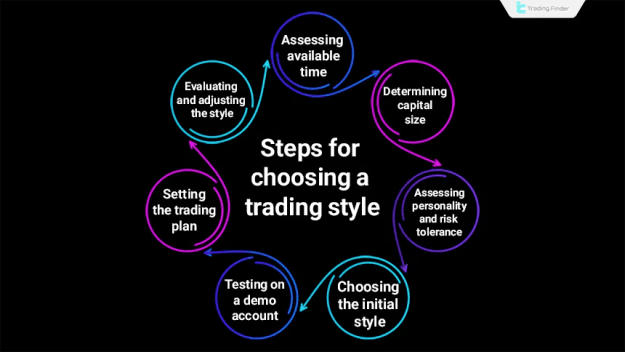
Roadmap for Choosing a Trading Style
- Evaluate personal personality, risk tolerance, and available time.
- Assess capital size and required holding costs.
- Test compatibility with various trading styles in a demo environment.
- Select the best trading style that aligns with mindset and finances.
Price Action Trade Management Expert Box
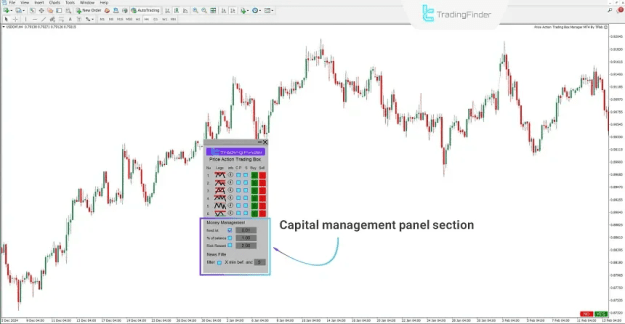
The Price Action Trade Management Expert Box is a semi-automated tool designed to help traders using the Price Action style manage entry and exit zones systematically on MT4/MT5.
- Functionality: Displays recognized price-action patterns (e.g., Double Top, Head and Shoulders) in a structured panel. The trader selects a pattern and manually aligns the corresponding trading box with the market structure.
- Automation: When the price re-enters the defined zone, the expert evaluates conditions (e.g., pattern checkpoints). Upon confirmation, it automatically opens a buy or sell position according to the trader’s settings.
- Key Features: Includes modules for Money Management (Fixed Lot, Percentage of Balance, Risk Reward settings), confirmation systems, and a News Filter to prevent entries during major news events.
Conclusion
Selecting a trading style is effective only when the trader possesses a comprehensive understanding of their personal conditions, analytical capability, and market limitations. Comparing the characteristics of each type of trading style, evaluating proper timeframes, understanding capital requirements, and reading market behavior all contribute to forming a more stable and structured trading approach. This alignment between the chosen style and personal traits is the foundation for consistent and long-term success.