

Prop Firm DrawDown Protector : Prop Firm Capital Protection Expert MT5 |Forex Money Management: Forex Trade Management Expert MT5 | ICT Concepts Indicator MT5 |Smart Money Concepts Expert MT5 | Smart Money Trap Scanner | Get a free Expert Advisor license via Telegram and WhatsApp
What Is a Trading Journal?
A trading journal is used to systematically record all executed trades along with their critical details.
Typical entries include:
- Trade date and instrument symbol
- Buy or sell direction
- Entry and exit price
- Position size and risk-to-reward ratio
- Resulting profit or loss
Advanced traders often expand their journals to track metrics like R-Multiple, MAE/MFE, or even psychological notes that help evaluate both technical and emotional aspects of performance.
Including parameters such as strategy type, trading session (Asia, Europe, or America), and holding duration creates a broader view of system efficiency.
Benefits and Limitations of Journaling
Benefits
- Identifies the strengths and weaknesses of strategies
- Promotes emotional stability and prevents impulsive trading
- Provides reliable data for statistical analysis (Win Rate, Expectancy, etc.)
- Encourages disciplined and structured trading behavior
- Allows performance evaluation under various market conditions
Limitations
- Requires time and attention for accurate record-keeping
- Inconsistent data can reduce analytical value
- Less practical for high-frequency or scalping traders
- Dependent on software or manual documentation tools
Practical Applications in Trading
The core functions of journaling go beyond simple record-keeping.
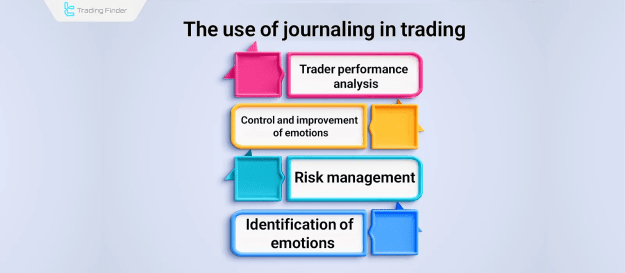
A trading journal serves several practical applications in trading and forex education, including:
- Performance Analysis: Assessing how strategies perform under different market conditions.
- Risk Management: Tracking exposure and maintaining consistency in risk-to-capital ratios.
- Emotional Regulation: Understanding how psychological factors such as fear, greed, or confidence influence outcomes.
- Error Detection: Identifying recurring mistakes and correcting decision-making patterns.
Regularly reviewing a trading journal transforms data into actionable insights that strengthen trading discipline and decision quality.
Identifying Mistakes Through Journaling
Mistake identification requires consistent analysis of journal entries. Traders should:
- Review the journal weekly or monthly
- Highlight losing trades and their common causes
- Note behavioral or emotional triggers influencing poor outcomes
- Track patterns and implement targeted improvements
Over time, this process minimizes repeated errors and enhances both strategy precision and psychological resilience.
Managing Emotions with a Trading Journal
Emotional management is a central element of journaling. Many losses in trading originate not from poor analysis but from emotional reactions such as greed, fear, or impatience.
Documenting emotional states during entry and exit helps traders identify psychological patterns that affect decision-making.
Emotion Labeling
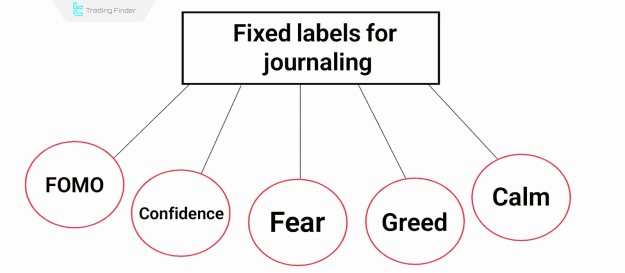
Using consistent emotional labels allows faster pattern recognition when reviewing trades. Common examples include:
- FOMO (Fear of Missing Out)
- Greed
- Fear
- Confidence
- Calmness
This structured labeling aids in building emotional awareness and reducing reactionary behavior.
Essential Information to Record
Every effective trading journal should include:
- Date and time of trade
- Traded instrument or pair
- Direction (long/short)
- Entry, stop-loss, and target prices
- Position size and risk percentage
- Reason for entry (technical, fundamental, or sentiment-based)
- Result in percentage and monetary terms
- Emotional state and personal notes
Adding subjective reflections enhances the qualitative value of the data, providing both statistical and psychological insights.
Importing Trade Data from MetaTrader Platforms
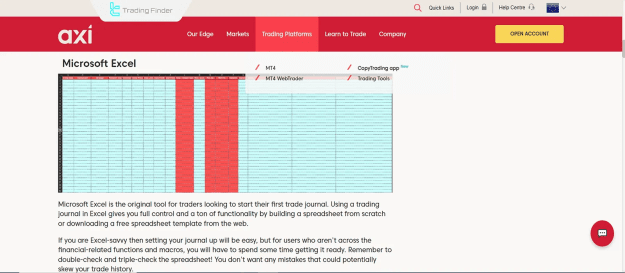
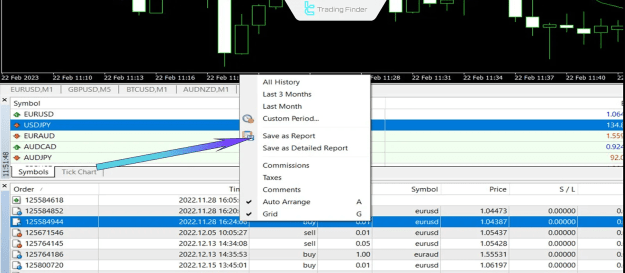
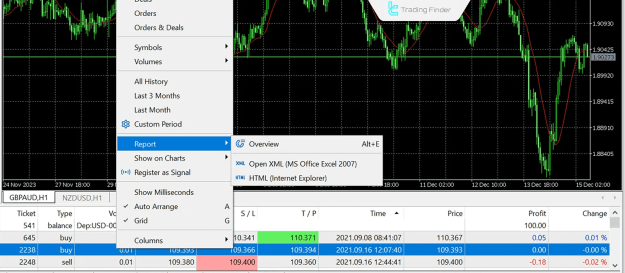
To improve accuracy and save time, traders can import their trade history directly from MetaTrader 4 (MT4) or MetaTrader 5 (MT5) into Excel or Google Sheets.
Steps for MT4
- Open the Account History tab.
- Right-click → Save as Report or Save as Detailed Report.
- Export as HTML.
- Import the file into Excel via Data → From Web or copy from a browser.
Steps for MT5
- Open the History tab.
- Right-click → Save as Report.
- Export as CSV or HTML.
- If CSV, open directly in Excel or Google Sheets.
Automating trade import ensures consistent data and reduces manual input errors.
Example Trading Journal Entry
Date: 25/01/29
Symbol: EUR/USD
Direction: Short
Entry Price: 1.0437
Exit Price: 1.0213
Volume: 0.01
Risk: 0.25
Reason for Entry: Monetary policy divergence
Result: +224 pips / +$22.4
Emotion: Anxious
Notes: Trading with fundamental data was a new learning experience.
Conclusion
A trading journal is more than a logbook—it is a strategic tool for growth and discipline.
In the broader context of forex education, journaling builds accountability, enhances emotional control, and provides measurable feedback for improvement.
By consistently recording trade data, emotional responses, and performance outcomes, traders can:
- Strengthen risk management
- Detect weaknesses
- Refine strategy execution
- Improve long-term profitability
Discipline begins with documentation—and every successful trader starts with a journal.