

Prop Firm DrawDown Protector : Prop Firm Capital Protection Expert MT5 |Forex Money Management: Forex Trade Management Expert MT5 | ICT Concepts Indicator MT5 |Smart Money Concepts Expert MT5 | Smart Money Trap Scanner | Get a free Expert Advisor license via Telegram and WhatsApp
What is Automated Trading?
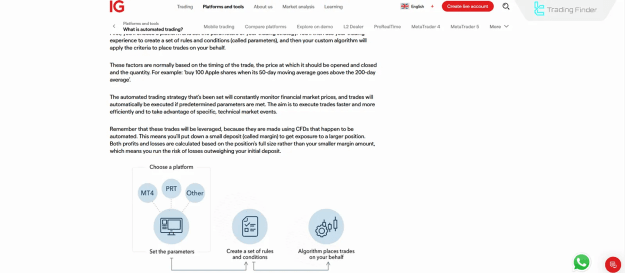
Automated trading refers to the process of executing trades based on a set of predefined rules, eliminating the need for real-time human intervention. These rules may include:
- Technical Indicators: Utilizing tools like Moving Averages or RSI to identify potential trade opportunities.
- Volume Parameters: Monitoring trading volumes to assess market activity and interest.
- Market Conditions: Setting specific thresholds for price or volatility to trigger trades automatically.
This approach enables faster execution, reduces human errors, and allows for simultaneous management of multiple trading strategies across different markets.
Levels of Automated Trading
Automated trading systems can be divided into three main levels:
- Basic Level: Executes simple conditional orders, such as Stop Loss and Take Profit.
- Semi-Automatic Level: Combines manual analysis with automated scripts or bots for trade execution.
- Advanced Level: Employs complex algorithms, artificial intelligence, and machine learning to optimize decision-making and execute trades.
Understanding these levels is essential to select a system that aligns with your trading objectives and risk tolerance.
Automated vs. Algorithmic Trading
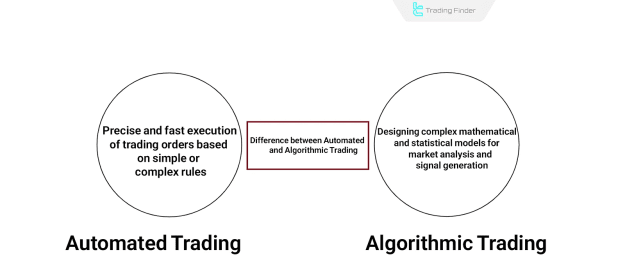
Although the terms are often used interchangeably, there are key differences between automated and algorithmic trading:
- Automated Trading: Focuses on executing trades based on predefined rules, often without deep market analysis.
- Algorithmic Trading: Uses complex mathematical models to analyze market data and generate trade signals.
In short, all algorithmic trading is automated, but not all automated trading is algorithmic.
Common Strategies in Automated Trading
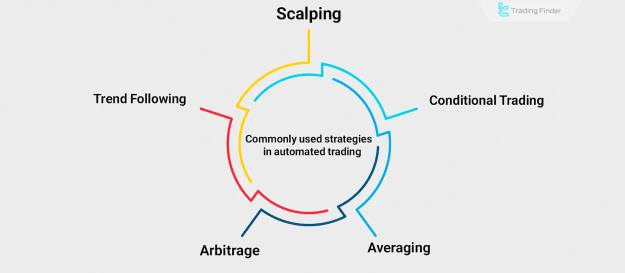
Traders implement various strategies in automated trading, including:
- Scalping: High-frequency, short-term trades to capitalize on small price fluctuations.
- Trend Following: Identifying and trading in line with prevailing market trends.
- Arbitrage: Exploiting price differences between markets or instruments.
- Averaging: Gradually entering positions to reduce risk exposure.
- Conditional Trading: Executing trades only when specific market conditions are met.
The choice of strategy depends on individual trading goals and market conditions.
Advantages of Automated Trading
Automated trading offers several significant benefits:
- Faster Execution: Enables rapid order placement, crucial in volatile markets.
- Elimination of Emotional Bias: Removes psychological factors such as fear and greed from trading decisions.
- Backtesting Capabilities: Allows traders to test strategies using historical data before implementation.
- 24/7 Market Monitoring: Provides continuous observation of markets without human fatigue.
These advantages help traders maintain discipline and achieve consistent performance.
Disadvantages and Risks
Despite its benefits, automated trading carries potential risks:
- Technical Dependencies: Requires stable internet connections and reliable hardware.
- System Failures: Vulnerable to software glitches or malfunctions.
- Market Adaptability: May fail to respond effectively to unexpected market events.
- Over-Optimization: Strategies overly fitted to historical data may perform poorly in live conditions.
Robust risk management practices are essential to mitigate these risks.
The Role of Trading Psychology
While automated trading removes emotions from the execution of trades, the design and optimization of trading systems are still influenced by the trader's psychology. Well-defined strategies based on logic are critical to prevent automation of flawed decision-making.
Tools and Platforms
Several platforms facilitate automated trading:
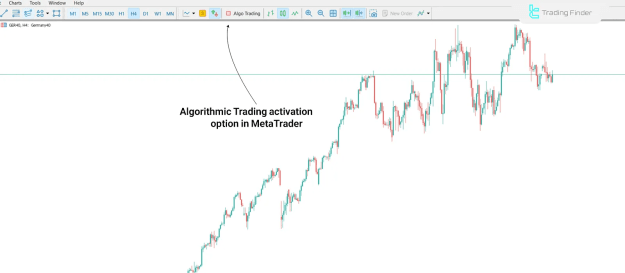
- MetaTrader 4/5: Supports Expert Advisors (EAs) for fully automated trading.
- TradingView: Provides scripting tools for strategy creation and testing.
- NinjaTrader: Offers advanced charting and automated trading capabilities.
The choice of platform should reflect the trader’s technical skills, strategy complexity, and personal preferences.
Artificial Intelligence in Trading
Integrating artificial intelligence (AI) into automated trading enhances the system’s ability to analyze large datasets and adapt to changing market conditions. AI-driven strategies can optimize decision-making, improve trade accuracy, and provide predictive insights for more informed trading.
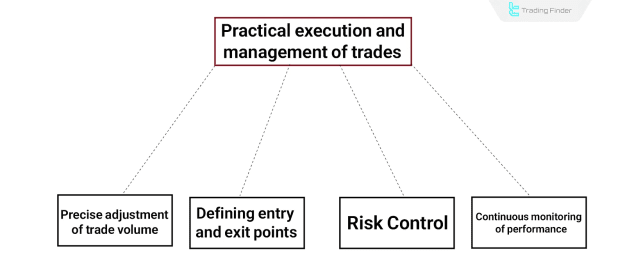
Practical Execution and Risk Management
Successful automated trading relies on:
- Thorough Backtesting: Evaluating strategies on historical data to ensure effectiveness.
- Real-Time Monitoring: Observing system performance to identify anomalies.
- Risk Management: Using stop-loss levels and appropriate position sizes to protect capital.
Neglecting these practices can result in significant losses, even with well-designed systems.
Conclusion
Automated trading addresses key challenges in the Forex market, including speed, accuracy, and emotional control. By leveraging predefined rules and advanced technologies, traders can enhance decision-making and achieve more consistent results. However, understanding system mechanics, implementing effective risk management, and continuously monitoring performance are essential for long-term success.