

Prop Firm DrawDown Protector : Prop Firm Capital Protection Expert MT4 |Forex Money Management: Forex Trade Management Expert MT4 |ICT Concepts Indicator MT4 | Smart Money Concepts Expert MT4| Get a free Expert Advisor license via Telegram and WhatsApp
How A-Book Brokers Transfer Risk to Liquidity Providers
What Is Hedging in the A-Book Model?
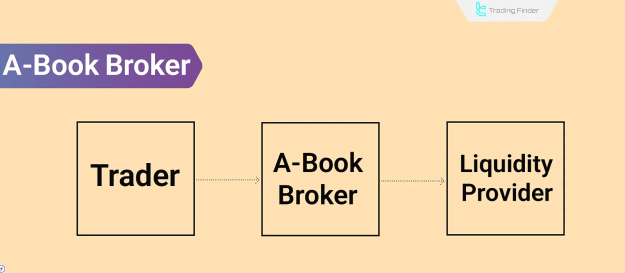
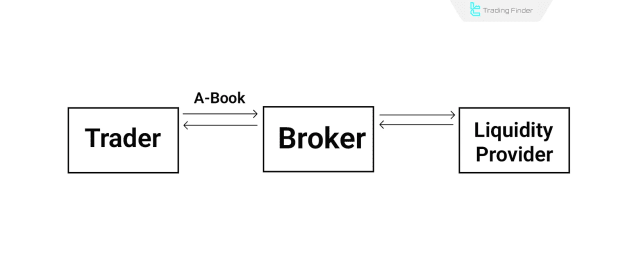
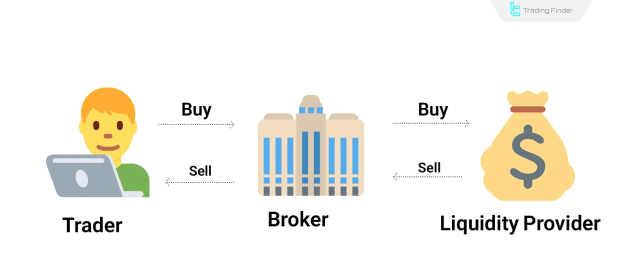
When a trader executes a trade, the broker mirrors the position with an LP—such as a bank, hedge fund, or institutional market maker. This process, known as hedging or risk transfer, ensures the broker remains neutral to market movements.
Trade Execution Flow in an A-Book Broker
- Client Places an Order – The trader submits a buy/sell request.
- Broker Logs the Trade Internally – The broker acts as the immediate counterparty.
- Simultaneous Hedging with an LP – The broker opens an offsetting position with an LP to neutralize risk.
This structure ensures that:
- The broker’s exposure is zero regardless of market direction.
- Client profits/losses are balanced by the LP’s opposite position.
Example: EUR/USD Trade in an A-Book Broker
Scenario 1: Price Increase
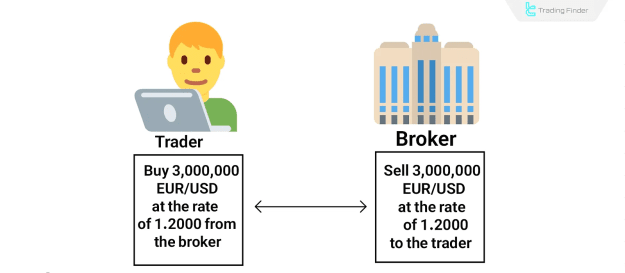
- Trader’s Position: Buys 3M EUR/USD at 1.2000 → Price rises → Profit.
- Broker’s Hedge: Short position with LP → Loss.
- Net Effect: Broker’s loss cancels trader’s profit → Zero impact on broker.
Scenario 2: Price Decrease
- Trader’s Position: Loses as EUR/USD falls.
- Broker’s Hedge: Gains from LP’s short position.
- Net Effect: Broker’s gain offsets trader’s loss → No broker profit.
Key Features of A-Book Brokers
Advantages
Transparent Execution – No conflict of interest; broker profits from spreads, not client losses.
Suitable for Scalping & High-Frequency Trading – Orders are hedged, allowing precise execution.
Regulatory Compliance – Aligns with strict risk management standards.
Disadvantages
Liquidity Dependency – Execution quality relies on LP pricing, leading to potential slippage.
Higher Operational Costs – Hedging requires deep liquidity access, increasing broker expenses.
Possible Order Rejections – Large-volume trades may face delays or rejections if LP liquidity is insufficient.
Who Is the Actual Counterparty in A-Book Trading?
Contrary to misconceptions:
- The broker remains the official counterparty—not the LP.
- Orders are not directly routed to LPs but are mirrored to hedge risk.
Conclusion
The A-Book execution model ensures fairness by eliminating broker incentives from client losses. While it offers transparency and compatibility with fast-paced trading strategies, it also depends heavily on liquidity quality and involves higher structural costs.
For traders prioritizing execution integrity, A-Book brokers provide a trustworthy environment—though potential slippage and order delays must be considered.