

Prop Firm DrawDown Protector : Prop Firm Capital Protection Expert MT4 |Forex Money Management: Forex Trade Management Expert MT4 |ICT Concepts Indicator MT4 | Smart Money Concepts Expert MT4| Get a free Expert Advisor license via Telegram and WhatsApp
How the Martingale Strategy Works
The Martingale method follows a structured scaling pattern:
- First Entry Level: Initial investment (e.g., $10)
- Second Entry Level: Double the initial amount ($20)
- Third Entry Level: Double again ($40)
- Fourth Entry Level: Further doubling ($80)
- Fifth Entry Level: Final escalation ($160)
Critical Consideration: Traders must ensure their risk tolerance aligns with the cumulative losses across entry levels. Excessive scaling can lead to margin calls or complete capital depletion.
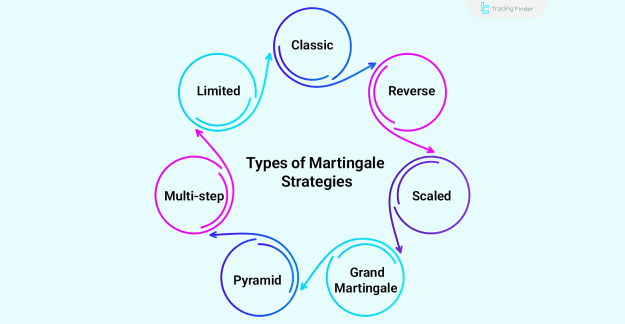
Types of Martingale Strategies
1. Classic Martingale
The standard approach involves doubling the position size after each loss. While effective in recovering losses, it carries significant risk during extended losing streaks.
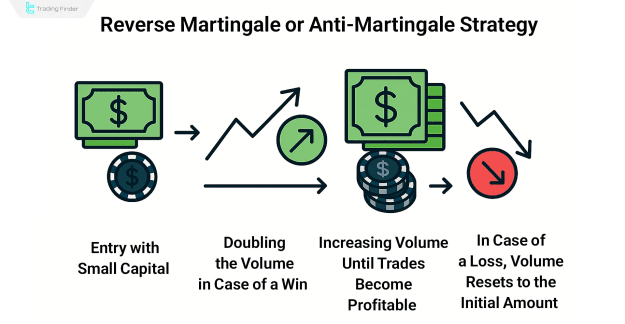
2. Reverse Martingale (Anti Martingale)
This variation increases position sizes after wins and reduces them after losses. It capitalizes on trending markets while minimizing risk during downturns.
3. Scaled Martingale
Instead of doubling, traders increase positions incrementally (e.g., by a fixed percentage). This smoothens risk exposure compared to the aggressive Classic Martingale.
4. Limited Martingale
A risk-controlled version where traders cap the number of doubling steps (e.g., 3–5 levels) to prevent catastrophic losses.
5. Multi-step Martingale
Position sizes adjust dynamically based on market conditions, incorporating technical analysis (e.g., support/resistance levels) for optimized entries.
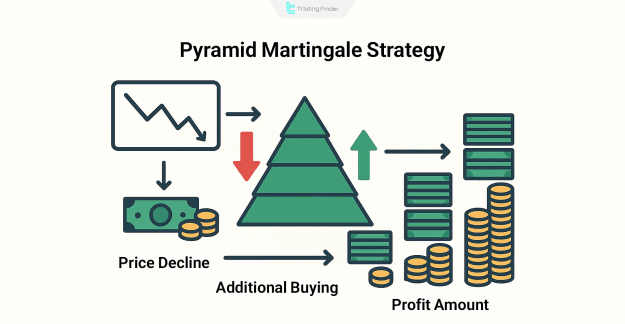
6. Pyramid Martingale
Applied in strong trending markets, this strategy increases positions after successful trades to maximize profit potential during sustained trends.
7. Grand Martingale
An advanced variant where each losing trade not only doubles the position but adds an extra unit (e.g., double +1). This accelerates loss recovery but heightens risk.
Advantages and Disadvantages of the Martingale Strategy
Advantages
- Rapid Loss Recovery: A single winning trade can offset previous losses.
- High Profit Potential: Works well in volatile, range-bound markets.
- Simple Implementation: Easy to apply with clear scaling rules.
Disadvantages
- High Capital Risk: Uncontrolled scaling can wipe out accounts.
- Large Investment Required: Sustaining multiple losses demands substantial capital.
- Psychological Stress: Emotional pressure from escalating losses.
- No Long-Term Guarantee: Success depends on market conditions and strict risk management.
Applying the Martingale Strategy in Forex and Crypto Markets
Forex Market Challenges
Forex trading requires precise volume calculations and deep market understanding, making Martingale strategies risky for beginners.
Cryptocurrency Trading
Due to high volatility and spot trading options, Martingale strategies are popular in crypto. Traders can hold assets during corrections, increasing rebound profit potential.
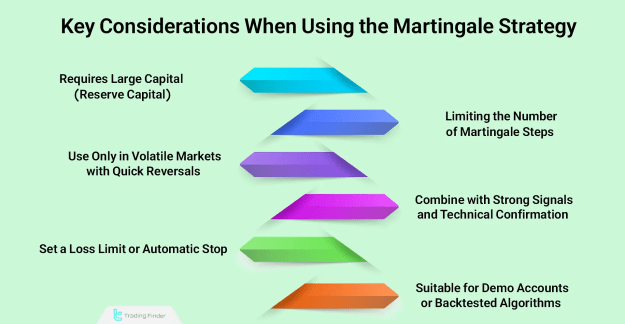
Key Considerations for Effective Martingale Trading
- Adequate Capital Reserves: Ensure sufficient funds to withstand multiple losing trades.
- Limit Entry Levels: Restrict doubling steps (e.g., 3–5 levels) to avoid excessive risk.
- Volatile, Reversing Markets: Best suited for choppy or sideways markets—avoid strong trends.
- Technical Confirmation: Combine with strong entry signals (e.g., RSI, Fibonacci levels).
- Strict Stop-Loss Rules: Predefine loss thresholds to prevent total account wipeout.
- Demo Testing: Practice on demo accounts or backtest algorithms before live implementation.
Conclusion
The Martingale strategy is a high-risk, high-reward capital management technique used in forex and crypto trading. While its variations (Classic, Pyramid, Grand Martingale) offer potential for rapid loss recovery, they demand disciplined risk management, technical expertise, and emotional control.
Successful implementation hinges on strategic planning, market analysis, and strict adherence to risk limits—making it more suitable for experienced traders in volatile markets.