

- Traders repay the borrowed amount plus agreed-upon interest on a specified date.
- Margin trading increases both potential profits and risks due to leveraged exposure.
Prop Firm DrawDown Protector : Prop Firm Capital Protection Expert MT5 | Forex Money Management: Forex Trade Management Expert MT5 | ICT Concepts Indicator MT5 |Smart Money Concepts Expert MT5 |Get a free Expert Advisor license via Telegram and WhatsApp
Types of Margin Trades
Margin trading supports two primary strategies:
1. Long Position
- Buying an asset with borrowed funds, anticipating price appreciation.
2. Short Position
- Selling an asset with borrowed funds, speculating on a price decline.
Key Margin Trading Calculations
Margin Level
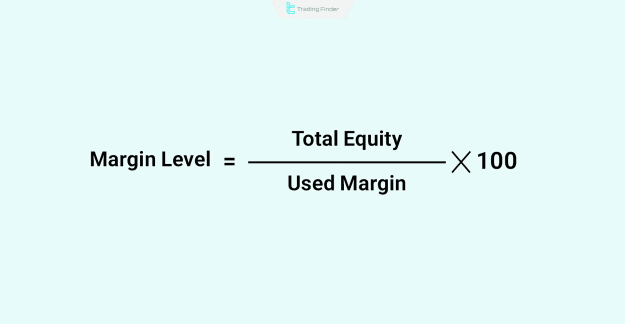
The margin level determines whether an account qualifies for additional margin. It is calculated as:
Margin Level = (Total Equity / Used Margin) × 100
A higher margin level indicates a healthier trading account, while a lower level may trigger margin calls.
Understanding Leverage in Margin Trading
Leverage allows traders to control larger positions with a fraction of the capital.
- Margin acts as collateral for the borrowed funds.
- Leverage Ratio defines the multiple of exposure (e.g., 3x leverage means $3 traded for every $1 of capital).
Example:
- With 3x leverage, a $1,000 investment controls a $3,000 position.
- Higher leverage magnifies both gains and losses.
Advantages and Disadvantages of Margin Trading
Advantages
 Increased Buying Power – Trade larger positions with borrowed funds.
Higher Profit Potential – Amplified gains from favorable market moves.
Flexible Repayment – Some brokers offer flexible loan terms.
Disadvantages
 Interest Payments – Borrowed funds incur interest charges.
Margin Calls – Falling below maintenance margin forces liquidation.
Higher Risk – Losses can exceed initial investment.
Margin Trading vs. Futures vs. Spot Trading
Margin Trading
- Involves borrowing funds to trade real assets.
- Limited leverage based on broker/exchange policies.
- No fixed expiry, allowing long-term positions.
Futures Trading
- Contracts based on future asset prices (no physical delivery).
- Often offers high leverage (e.g., 100x).
- May have expiry dates (except perpetual futures).
Spot Trading
- Direct buying/selling of assets with no leverage.
- Immediate settlement with full ownership.
- No expiry or forced liquidation risks.
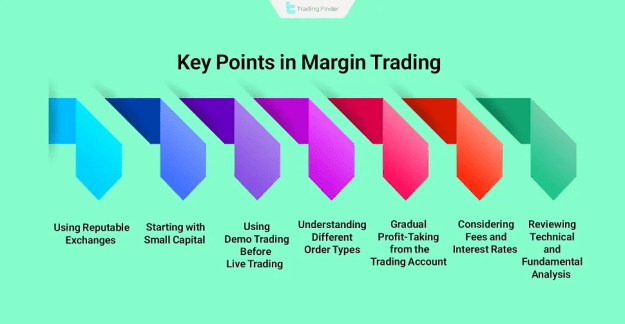
Essential Tips for Successful Margin Trading
- Choose Reputable Exchanges – Prioritize security and reliability.
- Start Small – Minimize risk with lower capital exposure.
- Practice with Demo Accounts – Gain experience before live trading.
- Understand Order Types – Use stop-loss and take-profit effectively.
- Withdraw Profits Gradually – Secure gains to mitigate risks.
- Monitor Fees & Interest – High costs can erode profits.
- Combine Analysis Methods – Use both technical and fundamental analysis.
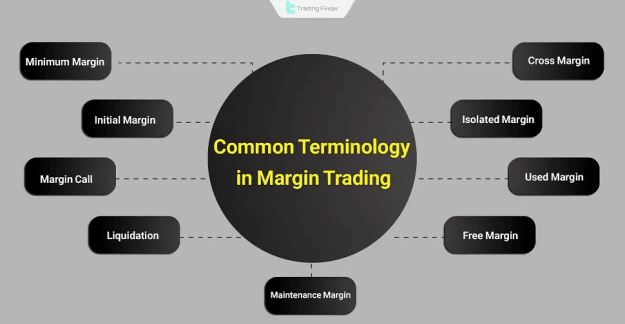
Common Margin Trading Terminology
- Minimum Margin – Required deposit to open a margin account.
- Initial Margin – Portion of the trade value paid upfront.
- Maintenance Margin – Minimum balance to avoid liquidation.
- Margin Call – Warning when equity falls below required levels.
- Liquidation – Forced closure of positions to recover borrowed funds.
- Free Margin – Available funds for new trades or withdrawals.
- Used Margin – Capital locked in open positions.
- Isolated Margin – Funds allocated to a single trade.
- Cross Margin – Shared margin pool across all positions.
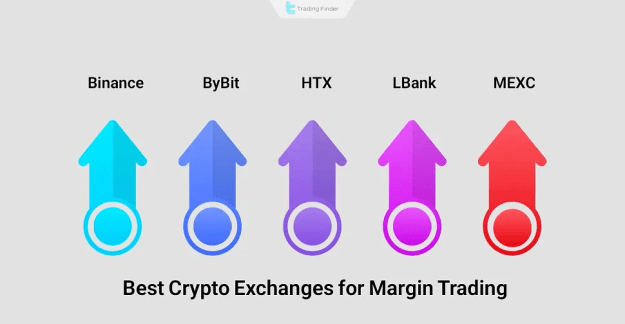
Best Crypto Exchanges for Margin Trading
- Binance
- ByBit
- HTX
- LBank
- MEXC
Top Brokers for Stock Margin Trading
- IG Broker
- Interactive Brokers
- Saxo Bank
- CMC Markets
- TD Ameritrade
Conclusion
Margin trading provides traders with increased capital through leverage, enhancing profit potential while also elevating risk. It is a powerful tool for experienced traders but requires a thorough understanding of mechanics, risks, and strategies.
By selecting reputable platforms, managing leverage wisely, and applying disciplined risk management, traders can navigate margin trading effectively. However, beginners should approach with caution and consider practicing with demo accounts before committing real funds.