

Prop Firm DrawDown Protector : Prop Firm Capital Protection Expert MT5 | Forex Money Management: Forex Trade Management Expert MT5 | ICT Concepts Indicator MT5 |Smart Money Concepts Expert MT5 |Get a free Expert Advisor license via Telegram and WhatsApp
What Is Risk Management?
Risk management is a structured process that evaluates and controls financial risks to reduce adverse outcomes. It involves proactive measures to prevent or minimize damage from unforeseen market events, adhering to established standards and best practices.
Types of Risks in Financial Markets
Financial risks are broadly classified into two categories:
1. Systematic Risks
These are market-wide risks that affect the entire economy or large sectors, making them unavoidable. They stem from macroeconomic or geopolitical factors.
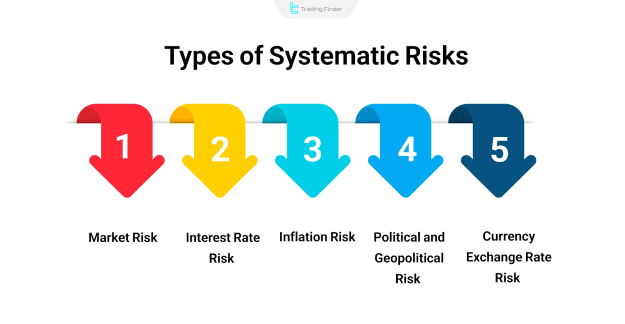
Key Types of Systematic Risks:
- Market Risk: General price fluctuations across asset classes.
- Interest Rate Risk: Impact of central bank policy changes on asset values.
- Inflation Risk: Erosion of purchasing power due to currency devaluation.
- Political/Geopolitical Risk: Market disruptions from sanctions, wars, or policy shifts.
- Currency Risk: Exchange rate volatility affecting international investments.
2. Unsystematic Risks
These are specific to individual companies, industries, or sectors and can be mitigated through diversification.
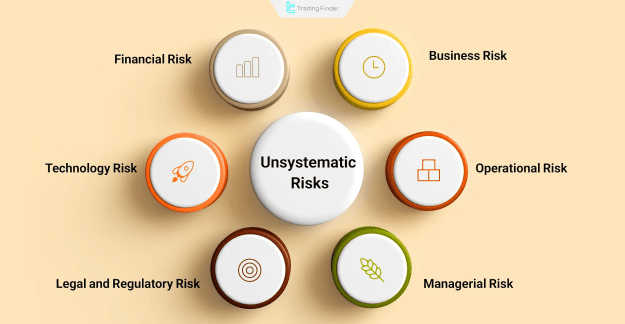
Key Types of Unsystematic Risks:
- Business Risk: Operational inefficiencies or competitive pressures.
- Financial Risk: Poor capital structure or excessive debt.
- Managerial Risk: Ineffective leadership decisions.
- Operational Risk: Failures in internal processes or systems.
- Legal/Regulatory Risk: Compliance issues or legal disputes.
- Technological Risk: Outdated infrastructure or cybersecurity threats.
Liquidity Risk
Liquidity risk arises when an investor cannot quickly convert assets into cash without significant price concessions, leading to potential losses.
Psychological Risks
Emotional biases often lead to poor financial decisions. Common psychological risks include:
- Fear & Greed: Impulsive trading driven by emotions.
- Overtrading: Excessive transactions due to overconfidence.
- Herd Mentality: Following market trends without analysis.
- Cognitive Biases: Irrational decision-making based on flawed perceptions.
Risk Management Strategies
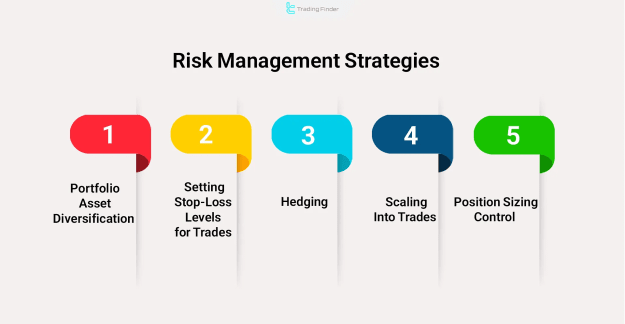
Effective risk management requires a structured approach to minimize exposure. Below are key strategies used by professional traders and investors:
1. Portfolio Diversification
Spreading investments across different asset classes (stocks, bonds, commodities, etc.) reduces reliance on a single asset, mitigating unsystematic risks.
2. Stop-Loss Orders
Setting predefined exit points ensures disciplined trading, preventing significant losses during adverse price movements.
3. Hedging
Using derivatives (options, futures) or inverse positions offsets potential losses in primary investments.
4. Scaling Into Positions
Gradually entering trades at different price levels reduces volatility impact and improves risk-adjusted returns.
5. Position Sizing
Controlling trade volume based on risk tolerance prevents overexposure and maintains long-term capital sustainability.
Steps in Risk Management
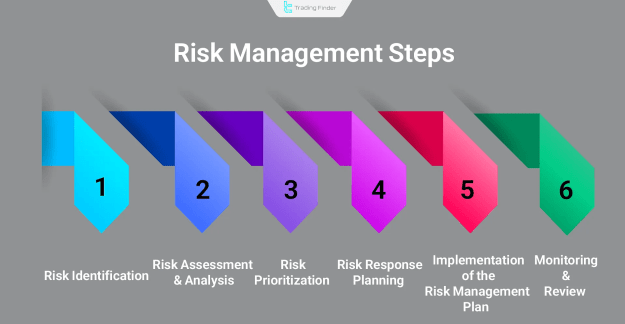
A systematic risk management process involves six critical phases:
1. Risk Identification
Recognizing potential threats (market volatility, liquidity constraints, psychological biases).
2. Risk Assessment & Analysis
Evaluating the probability and severity of risks through quantitative and qualitative methods.
3. Risk Prioritization
Focusing on high-impact risks that require immediate attention.
4. Risk Response Planning
Selecting appropriate mitigation strategies:
- Avoidance: Exiting high-risk investments.
- Reduction: Using stop-losses or diversification.
- Transfer: Insurance or hedging instruments.
- Acceptance: Tolerating minimal risks when rewards justify them.
5. Implementation
Executing the risk management plan in real-world trading scenarios.
6. Monitoring & Review
Continuously tracking market conditions and adjusting strategies to align with evolving risks.
Risk Management vs. Capital Management
While risk management focuses on individual trade protection, capital management safeguards the entire portfolio. Both are essential for sustainable trading:
- Risk Management: Minimizes trade-specific losses through stop-losses and hedging.
- Capital Management: Ensures long-term survival via position sizing and diversification.
Common Risk Management Mistakes
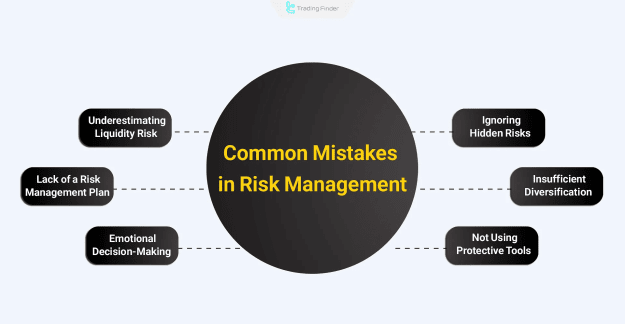
Traders often face losses due to these avoidable errors:
- Ignoring hidden risks (psychological, operational).
- Overconcentration in similar assets.
- Neglecting stop-loss and hedging tools.
- Emotional decision-making (fear, greed, FOMO).
- Lack of a structured risk management plan.
- Underestimating liquidity constraints.
Conclusion
Risk management is a vital discipline for navigating financial markets successfully. By understanding systematic and unsystematic risks, employing strategic tools like diversification and hedging, and avoiding emotional pitfalls, traders can optimize returns while minimizing losses. A disciplined, data-driven approach ensures long-term profitability and stability in volatile markets.