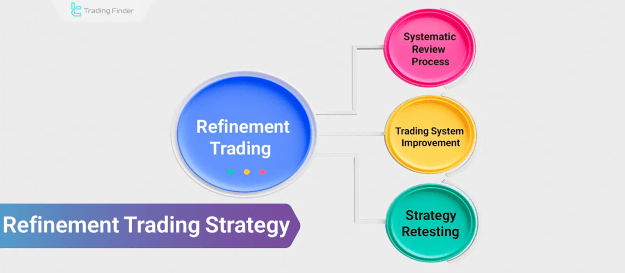


Refinement Trading refers to the systematic review, improvement, and re-testing of a trading strategy to ensure consistent performance under real market conditions.
Prop Firm DrawDown Protector : Prop Firm Capital Protection Expert MT5 | Forex Money Management: Forex Trade Management Expert MT5 | ICT Concepts Indicator MT5 |Smart Money Concepts Expert MT5 |Get a free Expert Advisor license via Telegram and WhatsApp
Refinement and Enhancement of Trading Strategy
What Is a Refinement Trading Strategy?
A Refinement Trading Strategy consists of targeted efforts to improve a trading system’s efficiency, accuracy, and consistency across varying market environments. This process includes reviewing historical performance, identifying weaknesses, implementing calculated modifications, and measuring the outcomes of each enhancement.
Methods for Refinement of Trading Strategy
Analysis and Adjustment in Refinement Trading
Strategy improvement begins with in-depth analysis. Refinement requires a clear understanding of historical results, detection of inefficiencies, and structured adjustments. Below are key methods of analysis and refinement:
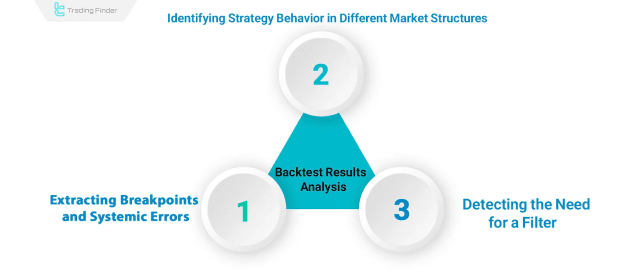
Backtest Results Analysis
Backtesting is the initial practical phase in strategy refinement. It involves analyzing performance against historical data to evaluate real-world applicability.
- Assessment across market conditions: Examine how the strategy performs in trending, ranging, or volatile phases. Poor results in specific conditions signal the need for refinement.
- Identification of system flaws: Detect weaknesses such as premature entries, late exits, or reactions to price noise.
- Requirement for filtering mechanisms: A strategy that performs inconsistently or generates low-quality trades benefits from technical filters.
Adding Filters and Improving Entry & Exit Zones
Refinement includes enhancing trade accuracy through filters and timing optimization.
- Use of technical indicators: Incorporate tools like RSI, ATR, or volume metrics to remove suboptimal entries.
- Application of candlestick patterns: Utilize price action and candle formations to validate entries and exits.
- Lower timeframe alignment: Employ confirmation from smaller timeframes or additional signals for precision.
These modifications improve selectivity and strengthen trade execution in high-probability conditions.
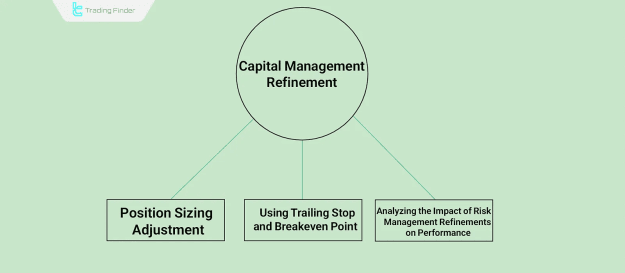
Capital Management Adjustment
Capital management is a vital component of strategy refinement, directly influencing risk control and long-term sustainability.
- Dynamic position sizing: Adjust trade size based on market risk, signal strength, and confidence. Fixed lot sizes often lead to poor results in volatile or uncertain markets.
- Implementation of trailing stops and break-even points: These tools help secure profits and minimize loss by eliminating exposure as price moves in favor.
- Quantitative impact evaluation: Changes must demonstrate measurable improvements in key metrics such as reduced drawdown, better profit-to-loss ratios, and enhanced profitability.
Cosmetic improvements without deeper structural benefit are not considered effective refinements.
Psychological and Behavioral Optimization
Mental Improvement and Trader Psychology
Strategy performance also depends on the psychological discipline of the trader. Many execution failures stem from emotional instability rather than flaws in the strategy itself.
- Emotional pattern recognition: Behaviors such as abandoning a strategy after minor losses, entering trades impulsively, or hesitating on valid signals stem from fear, greed, or lack of trust.
- Discipline development: Maintaining consistency requires emotional regulation, mental readiness, and focus.
- Use of behavioral tracking tools: A psychological journal and regular self-evaluation help traders identify patterns and improve execution consistency.
Documentation and Journaling
Creating a Journal in Refinement Trading
Thorough documentation is essential to monitor the progress and validate improvements during the refinement process.
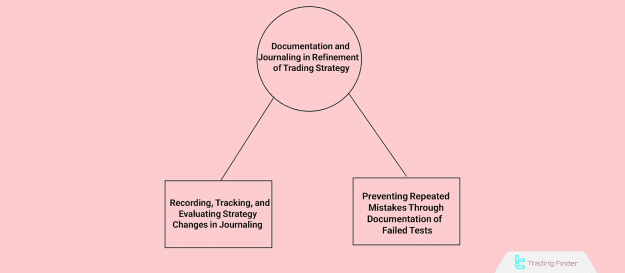
- Comprehensive recordkeeping: Each strategy change—whether it involves parameters, filters, or exits—must be documented with supporting rationale and performance impact.
- Result comparison and iteration: Continuous tracking enables performance comparison before and after each modification, facilitating data-driven decision-making.
Learning from Failures
Unsuccessful refinements or poor performance phases provide valuable insight. Documenting failed tests helps identify unsuitable conditions and prevents the repetition of mistakes. In the refinement process, both successes and failures contribute to strategic evolution.
Live Execution and Iterative Refinement
Gradual Real-Market Implementation
Transitioning from testing to live execution must be performed gradually. Begin with a demo account, followed by small real-capital exposure. This allows assessment of:
- Execution speed
- Slippage
- Emotional responses under real-time pressure
Controlled live testing validates the strategy in authentic conditions without risking core capital.
Creating Adaptive Strategy Versions
To ensure flexibility, traders should develop specialized versions of their strategy tailored for different market structures:
- One for trending markets
- One for ranging conditions
- One for high-volatility phases
This multi-structure system enhances strategic resilience and operational efficiency in diverse market environments.
Conclusion
The Refinement Trading Strategy is a comprehensive approach designed to enhance a trading system's performance under real-world conditions. This involves:
- Continuous backtest analysis
- Filter and entry/exit refinement
- Capital management improvements
- Psychological reinforcement
- Detailed journaling and performance documentation
- Live testing and adaptive strategy development
The ultimate goal is to build a robust, adaptable, and consistent trading system capable of thriving in the ever-changing landscape of financial markets.