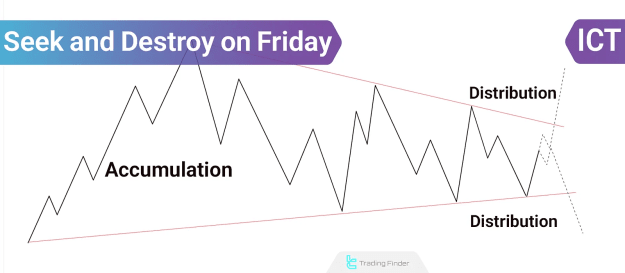


From Monday to Thursday, the market generally remains range-bound, leading to the accumulation or distribution of liquidity around swing highs and lows. This phase is often misleading, enticing retail traders into premature or false directional positions based on deceptive market structure.
TP & SL Tool: Risk Reward Ratio Calculator RRR MT5 | Prop Firm Protector: Trade Assist Prop Firm Plus TF Expert MT5 | Money Management + DrawDown Protector: Trade Panel Prop Firm Drawdawn Limiter Pro MT5 |Get a free Expert Advisor license via Telegram and WhatsApp
Core Phases of the Friday Seek and Destroy Strategy
- Pre-News Consolidation Phase (Monday–Thursday):
- Price remains within a tight range
- False signals and choppy structure
- Liquidity builds above highs and below lows
- Retail traders are trapped via support/resistance-based entries
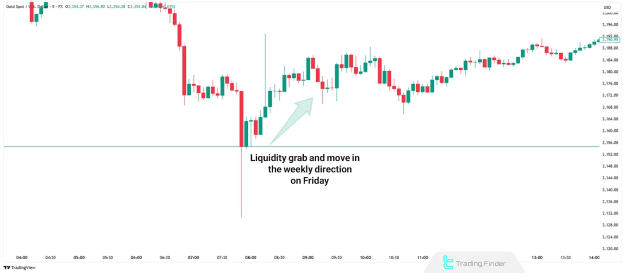
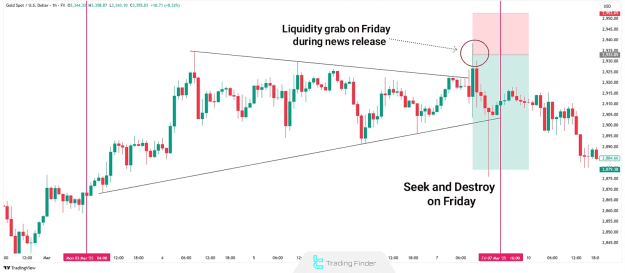
- News-Driven Liquidity Sweep (Friday):
- A quick move against the main weekly trend
- Stop-loss hunts above or below the consolidation range
- A displacement move follows in the direction of the weekly order flow
Understanding Market Behavior in Seek and Destroy Weeks
Bullish Seek and Destroy Setup
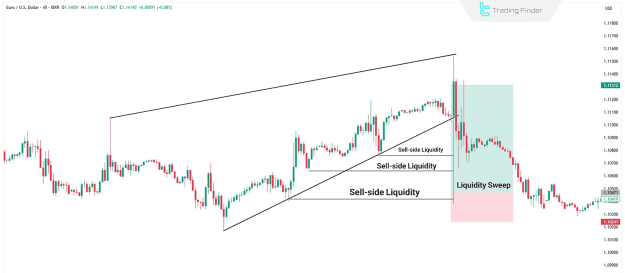
During a bullish weekly trend, the price forms an erratic pattern from Monday to Thursday, creating higher highs and lower lows without sustained momentum. This behavior is engineered to:
- Build sell-side liquidity beneath support zones
- Attract retail short entries before the real move occurs
Post-news on Friday, the market:
- Sweeps below support, triggering stops
- Reverses with a strong bullish displacement
- Moves toward higher timeframe liquidity targets (Draw on Liquidity)
Bearish Seek and Destroy Setup
In the case of a bearish weekly bias, the structure is characterized by:
- Choppy price action with lower lows and higher highs
- Buy-side liquidity accumulation above resistance levels
- Misleading breakout setups for long positions
Following the economic release on Friday:
- Price sweeps above resistance, stopping out buyers
- Executes a sharp bearish displacement
- Targets draw-on-liquidity levels on higher timeframes
Trading the Seek and Destroy Setup
To trade this strategy effectively, traders must:
- Avoid entries during the Monday–Thursday range
- Wait for confirmation post-liquidity sweep using:
- Market Structure Shift (MSS)
- Change in State of Delivery (CISD)
- Identify Draw on Liquidity (DOL) zones on the daily or weekly charts
- Focus on trading with the dominant weekly flow
Entry Guidelines for Lower-Risk Setups
- Wait for liquidity sweep to complete
- Confirm shift via MSS or CISD on lower timeframes
- Enter trades with stop-loss beyond liquidity voids
- Target imbalance fills or external liquidity pools
Common Mistakes in the Friday Seek and Destroy Strategy
Entering During Consolidation Phase
Many traders misinterpret the range-bound market early in the week as a valid directional setup. In reality, this is when smart money is building positions, and any entry during this period is high risk.
Ignoring Market Structure Confirmation
Entering trades without clear confirmation (e.g., MSS or CISD) leads to false starts and unnecessary losses. Liquidity-driven strategies require patience and evidence of smart money’s intent.
Misjudging Draw on Liquidity Levels
Failing to identify the correct liquidity targets can result in trades going against the weekly bias. It is essential to align your trade with where smart money is aiming—often visible on higher timeframes.
Conclusion
The Friday Seek and Destroy strategy is a powerful liquidity-based concept within the ICT framework. It is designed to:
- Trap retail traders early in the week
- Sweep liquidity during news events
- Displace price aggressively in line with the weekly market structure
Successful application of this model depends on patience, discipline, and an understanding of liquidity logic rather than traditional technical patterns.
Without Market Structure Shift (MSS), Change in State of Delivery (CISD), and Draw on Liquidity (DOL) identification, market analysis remains incomplete—and trades are taken based on speculation instead of smart money principles.