

TP & SL Tool: Risk Reward Ratio Calculator RRR MT4 | Prop Firm Protector: Trade Assist Prop Firm Plus TF Expert MT4 | Money Management + DrawDown Protector: Trade Panel Prop Firm Drawdawn Limiter Pro MT4 |Get a free Expert Advisor license via Telegram and WhatsApp
Pros and Cons of the Exponential Moving Average
Before integrating the EMA into your trading strategy, it is essential to understand its advantages and limitations:
Pros:
- Rapid response to sudden market movements
- Well-suited for intraday and scalping strategies
- Effective in crossover strategies involving multiple moving averages
Cons:
- May produce false signals in sideways or weak trends
- Requires careful calibration for optimal performance
- Can be more complex to interpret than simpler moving averages
How to Calculate the Exponential Moving Average
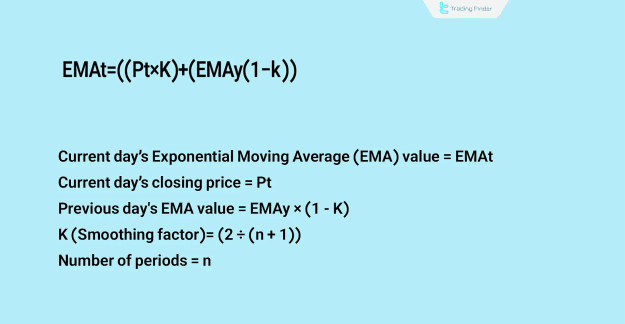
Unlike the Simple Moving Average (SMA), the EMA applies a more complex formula that increases the weight of recent prices. This dynamic weighting mechanism helps traders stay closely aligned with current market trends. The general formula incorporates a smoothing factor to reduce lag and improve reactivity.
Application of the EMA in Technical Analysis
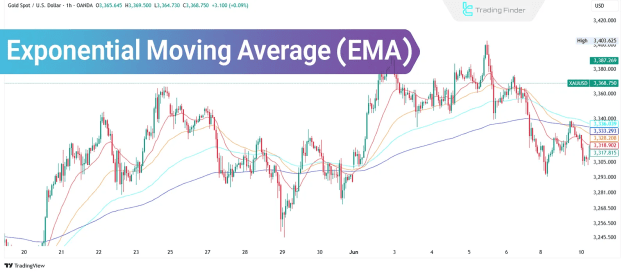
The Exponential Moving Average plays a critical role in identifying market trends and defining dynamic support and resistance levels. Buy and sell signals are often generated when the EMA crosses the asset's price line or interacts with other EMAs.
Caution: Relying solely on the EMA for entry and exit decisions is not recommended due to the possibility of false signals, particularly in choppy or range-bound markets.
How to Use the EMA Effectively
The EMA is best utilized on lower timeframes, where its responsiveness offers frequent and timely trading signals. Its sensitivity to price changes makes it ideal for scalpers and short-term traders seeking to capitalize on quick market movements.
To improve accuracy, the EMA is often paired with other indicators such as:
- Relative Strength Index (RSI)
- MACD
- Fibonacci tools
- Support and resistance zones
Traders frequently use multiple EMAs together. For example, EMA crossovers are used to identify potential trend reversals or momentum shifts, with shorter-term EMAs providing earlier signals.
Trading Example with the EMA Indicator
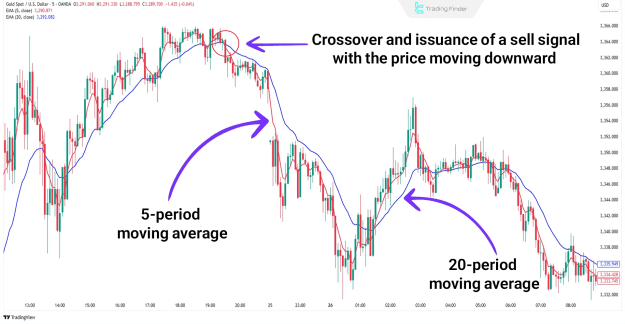
A common strategy involves using a 5-period EMA and a 20-period EMA on a short timeframe. When the 5 EMA crosses below the 20 EMA and both are positioned above the price, this typically indicates a sell signal.
This approach is frequently adopted in fast-moving markets to catch early entries or exits during developing trends.
EMA Trading Strategies
There are various strategies that leverage the strengths of the Exponential Moving Average, particularly in short-term trading. These include:
- Using multiple EMAs in combination
- Integrating EMAs with price action analysis
- Applying EMA levels with Fibonacci retracements
- Executing Golden Cross and Death Cross strategies
- Implementing the Guppy Multiple Moving Average (GMMA) method
- Developing custom crossover strategies for tailored entry/exit rules
Although the EMA is most effective in short-term setups, it can also be applied in long-term analysis. When used on higher timeframes, it typically provides fewer false signals and can help confirm major market trends.
Difference Between EMA and SMA
The Exponential Moving Average is more sensitive to recent price changes, which makes it suitable for traders operating in short-term and high-volatility environments. On the other hand, the Simple Moving Average (SMA) gives equal weight to all price points, making it more stable and better suited for long-term trend identification.
Traders often use both EMA and SMA in conjunction to assess market direction across various timeframes.
Best EMA Settings for Trading
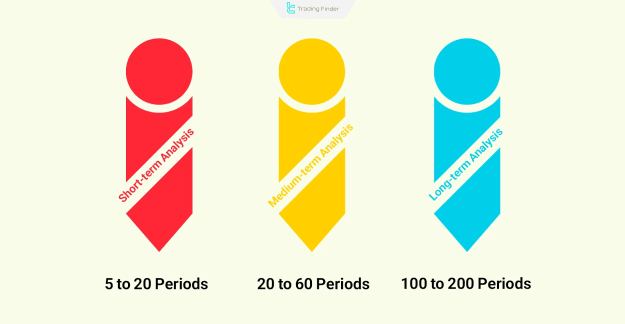
To adapt the EMA to different market conditions and timeframes, traders typically use the following settings:
- Short-term analysis: 5 to 20 periods
- Medium-term analysis: 20 to 60 periods
- Long-term analysis: 100 to 200 periods
These settings can be fine-tuned based on the asset being traded, its volatility, and the strategy employed.
Conclusion
The Exponential Moving Average (EMA) is a vital tool in technical analysis that enables traders to react swiftly to price movements and identify key trend changes. Its sensitivity to recent data makes it ideal for short-term strategies, including scalping and intraday trading.
When combined with other technical indicators, price action tools, and multiple EMA setups, the EMA enhances a trader's ability to identify high-probability entry and exit points. By understanding its advantages, limitations, and strategic applications, traders can integrate the EMA into more robust and reliable trading systems.