

TP & SL Tool: Risk Reward Ratio Calculator RRR MT5 | Prop Firm Protector: Trade Assist Prop Firm Plus TF Expert MT5 | Money Management + DrawDown Protector: Trade Panel Prop Firm Drawdawn Limiter Pro MT5 |Get a free Expert Advisor license via Telegram and WhatsApp
Double Top and Double Bottom Patterns
Understanding How Double Top and Bottom Patterns Signal Market Reversals
What Is a Double Top Pattern?
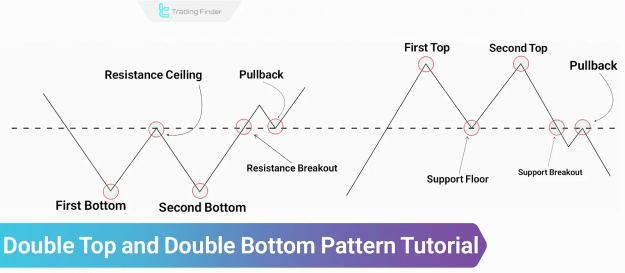
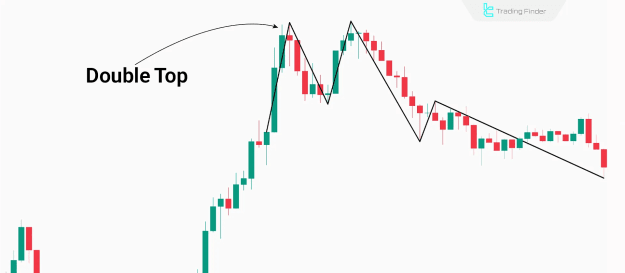
The double top pattern typically forms at the end of a bullish trend. After a strong upward movement, price reaches a resistance level twice, fails to break through, and reverses direction to initiate a bearish trend.
Key Components:
- Two relatively equal highs
- A middle valley acting as support
Breaking below this support zone confirms the start of a downward trend. A slight difference between the two tops is acceptable within this pattern.
Validating the Double Top Pattern
For the double top pattern to be valid, several factors should be evaluated:
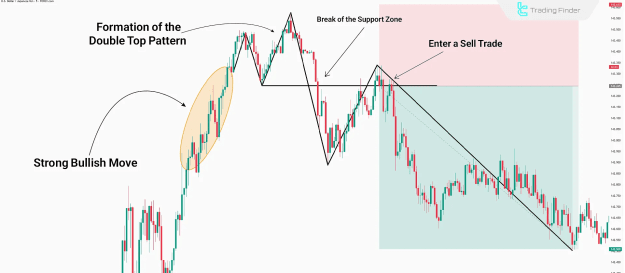
- Strong prior uptrend: Pattern formation must follow a clear bullish movement
- Peak levels: Both tops should have minimal height differences
- Volume behaviour: Declining volume during pattern formation with lower volume on the second top
- Neckline break: A strong bearish candlestick breaking the support level confirms the pattern
- Pullback validation: Reversal candlestick patterns during pullback strengthen the signal
Step-by-Step Guide to Trading the Double Top Pattern
Successful trading requires understanding price structure, volume trends, and breakout rules to anticipate bearish reversals effectively.
#1 Pattern Analysis and Confirmation
- Identify two nearly equal highs following a strong uptrend
- Ensure the valley between them acts as a support level
- Observe a gradual decline in volume, indicating weakening buyer momentum
#2 Entry Point
- After formation, price typically approaches the support level
- First entry: Execute when price breaks below support
- Second entry: Enter after a pullback to the broken support (now resistance) is confirmed with a strong bearish candlestick
- Increased volume during breakout strengthens the signal
#3 Setting a Stop Loss
Two main stop-loss placement strategies are recommended:
- Above the second top: More reliable but offers a lower risk-to-reward ratio
- Behind the breakout candle (below support line): Higher stop-out risk but provides a better reward ratio
#4 Trade Management
- Monitor volume activity as price nears the target
- Calculate the first target using the vertical distance between tops and support
- If momentum remains strong, keep the trade open to reach the next support zone
- Adjust strategy with partial closes or by moving stop loss to breakeven
What Is a Double Bottom Pattern?
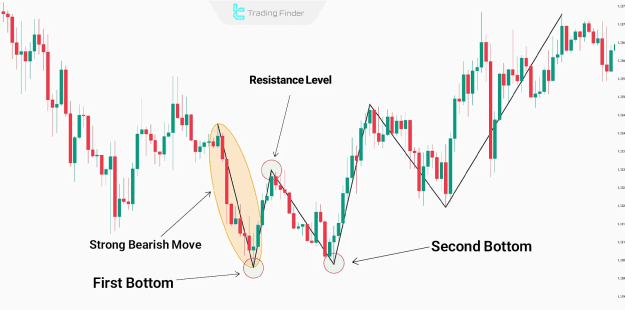
The double bottom pattern is a reversal formation occurring near significant support zones after bearish trends. It indicates selling exhaustion and increasing buying pressure.
Key Components:
- Two relatively equal lows
- The second bottom often dips slightly below the first to grab liquidity before reversal
Validating the Double Bottom Pattern
To ensure reliability, several factors should be assessed:
- Liquidity grab: Second bottom dips slightly below the first and rebounds strongly
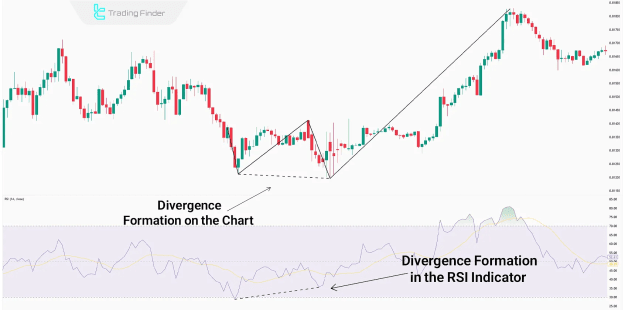
- Positive divergence: Indicators like RSI or MACD show divergence between the lows
- Reversal candlestick structure: Presence of hammer or bullish engulfing at the second bottom
- Volume behaviour: Declining volume during formation, followed by a surge at breakout
- Consolidation: Sideways movement before breakout indicates accumulation by buyers
How to Trade the Double Bottom Pattern
#1 Pattern Analysis and Confirmation
- Confirm two nearly equal lows separated by a peak after a strong downtrend
- Positive divergence and volume behaviour support the pattern’s validity
#2 Entry Points
- Aggressive entry: Enter after observing a strong bullish candle near resistance, even before neckline breakout
- Conservative entry: Enter after a confirmed breakout of resistance with a closing price above the neckline
#3 Stop Loss Placement
- Aggressive entries use a stop loss just below the second bottom
- Alternatively, place it below both the second bottom and breakout candle for reduced risk
#4 Trade Management
- Target is determined by the vertical distance between lows and neckline
- Adjust stop loss if price approaches target without a pullback to maximise gains
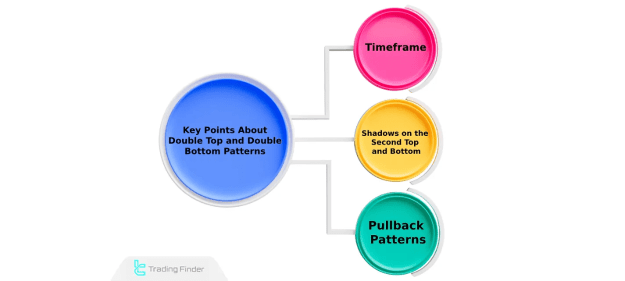
Key Points About Double Top and Double Bottom Patterns
Timeframe Considerations
- Lower timeframes: (e.g. 15-minute charts) Prone to false breakouts and quick reversals
- Higher timeframes: (e.g. daily charts) Patterns are more reliable with larger price moves
Shadows on Second Tops or Bottoms
- Shadows indicate failed attempts by buyers or sellers to break key levels, increasing reversal probability
Pullback Patterns
- Pullbacks after breakouts may not return directly to the broken level but may form channels or flags instead
Pros and Cons of Double Top and Double Bottom Patterns
Advantages
- Early reversal detection: Enables entering new trends earlier
- Simple structure: Easily identifiable even in volatile markets
- Clear target and stop-loss levels: Based on pattern height
- Works with indicators: Complements divergence analysis and support/resistance levels
Disadvantages
- False breakouts: Common in volatile markets or lower timeframes
- Need for multiple confirmations: Requires volume analysis or reversal candlestick validation
- Delayed conservative entries: May reduce reward ratio
- Ineffective in ranging markets: Higher chance of false signals
Comparison with Other Classic Patterns
Compared to head and shoulders or rounded bottom formations, double top and bottom patterns are simpler to identify but may need additional confirmations for accuracy.
Limitations of Double Top and Double Bottom Patterns
- Fake breakouts: Neckline may temporarily break and then reverse
- Reliance on confirmations: Patterns alone are insufficient
- Delayed confirmations: Immediate entries without confirmation increase risk
Conclusion
Double top and double bottom patterns are fundamental reversal formations in technical analysis, enabling traders to detect trend changes through price action analysis. When combined with divergence indicators, volume analysis, and support-resistance breakouts, they provide high-probability trade setups for market participants.