

TP & SL Tool: Risk Reward Ratio Calculator RRR MT5 | Prop Firm Protector: Trade Assist Prop Firm Plus TF Expert MT5 | Money Management + DrawDown Protector: Trade Panel Prop Firm Drawdawn Limiter Pro MT5 |Get a free Expert Advisor license via Telegram and WhatsApp
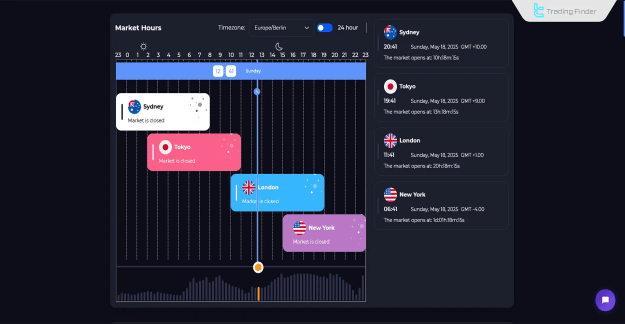
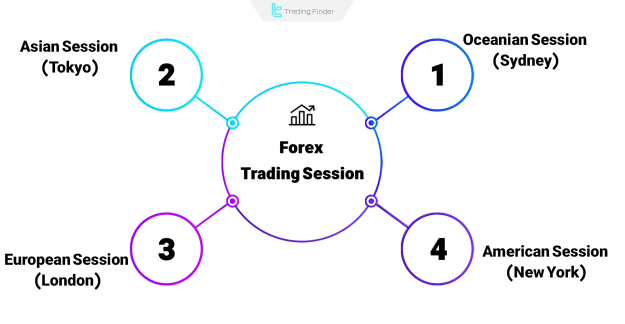
Forex Market Trading Sessions
1. Sydney Session (Oceanian Session)
- Opening Time: 22:00 UTC
- Closing Time: 07:00 UTC
- Key Financial Centers: Australia, New Zealand
- Characteristics:
- Marks the beginning of the Forex trading week.
- Lower liquidity compared to other sessions.
- Ideal for scalping and low-risk trading strategies.
2. Tokyo Session (Asian Session)
- Opening Time: 00:00 UTC
- Closing Time: 09:00 UTC
- Key Financial Centers: Japan, Singapore, Hong Kong
- Characteristics:
- Moderate volatility with steady price movements.
- Influenced by economic data from Japan and China.
- Best for trading Asian currency pairs like USD/JPY and AUD/JPY.
3. London Session (European Session)
- Opening Time: 08:00 UTC
- Closing Time: 17:00 UTC
- Key Financial Centers: UK, Germany, France
- Characteristics:
- The most liquid session, accounting for over 35% of daily Forex volume.
- High volatility due to participation from major banks and institutions.
- Optimal for trading EUR/USD, GBP/USD, and other major pairs.
4. New York Session (American Session)
- Opening Time: 13:00 UTC
- Closing Time: 22:00 UTC
- Key Financial Centers: USA, Canada
- Characteristics:
- Heavily influenced by U.S. economic news (NFP, CPI, Fed decisions).
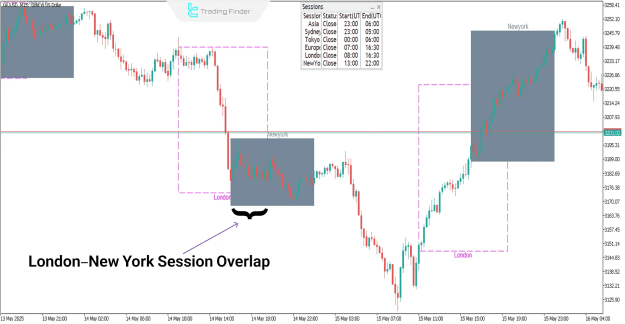
- Overlaps with the London session, creating peak volatility.
- Best for trading USD pairs and reacting to macroeconomic events.
Impact of Daylight Saving Time (DST) on Forex Market Hours
Forex trading hours shift slightly due to Daylight Saving Time (DST) adjustments in regions like the U.S. and Europe. Traders must account for these changes to avoid timing discrepancies.
- Summer Time (DST) Adjustments:
- Sydney: 21:00 – 06:00 UTC
- Tokyo: 23:00 – 08:00 UTC
- London: 07:00 – 16:00 UTC
- New York: 12:00 – 21:00 UTC
- Winter Time (Standard Time) Adjustments:
- Sydney: 22:00 – 07:00 UTC
- Tokyo: 00:00 – 09:00 UTC
- London: 08:00 – 17:00 UTC
- New York: 13:00 – 22:00 UTC
Overlapping Trading Sessions: Maximizing Volatility & Liquidity
When two Forex sessions overlap, liquidity increases, spreads tighten, and volatility rises, creating prime trading opportunities.
1. London-New York Overlap (13:00 – 17:00 UTC)
- The most active and liquid period in Forex trading.
- High volatility due to combined participation from Europe and the U.S.
- Best for day trading and scalping major currency pairs.
2. Tokyo-London Overlap (08:00 – 09:00 UTC)
- Moderate volatility as Asian traders hand off to European markets.
- Early trend formations in EUR/JPY and GBP/JPY.
3. Sydney-Tokyo Overlap (00:00 – 07:00 UTC)
- Low volatility, suitable for scalping AUD and NZD pairs.
Best Time to Trade Forex
The optimal trading window is during high-liquidity periods, particularly:
- London Session (08:00 – 17:00 UTC)
- New York Session (13:00 – 22:00 UTC)
- London-New York Overlap (13:00 – 17:00 UTC)
Avoid trading during low-volatility hours, such as late New York session or the Sydney session’s early phase.
Key Tips for Effective Forex Time Management
- Understand the four major trading sessions and their characteristics.
- Trade during session overlaps for maximum volatility.
- Adjust for Daylight Saving Time to avoid timing errors.
- Avoid low-liquidity periods to minimize slippage.
- Align your strategy with session strengths (e.g., scalping in London, swing trading in New York).
- Use an economic calendar to track high-impact news events.
Conclusion
The Forex market’s 24-hour structure allows traders to engage at any time, but strategic timing is crucial for success. By understanding session dynamics, overlaps, and DST adjustments, traders can optimize their trading performance and capitalize on the best market conditions.
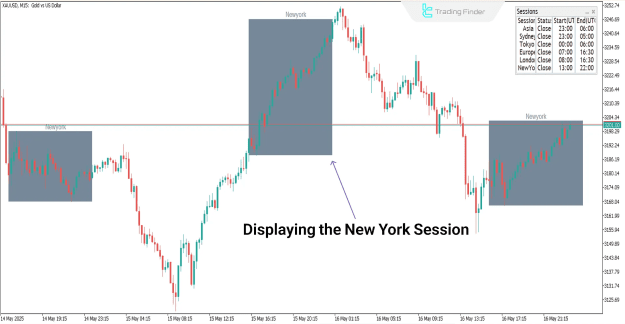
For precise session tracking, tools like TradingFinder’s Session Box Indicator can help visualize trading hours directly on charts.