

TP & SL Tool: Risk Reward Ratio Calculator RRR MT5 | Prop Firm Protector: Trade Assist Prop Firm Plus TF Expert MT5 | Money Management + DrawDown Protector: Trade Panel Prop Firm Drawdawn Limiter Pro MT5 |Get a free Expert Advisor license via Telegram and WhatsApp
What is a CFD Contract?
A Contract for Difference (CFD) is a financial derivative that enables traders to speculate on price movements of underlying assets without owning them physically. Instead of purchasing the asset itself, traders enter into an agreement with a broker to exchange the difference in an asset’s price between the opening and closing of the contract.
Key Features of CFD Trading
CFDs offer unique advantages that attract both short- and long-term traders:
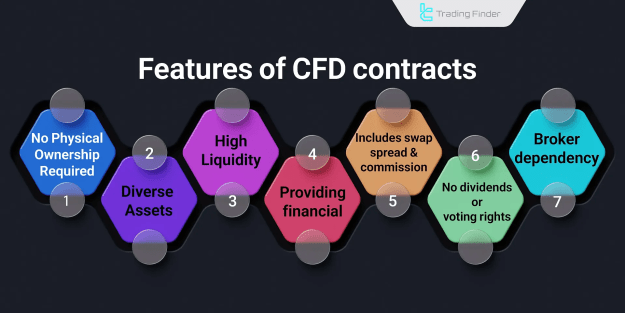
- No Physical Ownership Required – Traders profit from price fluctuations without holding the actual asset.
- Two-Way Trading – CFDs allow both long (buy) and short (sell) positions, enabling profits in rising and falling markets.
- Leverage – With leverage, traders can control larger positions with a smaller capital outlay, amplifying both gains and losses.
- Diverse Asset Coverage – CFDs are available for stocks, forex, commodities, indices, cryptocurrencies, bonds, and ETFs.
- High Liquidity – Ensures faster trade execution and tighter spreads.
- No Dividends or Voting Rights – Since traders don’t own the underlying asset, they don’t receive dividends or corporate voting rights.
- 24/5 Trading – Most CFDs can be traded around the clock, five days a week.
- Broker-Dependent Execution – Choosing a reliable CFD broker is crucial for optimal trading conditions.
Pros and Cons of CFD Trading
Advantages of CFDs
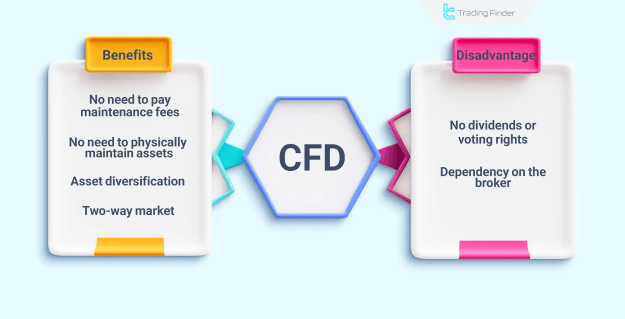
- No Ownership Costs – Avoids expenses like storage fees or stamp duty.
- Tax Benefits in Some Jurisdictions – In countries like the UK, CFD profits are exempt from Capital Gains Tax (but may be subject to income tax elsewhere).
- Flexible Market Access – Trade multiple asset classes from a single platform.
- Hedging Opportunities – Use CFDs to offset risks in an existing portfolio.
Disadvantages of CFDs
- Leverage Risks – While leverage magnifies profits, it also increases potential losses.
- No Dividend Entitlement – Traders miss out on dividend payouts from underlying stocks.
- Overnight Financing Costs – Holding positions overnight may incur swap fees.
- Broker Dependency – Trading conditions (spreads, execution speed) vary by broker.
Types of CFD Contracts
1. Forex CFDs
Trade currency pairs like EUR/USD or GBP/JPY, benefiting from forex market volatility.
2. Stock CFDs
Speculate on company shares (e.g., Apple, Tesla) without owning the stock or receiving dividends.
3. Index CFDs
Track major indices such as S&P 500, NASDAQ, or FTSE 100 with leveraged exposure.
4. Commodity CFDs
Trade gold, oil, silver, and other commodities without physical storage concerns.
5. Cryptocurrency CFDs
Speculate on Bitcoin, Ethereum, and other cryptos without managing a digital wallet.
6. Bond CFDs
Profit from price changes in government or corporate bonds (no coupon payments).
7. Interest Rate CFDs
Bet on central bank rate decisions (e.g., Fed or ECB policy changes).
8. ETF CFDs
Gain exposure to exchange-traded funds without direct ownership.
CFD Trading Example
A trader predicts Nvidia’s stock price will rise from $110 to $120.
- Trade Details:
- Buys 100 CFD shares at $110 (Total position: $11,000).
- Uses 1:10 leverage, requiring only $1,100 in margin.
- Outcome:
- If Nvidia rises to $120, profit = $1,000 (before fees).
- If Nvidia drops to $100, loss = $1,000.
- Additional Costs:
- Spread cost (e.g., $0.10 per share = $10).
- Swap fees (if held overnight).
Conclusion
CFDs provide a flexible, leveraged, and cost-efficient way to trade multiple asset classes without ownership. While they offer significant profit potential, traders must manage risks like leverage exposure and overnight fees. Choosing a trusted broker and understanding market dynamics are essential for successful CFD trading.
By leveraging CFDs, traders can capitalize on market volatility, diversify portfolios, and execute advanced strategies—making them a powerful tool in modern finance.