

TP & SL Tool: Risk Reward Ratio Calculator RRR MT5 | Prop Firm Protector: Trade Assist Prop Firm Plus TF Expert MT5 | Money Management + DrawDown Protector: Trade Panel Prop Firm Drawdawn Limiter Pro MT5 |Get a free Expert Advisor license via Telegram and WhatsApp
What Is Leverage in Forex?
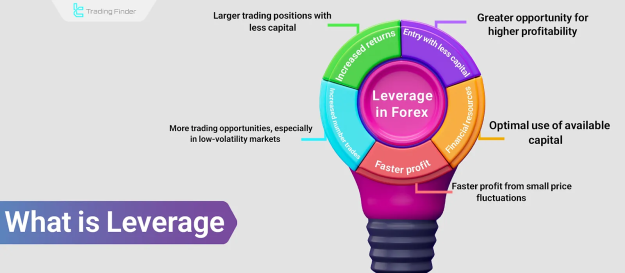
Leverage in the Forex market enables traders to control larger positions with a relatively small amount of capital. By borrowing funds from a broker, traders can amplify their exposure to currency movements, increasing both potential profits and risks.
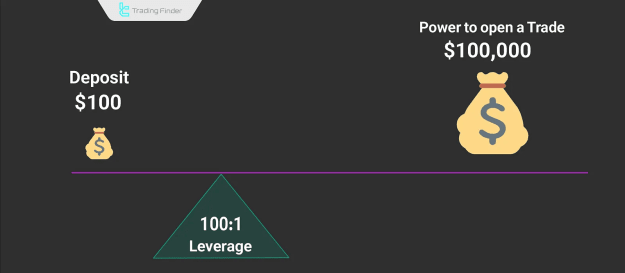
Leverage is expressed as a ratio, such as 100:1, meaning that for every $1 of a trader’s capital, they can open a $100 position. While leverage can enhance short-term gains, it also magnifies losses, making risk management crucial.
How Does Leverage Work in Forex?
Forex brokers provide leverage to traders, allowing them to open positions that exceed their account balance. For example:
- Account Balance: $1,000
- Leverage: 100:1
- Trade Size: $100,000
This means a trader can control a $100,000 position with just $1,000 of their own funds. However, while profits are calculated based on the full position size, losses are also magnified.
Calculating Leverage in Forex
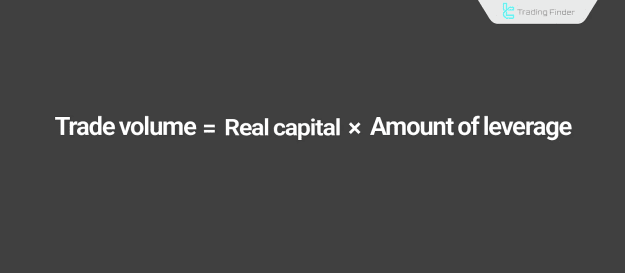
The formula for determining leverage is:
Leverage Ratio × Account Balance = Position Size
Example Calculation:
If a trader uses 50:1 leverage with an account balance of $5,000, their maximum position size would be:
50 × $5,000 = $250,000
This calculation helps traders understand their maximum exposure in the market.
Pros and Cons of Using Leverage
Advantages of Leverage
- Increased Trading Power: Trade larger positions with minimal capital.
- Higher Profit Potential: Small price movements yield greater returns.
- Capital Efficiency: Allocate funds across multiple trades.
- Short-Term Gains: Ideal for scalping and day trading strategies.
Disadvantages of Leverage
- Amplified Losses: Small market moves can lead to significant losses.
- Margin Calls: Brokers may close positions if losses exceed account equity.
- Higher Risk Exposure: Requires strict risk management strategies.
- Potential for Account Blowout: Over-leveraging can wipe out trading capital.
How to Use Leverage Effectively
To maximize leverage while minimizing risk, traders should follow these best practices:
- Choose Appropriate Leverage: Beginners should start with lower ratios (e.g., 10:1 to 30:1), while experienced traders may use higher leverage (50:1 to 500:1).
- Implement Stop-Loss Orders: Automatically exit losing trades to prevent excessive losses.
- Analyze Market Conditions: Avoid high leverage during volatile market periods.
- Practice on a Demo Account: Test strategies without risking real capital.
- Follow Risk Management Rules: Never risk more than 1-2% of capital on a single trade.
Leverage in Different Forex Trading Strategies
1. Scalping
- Uses high leverage (100:1 to 500:1) to profit from small price movements.
- Requires quick execution and tight stop-loss orders.
2. Swing Trading
- Moderate leverage (20:1 to 50:1) to capitalize on multi-day trends.
- Balances risk and reward over longer holding periods.
3. Trend Trading
- Lower leverage (10:1 to 30:1) for sustained market movements.
- Reduces margin pressure during long-term trades.
Forex Brokers Offering High Leverage
Some brokers provide high leverage options, including:
- Exness
- FBS
- IC Markets
- Pepperstone
- XM Broker
Regulations in certain regions may limit maximum leverage, so traders should verify broker policies.
Leverage in Islamic (Swap-Free) Accounts
Islamic Forex accounts comply with Sharia law by eliminating swap fees. However, brokers may adjust leverage or charge commissions instead. Traders should check:
- No overnight interest (Riba-free).
- Alternative fee structures.
- Leverage restrictions (often lower than standard accounts).
What Is the Best Leverage for Forex Trading?
The ideal leverage depends on experience and strategy:
- Beginners: 10:1 to 30:1 (Lower risk exposure).
- Intermediate Traders: 50:1 to 100:1 (Balanced approach).
- Advanced Traders: 200:1 to 500:1 (High-risk, high-reward strategies).
Conclusion
Leverage is a powerful tool in Forex trading, enabling traders to maximize profits with limited capital. However, it also increases risk, making disciplined risk management essential. By selecting appropriate leverage levels, using stop-loss orders, and practicing sound trading strategies, traders can harness leverage effectively while minimizing potential downsides.