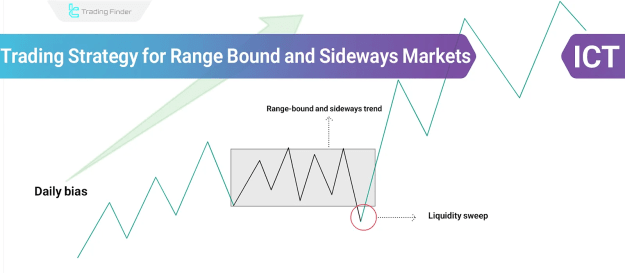


The ICT range trading approach, in forex education, deciphers market maker behavior within these zones, revealing high-probability setups that align with institutional order flow rather than retail expectations.
TP & SL Tool: Risk Reward Ratio Calculator RRR MT5 | Prop Firm Protector: Trade Assist Prop Firm Plus TF Expert MT5 | Money Management + DrawDown Protector: Trade Panel Prop Firm Drawdawn Limiter Pro MT5 |Get a free Expert Advisor license via Telegram and WhatsApp
Core Principles of ICT Range Trading
- Liquidity Analysis: Institutional traders target retail stop clusters beyond obvious support/resistance levels
- False Breakout Identification: Recognizing deceptive price movements that trap retail participants
- Higher Timeframe Alignment: Establishing directional bias before engaging with range setups
- Precision Entry Timing: Capitalizing on liquidity sweeps and subsequent reversals
Executing the ICT Range Strategy
Step 1: Establish Market Context
Begin by analyzing the daily and 4-hour charts to determine the prevailing market bias. This macro perspective informs your approach to range-bound conditions on lower timeframes.
Step 2: Identify Consolidation Zones
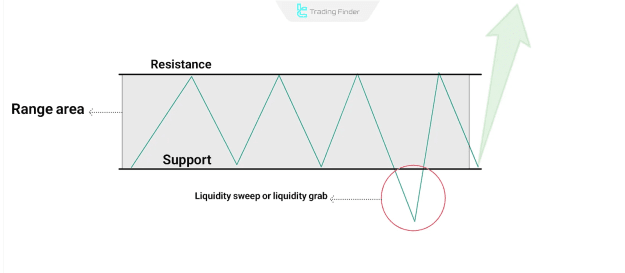
Mark clear support and resistance boundaries where price has repeatedly reversed. These zones typically show:
- Multiple tests of price extremes
- Declining volume during range development
- Decreasing volatility as the range matures
Step 3: Anticipate Liquidity Runs
Monitor for false breakouts beyond range boundaries that:
- Quickly reverse into the consolidation zone
- Show exaggerated wicks into liquidity pools
- Trigger clustered stop orders before reversing
Step 4: Execute Counter-Range Entries
Enter positions in the direction of the higher timeframe bias after observing:
- Clear liquidity grabs beyond range extremes
- Price rejection signals at key levels
- Shift in market structure on lower timeframes
Step 5: Manage Trade Progression
Implement disciplined risk management by:
- Placing stops beyond recent swing points
- Taking partial profits at internal range levels
- Monitoring for trend continuation signals
Psychological Dynamics of Range Trading
Institutional traders exploit predictable retail behavior during consolidation:
- Retail traders typically fade range extremes with tight stops
- Market makers intentionally trigger these stops before reversing
- The majority of breakouts from ranges fail initially
- True directional moves often begin after liquidity runs
Practical Application Across Market Conditions
Bullish Market Scenario
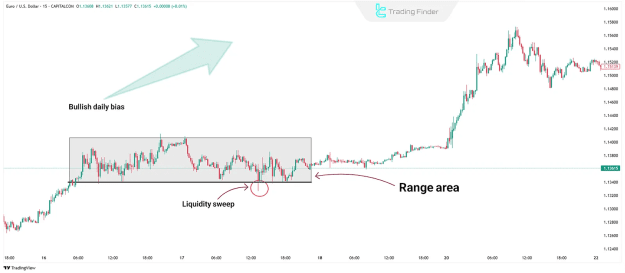
When higher timeframes indicate bullish bias:
- Watch for bear trap setups below range support
- Enter long positions after stop runs are complete
- Target previous range highs as initial profit zones
Bearish Market Scenario
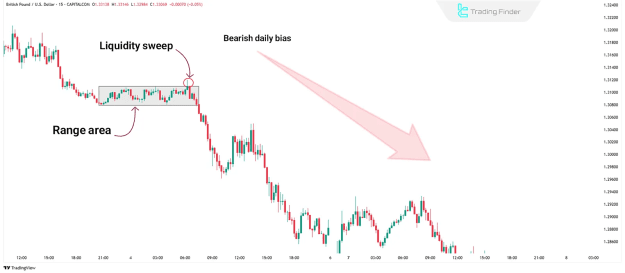
When daily charts show downward pressure:
- Monitor for bull traps above range resistance
- Initiate short positions after failed breakouts
- Project moves toward range support levels
Strategic Advantages
The ICT range methodology offers traders:
- High-probability setups with clearly defined risk parameters
- Alignment with institutional order flow dynamics
- Reduced exposure to false breakout scenarios
- Objective criteria for trade entry and exit decisions
Implementation Considerations
Successful application requires:
- Patience to wait for optimal liquidity runs
- Discipline to avoid premature entries
- Rigorous backtesting of range identification parameters
- Consistent execution of risk management protocols