

TP & SL Tool: Risk Reward Ratio Calculator RRR MT5 | Prop Firm Protector: Trade Assist Prop Firm Plus TF Expert MT5 | Money Management + DrawDown Protector: Trade Panel Prop Firm Drawdawn Limiter Pro MT5 |Get a free Expert Advisor license via Telegram and WhatsApp
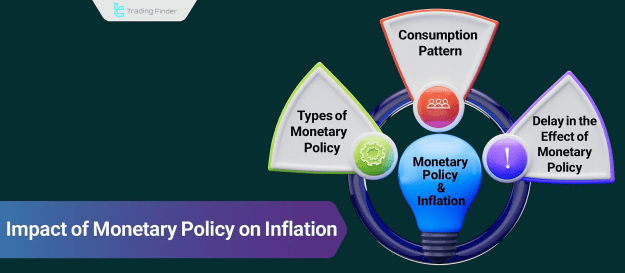
Additionally, monetary policy can trigger booms or recessions across different sectors by altering consumer spending and consumption patterns.
What Is Monetary Policy?
Monetary policy refers to a set of actions undertaken by the central bank to ensure economic stability, particularly controlling inflation and supporting the labour market (the central bank’s dual mandate). The main tools include:
- Interest Rates: Adjusting the cost of borrowing for consumers and businesses.
- Open Market Operations: Buying or selling government securities to control liquidity.
- Reserve Requirements: Determining the percentage of deposits that banks must hold with the central bank.
Contractionary vs. Expansionary Monetary Policy
The impact of monetary policies varies based on their direction:
Contractionary Monetary Policy
- Purpose: To reduce inflationary pressures.
- Effect on Inflation: Lowers inflation rates.
- Effect on Economic Growth: Restricts economic expansion.
- Tools Used: Raising interest rates and reducing asset balances.
Expansionary Monetary Policy
- Purpose: To stimulate economic growth and reduce unemployment.
- Effect on Inflation: Increases inflation due to higher liquidity.
- Effect on Economic Growth: Promotes economic expansion.
- Tools Used: Lowering interest rates and applying quantitative easing.
The stance of the central bank president, whether hawkish or dovish, also influences inflation expectations. A neutral monetary policy is applied when inflation is within the central bank’s target range to maintain economic equilibrium.
How Monetary Policies Affect Inflation
Changes in monetary policy influence liquidity levels, thus directly affecting inflation. The magnitude and direction of this impact depend on the type of policy and its objectives.
Impact of Expansionary Monetary Policy on Inflation
Expansionary policy increases liquidity through:
- Reducing interest rates;
- Purchasing securities to expand the central bank’s balance sheet (quantitative easing).
According to the monetary base formula, inflation occurs when the money supply grows faster than the supply of goods and services.
Example: Expansionary Policy and Inflation
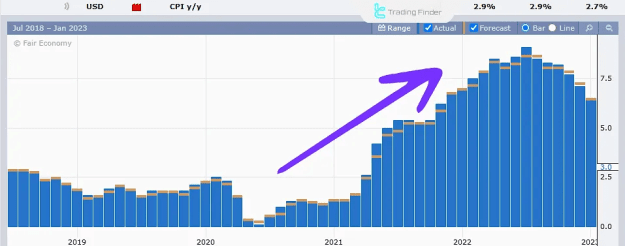
In 2020, to counter the recession caused by the COVID-19 pandemic, central banks implemented expansionary policies. The Federal Reserve:
- Lowered interest rates;
- Purchased securities, increasing liquidity.
This resulted in a sharp rise in U.S. inflation, reaching approximately 9%.
However, the intensity and duration of expansionary policies determine their overall impact on inflation.
Impact of Contractionary Monetary Policy on Inflation
Contractionary policy works by:
- Increasing borrowing costs through higher interest rates;
- Reducing liquidity in the market.
This strategy demonstrates how raising interest rates suppresses demand, leading to lower inflation.
Example: Contractionary Policy and Inflation
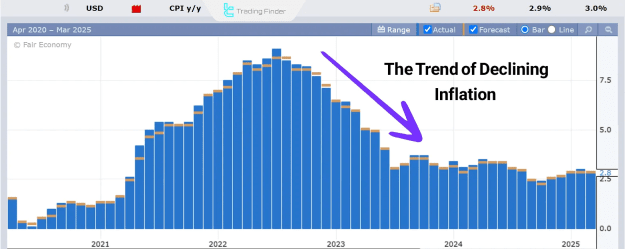
In 2022, the Federal Reserve raised interest rates to control rising inflation, which led to:
- A decrease in U.S. inflation from approximately 9% to 2%.
Timing of Monetary Policy Effects on Inflation
The effects of monetary policies are not immediate and typically take several months to influence economic indicators. This delay results from the time needed for interest rate changes to impact consumer behaviour and existing loan structures.
Example of Delay
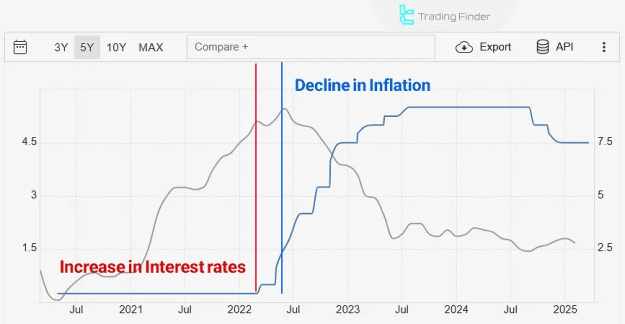
When the Federal Reserve began raising rates in March 2022, inflation only started to decline around August 2022. This lag is due to:
- The time required for the banking system and market participants to adjust to the new rates.
Why Is There a Delay in the Impact of Monetary Policy?
Key reasons include:
- Application to Existing Loans
New interest rates affect new loans immediately, but many existing loans have fixed rates or periodic revisions (every 3, 6, or 12 months). - External Economic Factors
Commodity prices, geopolitical events, supply chain disruptions, and import costs can offset or delay policy effects. - Changes in Consumer and Producer Behaviour
Expansionary policies boost liquidity and demand, leading to gradual price increases. Conversely, under contractionary policies, producers may wait to adjust prices until reduced demand proves persistent.
Sectoral Impact of Monetary Policies
Monetary policy does not affect all sectors uniformly. For example:
- Sectors dependent on imported raw materials are more sensitive due to currency exchange rate volatility, delaying the full impact of policy changes.
Example
During major economic crises:
- 1980 U.S. Inflation Crisis: Contractionary policy effects lasted 1.5 to 2 years.
- 2008 Financial Crisis: Expansionary policies took effect by 2010.
- Turkey Post-COVID-19: Interest rate cuts boosted lending and investment, but inflation rose sharply within months, leading to currency devaluation.
Changing Consumption Patterns During Monetary Policy Implementation
Both expansionary and contractionary policies influence consumption patterns based on changes in purchasing power.
- High Inflation Scenario: Consumers may shift towards cheaper substitute goods.
- Contractionary Scenario: Reduced liquidity lowers demand for luxury goods and services.
Consumption Patterns and Price Elasticity
- High Elasticity Goods: Products like luxury items or travel services show significant demand changes with price fluctuations.
- Low Elasticity Goods: Necessities such as water, electricity, internet, and medicine remain essential despite price increases, exerting economic pressure during inflationary periods.
Importance of Monitoring Consumption Patterns for Investment Decisions
In fundamental analysis:
- Analysing inflation trends and sector-specific impacts is crucial for investment planning.
- Predicting booms or recessions in different sectors guides strategic stock market decisions.
Example
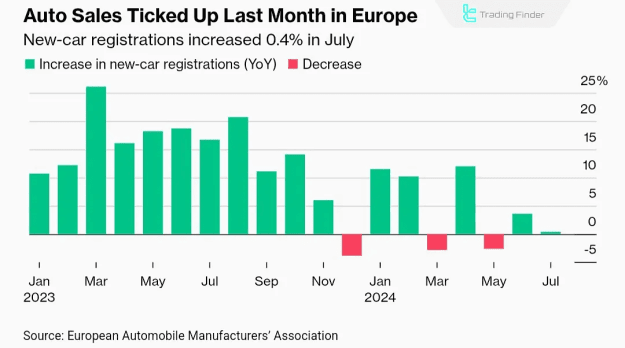
During contractionary policies, demand for new cars, especially luxury vehicles, tends to decrease. Between 2022 and 2024, the global contractionary cycle affected luxury car exports.
Conclusion
Central banks use monetary policy tools, including interest rates and open market operations, to control inflation and stabilise the economy. However, the impact of these policies is delayed due to:
- The gradual transmission of new interest rates;
- External market factors;
- Shifts in consumer and producer behaviour.
Understanding these dynamics is essential for analysing economic cycles and identifying potential booms or recessions across various sectors.