

TP & SL Tool: Risk Reward Ratio Calculator RRR MT5 | Prop Firm Protector: Trade Assist Prop Firm Plus TF Expert MT5 | Money Management + DrawDown Protector: Trade Panel Prop Firm Drawdawn Limiter Pro MT5 |Get a free Expert Advisor license via Telegram and WhatsApp
What Is Stagflation in the Economy?
Stagflation is defined as a period when economic stagnation (declining or low growth) coincides with high inflation and rising unemployment. Unlike standard economic models that suggest an inverse relationship between inflation and unemployment, stagflation defies the Phillips Curve theory by combining both.
This rare economic condition typically results from structural disruptions, such as supply shocks or prolonged cost-push inflation, which simultaneously damage productivity and drive prices higher.
How Does Stagflation Occur?
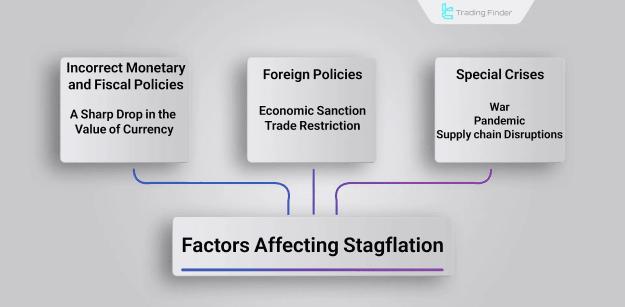
While recession and inflation usually occur under separate circumstances, stagflation emerges when supply-demand imbalances affect both simultaneously. This typically occurs during geopolitical crises, war, or prolonged supply chain disruptions.
Key Factors Contributing to Stagflation
● Rising Prices of Essential Goods
- Supply shocks or price surges in raw materials increase production costs.
- As businesses reduce output, unemployment rises.
- Consumers face higher prices, further eroding demand.
● Poor Monetary and Fiscal Policy
- Excessive money printing and liquidity injection contribute to inflation.
- Simultaneously, reduced purchasing power slows down demand.
- Misguided taxation or austerity policies raise production costs and suppress consumption.
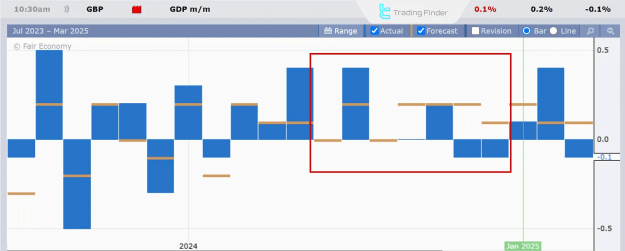
● Sharp Tax Increases (e.g., UK, H2 2024)
- Sudden tax hikes, as seen in the UK during the second half of 2024, can reduce GDP and consumer confidence.
- If inflation persists, the risk of stagflation increases.
● Trade Restrictions and Foreign Policy
- Tariffs, sanctions, and trade barriers limit supply.
- Input costs rise, disrupting production and intensifying inflationary pressure.
● Currency Depreciation and Exchange Rate Volatility
- Sharp currency devaluation reduces purchasing power.
- It leads to imported inflation, especially in import-reliant economies.
- Demand contracts while costs rise, increasing stagflation risks.
How to Overcome Stagflation
Addressing stagflation requires complex policy coordination. Policymakers must strike a balance between controlling inflation and supporting growth.
● Exchange Rate Adjustments
- Stabilizing currency through export promotion and inflation control is vital.
- Controlled devaluation may help competitiveness while curbing imported inflation.
● Increased Government Investment
- Strategic public spending boosts production and job creation.
- However, fiscal expansion must avoid excessive debt accumulation.
● Political and Economic Stability
- Foreign investment contributes to recovery.
- Ensuring political stability and securing investor confidence are essential for capital inflows and long-term growth.
Currency Behavior During Stagflation
Currency responses to stagflation vary by region and policy. Typically:
- Central banks implement contractionary policies to prioritize inflation control.
- As a result, national currencies often weaken in forex markets.
- Temporary strengthening may occur under aggressive interest rate hikes.
Best Investment Options During Stagflation
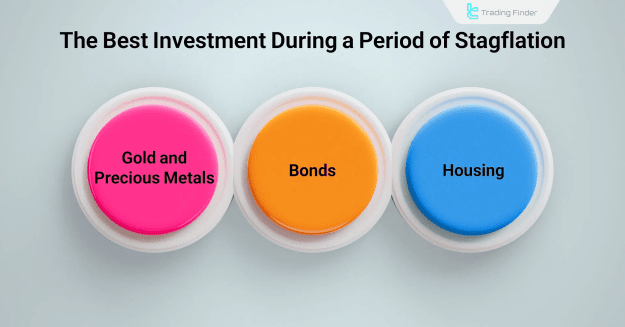
During stagflation, inflation reduces real returns in volatile markets. Investors typically shift toward safe-haven assets that preserve capital.
Recommended Assets:
- Gold and Precious Metals: Act as inflation hedges and maintain purchasing power.
- Bonds (Fixed-Income Securities): Offer capital preservation with predictable returns.
- Real Estate: Particularly in high-demand regions, property can appreciate despite inflationary pressures.
Major Historical Examples of Stagflation
The 1970s Global Stagflation
Triggered by oil supply shocks from OPEC, stagflation in the 1970s lasted nearly a decade.
Key Events:
- 1973: First oil shock due to OPEC’s supply cuts.
- 1978: Iranian Revolution further disrupted oil markets.
Consequences:
- Double-digit inflation in the US and Europe.
- High unemployment and decreased purchasing power.
- Strikes and productivity losses, especially in the UK.
- Inflation was ultimately curbed through aggressive monetary tightening.
Iran’s Stagflation Crisis
Post-revolution sanctions, oil export reductions, and severe currency depreciation have led to recurring stagflation in Iran.
Outcomes:
- Persistent double-digit inflation.
- Elevated unemployment and diminished consumer spending capacity.
Russia in the 1990s
Russia faced stagflation during its transition from a centrally planned to a market economy.
Consequences:
- Hyperinflation exceeding 200% annually in some years.
- Deep recession and mass layoffs.
- The economy stabilized after six years of reforms and international assistance.
Conclusion
Stagflation is a complex and prolonged economic challenge characterized by high inflation, rising unemployment, and stagnant or negative growth. It contradicts conventional economic models and demands tailored policy solutions.
Effective recovery strategies include:
- Exchange rate management
- Strategic government investment
- Political and economic stabilization
During such periods, capital preservation is crucial. Recommended investments include:
- Gold and precious metals
- Fixed-income securities
- Real estate in stable markets
Addressing stagflation requires careful balance, long-term vision, and structural reforms.