

- Selecting the right broker requires a thorough understanding of the services provided and the operational structure of each broker.
- Knowing the different types of brokers is essential when learning how to choose the best forex broker for your strategy.
TP & SL Tool: Risk Reward Ratio Calculator RRR MT5 | Prop Firm Protector: Trade Assist Prop Firm Plus TF Expert MT5 | Money Management + DrawDown Protector: Trade Panel Prop Firm Drawdawn Limiter Pro MT5 |Get a free Expert Advisor license via Telegram and WhatsApp
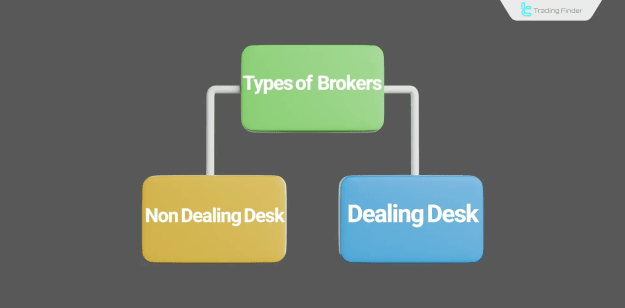
Types of Brokers Based on Execution Model
Brokers are categorised according to their execution models:
- Dealing Desk (DD) Brokers
- Non-Dealing Desk (NDD) Brokers
Dealing Desk Brokers (DD)
- In this model, traders place orders directly with the broker.
- The broker executes buy or sell orders internally, fulfilling the trader’s request within its own system.
Non-Dealing Desk Brokers (NDD)
Non-Dealing Desk brokers connect traders directly to liquidity providers and are divided into:
- STP Brokers (Straight Through Processing)
- ECN Brokers (Electronic Communication Network)
STP Brokers
- STP brokers use fixed and predefined liquidity providers.
- They offer floating spreads and often apply a slight markup to increase their profit margins.
- Generally, they do not charge a commission for executing trades.
- These brokers provide high-speed order execution with moderate transaction costs.
ECN Brokers
- ECN brokers operate a network of market participants, including banks, institutions, and traders.
- Orders are automatically matched and executed within this electronic network.
- ECN brokers charge a separate commission for facilitating trade connections.
- They provide maximum transparency and typically offer ultra-low spreads.
Key Differences Between Dealing Desk and Non-Dealing Desk Brokers
Important distinctions include:
- Order Execution
- DD brokers execute orders internally.
- NDD brokers route orders to external liquidity providers.
- Conflict of Interest
- DD brokers may have conflicts due to internal execution.
- NDD brokers operate without such conflicts.
- Spread Types
- DD brokers generally offer fixed spreads.
- NDD brokers typically provide floating spreads.
- Requotes
- DD brokers have a higher chance of requotes.
- NDD brokers minimise requotes due to direct market access.
- Price Transparency
- DD brokers have limited transparency.
- NDD brokers offer higher transparency in pricing.
- Trader Suitability
- DD brokers are suitable for beginner traders.
- NDD brokers are preferred by professional traders.
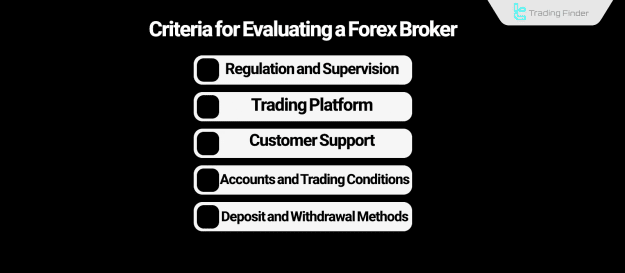
Criteria for Choosing a Forex Broker
Evaluating brokers requires consideration of the following factors:
Regulation and Supervision
- Regulation ensures the broker is monitored by financial authorities.
- Regulatory bodies are categorised as:
- Tier-1 Regulators: Highly reputable with strict regulatory frameworks.
- Tier-2 Regulators: Reputable with moderate strictness.
- Tier-3 or Offshore Regulators: Less strict, often used by brokers serving sanctioned regions.
Trading Platform
- An effective trading platform should be stable, fast, and widely recognised.
- Common platforms include MetaTrader 4 (MT4), MetaTrader 5 (MT5), and cTrader.
- Fast execution with minimal slippage indicates robust infrastructure.
Customer Support
- Reliable customer support is crucial for trading continuity.
- Ideal support features include:
- 24/7 availability
- Multiple communication channels such as live chat, phone, and email
- Multilingual assistance
Account Types and Trading Conditions
- Brokers should offer diverse account types (ECN, Micro, Standard) to suit various trading strategies.
- Evaluation criteria include:
- Minimum deposit requirements
- Leverage options
- Spread levels
- Transaction commissions
Deposit and Withdrawal Methods
- A good broker offers multiple deposit and withdrawal options to ensure smooth transactions at all times.
- Common methods include:
- Bank wire transfers
- Credit or debit cards
- E-wallets like Skrill and Neteller
- Cryptocurrency payments
Conclusion
Choosing the right forex broker involves evaluating:
- The execution model (Dealing Desk or Non-Dealing Desk)
- Spread structure (fixed or floating)
- Requote risk
- Pricing transparency
- Connectivity to the interbank market
Additionally, assessing a broker’s credibility by examining its regulatory status, account structures, commission policies, and trading platforms is essential. Ultimately, these factors should align with the trader’s strategy to ensure optimal trading performance in the Forex market.