

TP & SL Tool: Risk Reward Ratio Calculator RRR MT5 | Prop Firm Protector: Trade Assist Prop Firm Plus TF Expert MT5 | Money Management + DrawDown Protector: Trade Panel Prop Firm Drawdawn Limiter Pro MT5 |Get a free Expert Advisor license via Telegram and WhatsApp
What Is the Carry Trade Strategy?
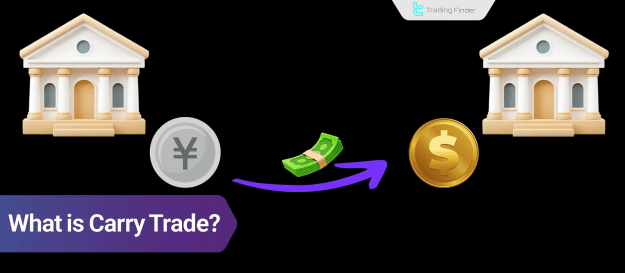
The carry trade strategy is a fundamental trading approach that exploits interest rate differentials between two economies. Traders borrow in a low-interest-rate currency (such as the Japanese yen or Swiss franc) and invest in higher-yielding assets (like bonds, stocks, or gold).
By leveraging this interest rate gap, traders earn profits from the yield spread while covering the borrowing costs. For example, borrowing in Japanese yen (where interest rates are historically low) and investing in U.S. Treasury bonds (with higher yields) can generate steady returns in stable market conditions.
Advantages and Disadvantages of Carry Trade
Advantages
- Low-risk profits in stable markets with minimal volatility.
- Potential currency appreciation if the high-yield currency strengthens.
- Steady returns from bond yields when interest rate differentials remain favorable.
Disadvantages
- Interest rate fluctuations can reduce profit margins.
- Market sentiment shifts (risk-on/risk-off) impact capital flows.
- Currency depreciation risk if the funding currency strengthens unexpectedly.
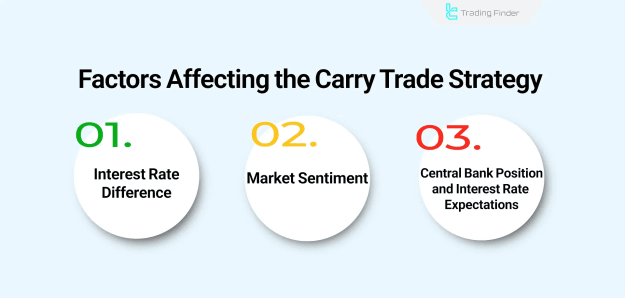
Key Factors Influencing Carry Trade
1. Interest Rate Differentials
The core driver of carry trade profitability. Wider gaps between borrowing and investment yields increase potential returns.
2. Market Sentiment (Risk Appetite vs. Risk Aversion)
- Risk-on environments encourage carry trades as investors seek higher returns.
- Risk-off scenarios (recessions, geopolitical tensions) lead to unwinding of carry trades, strengthening funding currencies like the yen.
3. Central Bank Monetary Policies
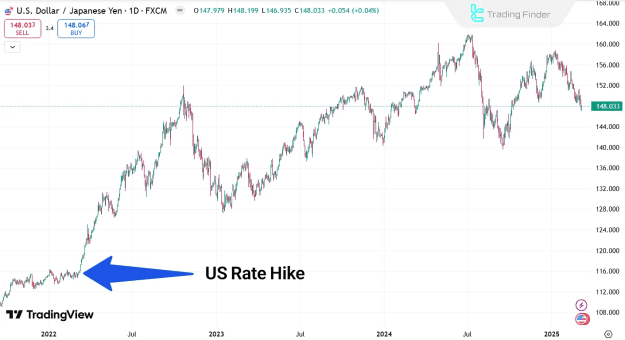
- Rate hikes in high-yield economies attract more carry traders.
- Dovish policies in funding economies (e.g., Japan) sustain low borrowing costs.
Why the Yen Is a Popular Funding Currency
Japan’s persistently low interest rates make the yen a prime choice for carry traders. Borrowing in yen and investing in higher-yield assets creates downward pressure on the JPY, weakening it over time.
Yen’s Inverse Correlation with Global Markets
- During bull markets, carry traders sell yen to invest in riskier assets, depreciating the JPY.
- In market downturns, traders unwind positions, buying back yen and causing it to appreciate.
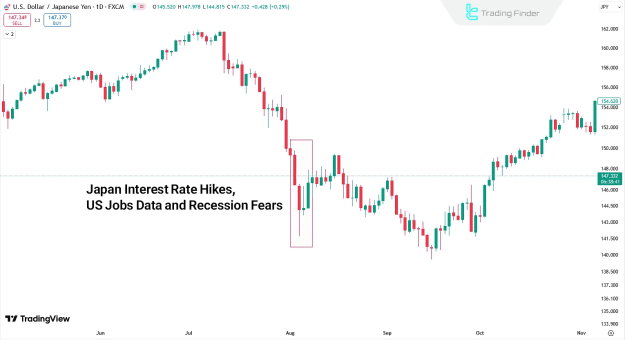
Example: Yen Surge in 2024
In July 2024, the yen rallied sharply due to:
- Japan’s rate hike (reducing carry trade appeal).
- Weak U.S. jobs data, triggering risk-off sentiment and yen buying.
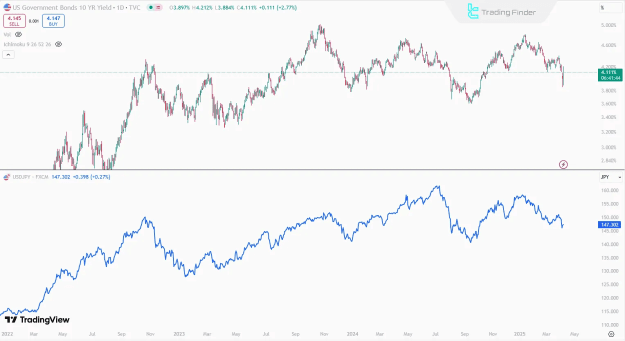
Relationship Between USD/JPY and U.S. Bond Yields
Key Correlation Factors
- Safe-Haven Demand
- In crises, investors flock to U.S. bonds (lowering yields) and the yen, pushing USD/JPY down.
- Carry Trade Activity
- Rising U.S. Treasury yields attract yen-funded investments, weakening JPY and lifting USD/JPY.
Conclusion
The carry trade strategy remains a powerful tool for traders capitalizing on interest rate disparities. However, its success depends on:
- Stable interest rate differentials.
- Favorable market sentiment.
- Central bank policies.
For forex traders, monitoring yen movements and U.S. bond yields provides critical insights into carry trade trends. By understanding these dynamics, investors can better navigate opportunities and risks in global markets.