

TP & SL Tool: Risk Reward Ratio Calculator RRR MT5 | Prop Firm Protector: Trade Assist Prop Firm Plus TF Expert MT5 | Money Management + DrawDown Protector: Trade Panel Prop Firm Drawdawn Limiter Pro MT5 |Get a free Expert Advisor license via Telegram and WhatsApp
Understanding Time Frames
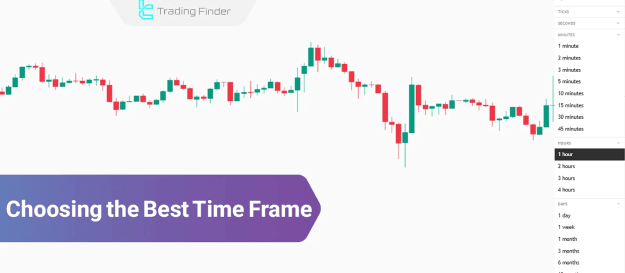
A time frame refers to the duration between the opening and closing of a candlestick on a trading chart. Each time frame reflects a unique market behavior, affecting how traders interpret indicators and apply technical analysis tools.
Key Categories of Time Frames
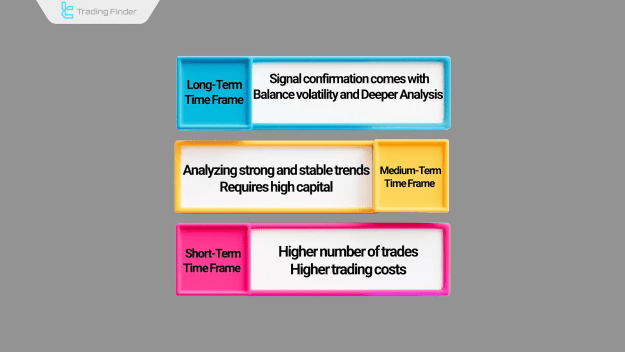
Time frames are typically divided into three main categories:
- Long-Term: Daily and higher intervals
- Medium-Term: Between 1 and 4 hours
- Short-Term: Ranging from 1 to 15 minutes
Each category is best suited for a particular trading style, profit strategy, and risk profile.
Short-Term Time Frames (1 to 15 Minutes)
Short-term time frames are primarily used for scalping strategies, where trades are opened and closed within minutes.
Key Characteristics:
- High sensitivity to market news and data releases
- Frequent price fluctuations with unpredictable movements
- Increased levels of market noise
- Fast-paced trading requiring quick execution
- Higher number of trades with small profit targets
This category is ideal for traders aiming to capitalize on micro price movements in highly liquid markets.
Medium-Term Time Frames (1 to 4 Hours)
Medium-term charts offer a balanced environment between volatility and stability, making them well-suited for day trading and swing trading strategies.
Key Characteristics:
- A stable structure with moderate noise
- Clear price action and pattern formation
- Reliable support and resistance levels
- Manageable risk-to-reward ratios
- Ideal for traders seeking technical confirmation before entry
Medium-term time frames allow for more deliberate trade execution while still providing ample opportunities.
Long-Term Time Frames (Daily and Above)
Long-term time frames are commonly employed in position trading or long-term swing trading. These charts reflect broader market trends and are less affected by short-term volatility.
Key Characteristics:
- Minimal noise and clean price structure
- Clear trend development over time
- Reliable breakouts and strong support/resistance zones
- Lower trade frequency with higher potential profits
- More time for fundamental and macroeconomic analysis
This time frame suits traders who prioritize market sentiment and long-term trend analysis.
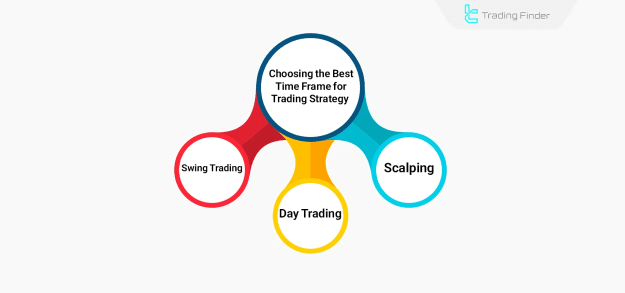
Choosing the Right Time Frame Based on Strategy
Selecting the most appropriate time frame is a critical step in aligning your trading strategy with your market expectations, risk tolerance, and execution style.
Best Time Frame for Scalping
Scalping requires rapid trades with minimal price movement. An effective scalping time frame should ensure:
- High market liquidity and trading volume
- Minimal spreads for cost efficiency
- Real-time price action observation for swift decisions
Time frames between 1 to 5 minutes are typically optimal for scalping techniques.
Best Time Frame for Day Trading
Day traders complete all transactions within the same trading session. The preferred time frames generally range from 15 minutes to 1 hour, offering a good balance between speed and clarity.
Key factors include:
- Intraday price analysis
- Sufficient room for technical setups
- Alignment of entry and exit points within a single day
Best Time Frame for Swing Trading
Swing traders aim to capture larger price movements over a span of hours or days. Time frames from 1 hour to daily provide a suitable environment for this strategy.
Traders should focus on:
- Clearly defined market structures
- Formation of chart patterns and technical signals
- Accurate risk management over extended time periods
Conclusion
Selecting the correct time frame for trading is essential for optimizing technical analysis, reducing market noise, and improving signal accuracy. By aligning your chosen time frame with your trading goals and methodology, you increase the effectiveness and consistency of your strategy.
Whether you're scalping quick moves or analyzing long-term trends, matching your strategy to the appropriate time frame is a foundational element of successful trading.