

TP & SL Tool: Risk Reward Ratio Calculator RRR MT4 | Prop Firm Protector: Trade Assist Prop Firm Plus TF Expert MT4 | Money Management + DrawDown Protector: Trade Panel Prop Firm Drawdawn Limiter Pro MT4 |Get a free Expert Advisor license via Telegram and WhatsApp
ICT Concepts Used in the Twitter Model
The foundation of the Twitter Model is built upon multiple Smart Money Concepts (SMC), each playing a specific role in defining structure, liquidity, and entry conditions:
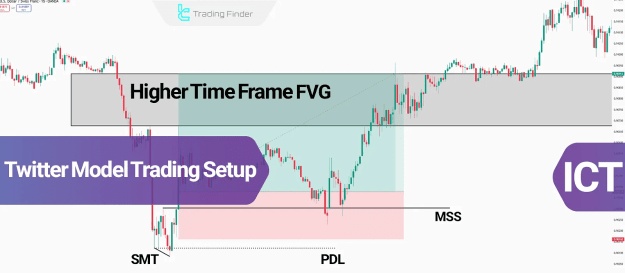
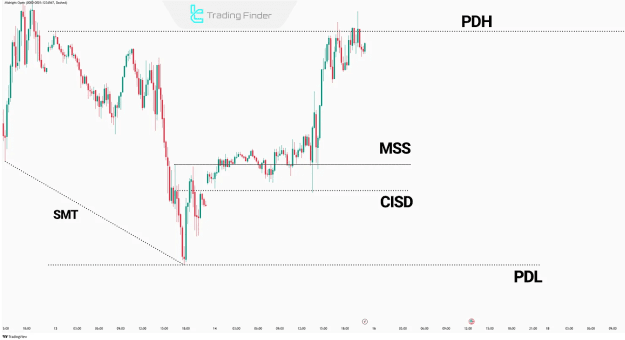
- Market Structure Shift (MSS): Represents a mid-term reversal by breaking a significant swing high or swing low.
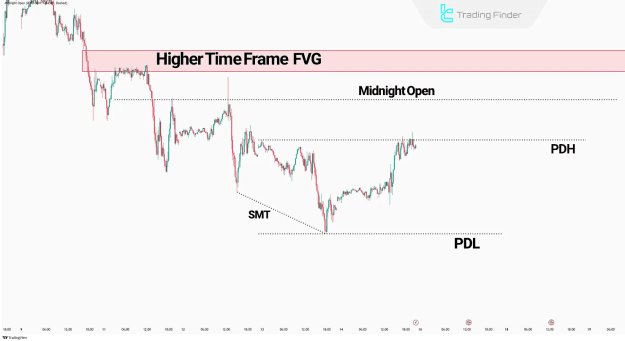
- Smart Money Divergence (SMT): Occurs when correlated assets diverge, suggesting a liquidity grab or manipulation by institutional players.
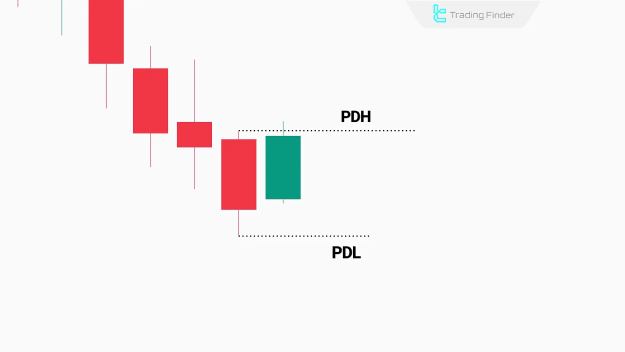
- Previous Day Low (PDL): The lowest price of the previous day, often used as a support level or liquidity target.
- Previous Day High (PDH): The highest price of the prior day, acting as a resistance level or area of interest for liquidity.
- Fair Value Gap (FVG): A gap between three consecutive candles that reflects a temporary price imbalance likely to be revisited.
Setup Identification and Multi-Timeframe Analysis
Each element of the Twitter Model strategy is analyzed on a distinct timeframe to confirm institutional activity and entry precision.
Step-by-Step Twitter Model Setup
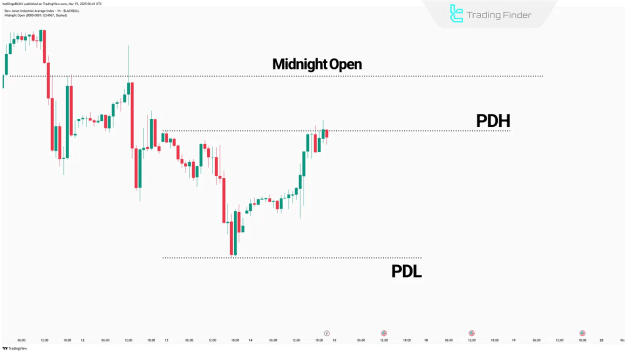
- Identify PDH/PDL on the daily timeframe as the primary reference level for divergence and liquidity zones.
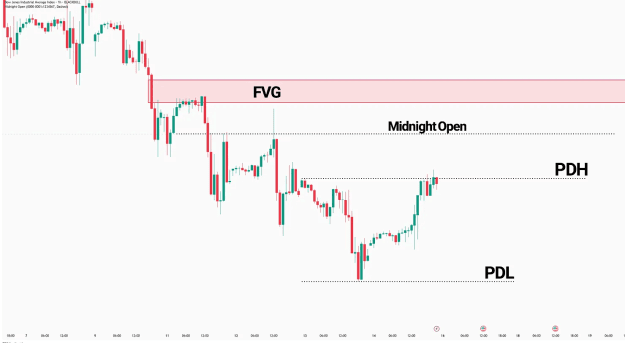
- Mark the Midnight Open to define the anticipated direction (Buy or Sell bias).
- Locate the 1-hour FVG as a potential retracement zone where price is expected to return.
- On the 15-minute chart, look for SMT divergence in relation to PDH or PDL, aligned with the Midnight Open bias.
- Confirm the Market Structure Shift (MSS) on the same 15-minute timeframe for a valid trend reversal indication.
A valid trade opportunity arises only when all conditions above are confirmed. Absence of any condition invalidates the setup.
Trading the Twitter Model Setup
Once a Market Structure Shift is identified and all prior conditions are met, the trader can proceed with placing a trade. Entry, stop loss, and take profit levels should be managed according to liquidity structure and price behavior.
Entry Strategies
- Aggressive Entry: Enter immediately after MSS confirmation to avoid missing the move if price doesn’t retrace. This reduces risk-to-reward slightly.
- Conservative Entry: Wait for a pullback to the 1-hour FVG, offering a better risk-to-reward setup. However, the trade may be missed if price continues without retracing.
Stop Loss Placement
- Below MSS Candle: Offers a tighter stop with better risk-to-reward but is vulnerable to liquidity sweeps.
- Below SMT Divergence Candle Wick: Provides a more protected stop but lowers the risk-to-reward ratio.
Take Profit Strategy
- The 1-hour Fair Value Gap zone can act as an optimal target area based on the momentum and direction of the price movement.
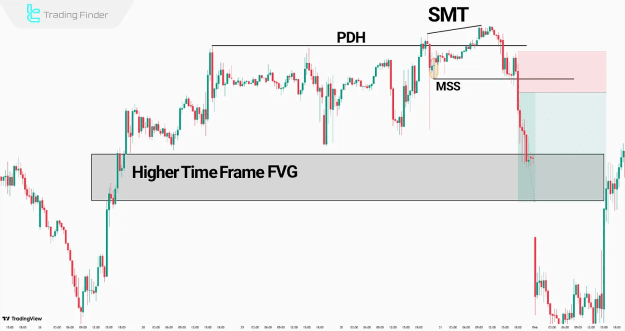
Example: Sell Trade Using the Twitter Model
In a bearish setup:
- Identify PDL and mark Midnight Open;
- Detect SMT divergence and MSS on the 15-minute timeframe;
- Wait for a pullback to the 1-hour FVG;
- Place a short position with stop loss below the SMT wick or MSS candle;
- Exit the position within the target FVG zone or at a predetermined liquidity level.
Pros and Cons of the Twitter Model Setup
While this strategy aligns closely with Smart Money behavior, it also involves a degree of complexity due to its reliance on multi-timeframe analysis and multiple confirmations.
Pros
- Integrates liquidity and order flow precision
- Aligns entries with institutional trading behavior
- Filters false breakouts using divergence and structure
- Encourages entries at high-probability liquidity zones
- Supports effective risk management with structure-based stop placement
Cons
- Requires multiple confirmations and chart analysis
- Involves higher execution complexity
- Signals are infrequent due to strict criteria
- Depends heavily on London and New York trading sessions
Conclusion
The Twitter Model is a structured and efficient trading setup that combines MSS, SMT divergence, Fair Value Gaps, and key liquidity levels like PDH/PDL. It is ideal for traders with a strong understanding of ICT principles and a disciplined approach to multi-timeframe analysis. While its confirmation-heavy nature may limit frequency, it significantly improves the quality and reliability of trade setups.