

TP & SL Tool: Risk Reward Ratio Calculator RRR MT5 | Prop Firm Protector: Trade Assist Prop Firm Plus TF Expert MT5 | Money Management + DrawDown Protector: Trade Panel Prop Firm Drawdawn Limiter Pro MT5 |Get a free Expert Advisor license via Telegram and WhatsApp
Understanding Forex
What is Forex?
The Forex (Foreign Exchange) market is a decentralized over-the-counter (OTC) market where global currencies are traded in pairs. Forex trading is primarily speculative and is conducted through Contracts for Difference (CFDs). In CFD trading, participants do not own the underlying currency but profit from price movements.
- Decentralized structure
- 24/5 market access
- Primarily used for speculative purposes
- Currency pairs such as EUR/USD, GBP/JPY, etc.
Key Characteristics of the Forex Market
- Extremely high liquidity (approximately $5–7 trillion in daily volume)
- Flexible leverage (up to 1:500 or more)
- Trading through four major sessions: Sydney, Tokyo, London, and New York
- No fixed expiration dates for trades
- Minimal trading costs (spread, commission, and swap)
Understanding Futures
What is the Futures Market?
The Futures market is a centralized and exchange-regulated market where standardized contracts are traded. These contracts obligate the buyer and seller to transact an asset at a predetermined price on a specified future date.
- Centralized exchanges such as CME, NYMEX, and others
- Used for both speculation and long-term hedging
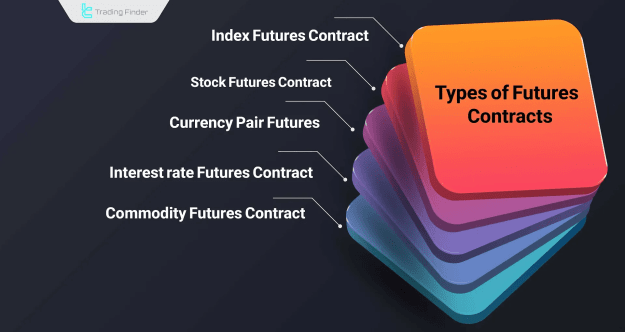
- Covers a variety of asset classes including commodities, indices, currencies, and cryptocurrencies
Core Features of Futures Trading
- Standardized contracts with expiration dates
- Trading volume varies by asset (e.g., S&P500, oil, gold)
- Transparent pricing and regulation
- Limited leverage (typically up to 1:100)
- Involves exchange fees in addition to spreads
Major Differences Between Forex and Futures
Market Structure and Instruments
- Forex: Decentralized, focused on currency pairs
- Futures: Centralized, includes a broad range of asset classes
Trading Hours
Forex Trading Hours
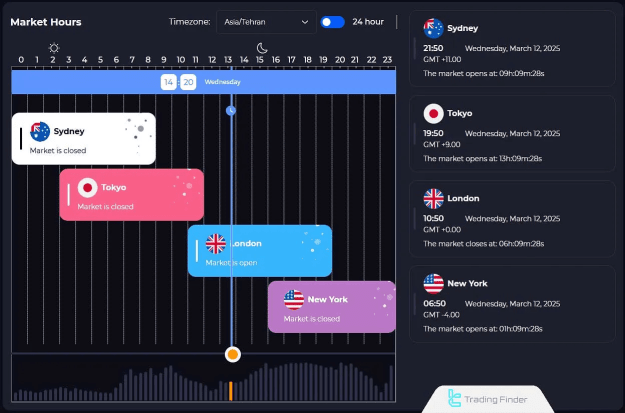
Forex operates continuously 24 hours a day, five days a week, following the global market cycle across four major sessions:
- Sydney
- Tokyo
- London
- New York
Futures Trading Hours
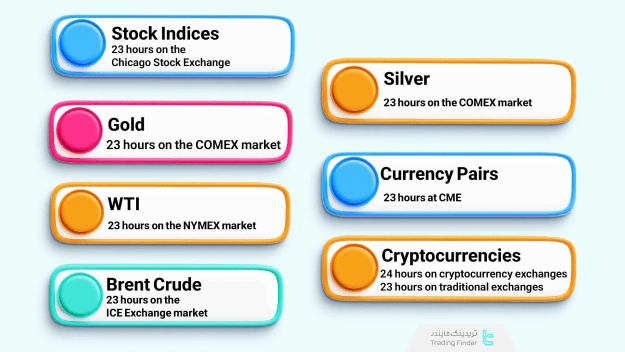
Futures trading sessions depend on the exchange and the specific asset being traded. While many futures assets trade nearly 24 hours, most markets:
- Have short daily breaks for liquidity management
- Close on holidays, unlike Forex
- Include crypto futures which may operate 24/7
Leverage and Volume
- Forex Market:
- Offers higher leverage (up to 1:500)
- Largest global trading volume (over $5 trillion daily)
- Futures Market:
- Offers regulated and limited leverage
- Total volume varies by asset (e.g., ~30–40 billion daily for major contracts)
Hedging and Risk Management
Hedging is one of the key distinguishing functions between the Forex and Futures markets. Each market offers unique mechanisms for risk management.
Hedging in the Futures Market
Futures contracts are ideal for long-term risk hedging due to the ability to fix prices for a future date. This is especially beneficial for commercial enterprises managing commodity costs.
Example:
An airline company expecting higher oil prices can buy oil futures at a fixed rate (e.g., $75 per barrel), effectively locking in future costs and avoiding market volatility.
Hedging in the Forex Market
Forex is more suitable for short-term hedging strategies against currency risk. Hedging in Forex usually involves speculative positioning on currency pairs to offset potential losses.
Example:
A European exporter worried about the weakening Swiss Franc can buy EUR/CHF to hedge the risk of currency depreciation impacting revenue.
Comparison of Hedging Capabilities
- Forex:
- Short-term hedging
- Includes overnight swap costs
- No fixed pricing
- Futures:
- Long-term hedging
- No swap costs
- Fixed price contracts
Transaction Costs and Market Access
Forex Costs
- Spread
- Commission (may vary by broker)
- Swap (overnight interest)
Futures Costs
- Spread
- Exchange fees
- No swap costs
Forex traders typically benefit from lower transaction costs and greater accessibility, while Futures traders enjoy more transparency and regulatory oversight.
Conclusion
While both Forex and Futures markets offer valuable opportunities for traders and institutions, they serve different purposes based on their structure and capabilities.
- Forex is ideal for short-term speculative trading with high liquidity and leverage.
- Futures offer standardized contracts that are more suitable for long-term hedging and provide greater regulatory protection.
Traders and businesses should choose between these markets based on their risk management needs, trading objectives, and preferred asset classes.