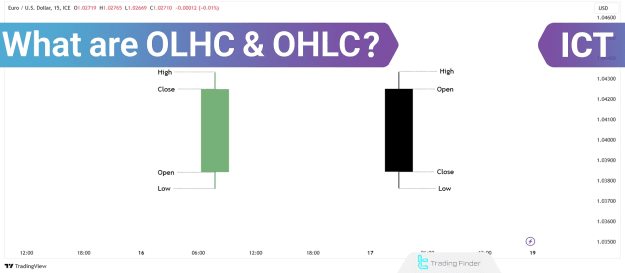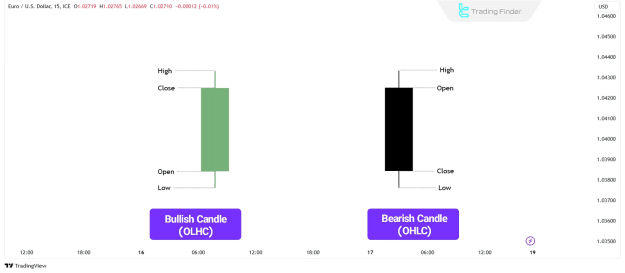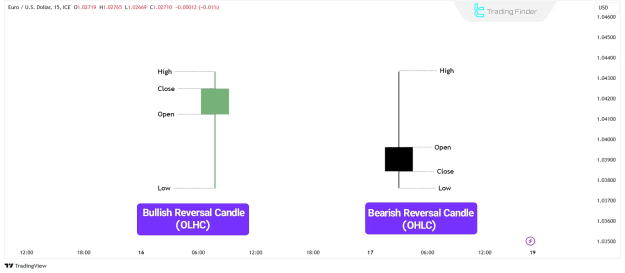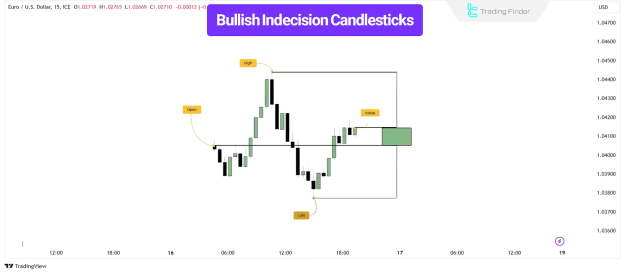


Each candlestick consists of four key components:
- Open Price: The starting price of the candlestick.
- High Price: The highest price reached during the timeframe.
- Low Price: The lowest price reached during the timeframe.
- Close Price: The final price at the end of the candlestick.
By analyzing these components, Forex traders can determine whether buyers or sellers are in control, helping them make informed trading decisions based on price action dynamics.
TP & SL Tool: Risk Reward Ratio Calculator RRR MT4 | Prop Firm Protector: Trade Assist Prop Firm Plus TF Expert MT4 | Money Management + DrawDown Protector: Trade Panel Prop Firm Drawdawn Limiter Pro MT4 |Get a free Expert Advisor license via Telegram and WhatsApp
Bullish (OLHC) vs. Bearish (OHLC) Candlesticks
Candlesticks are broadly categorized into bullish (OLHC) and bearish (OHLC) based on their price action:
Bullish Candlestick (OLHC) – Buyers in Control
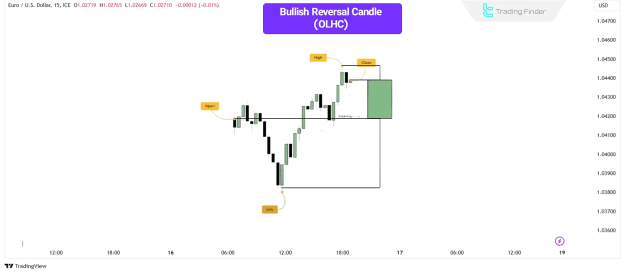
- Structure: The price opens, drops slightly to form a low, then rises to establish a high, and finally closes near the top.
- Implication: Indicates strong buying pressure, suggesting upward momentum.
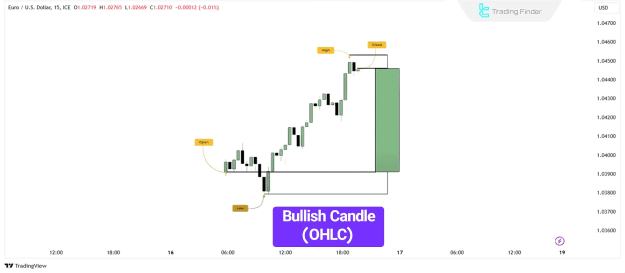
Internal Price Movement of a Bullish OLHC Candlestick
On a lower timeframe, a bullish OLHC candlestick shows:
- A slight downward move (forming the low).
- A strong upward push (creating the high).
- A minor pullback before closing higher.
This structure reflects accumulation followed by a bullish breakout.
Bearish Candlestick (OHLC) – Sellers in Control
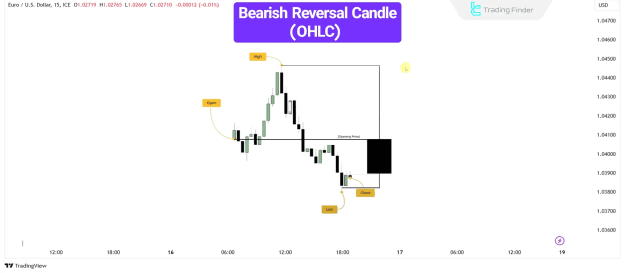
- Structure: The price opens, rises slightly to form a high, then declines to establish a low, and finally closes near the bottom.
- Implication: Signals selling dominance, indicating potential downward movement.
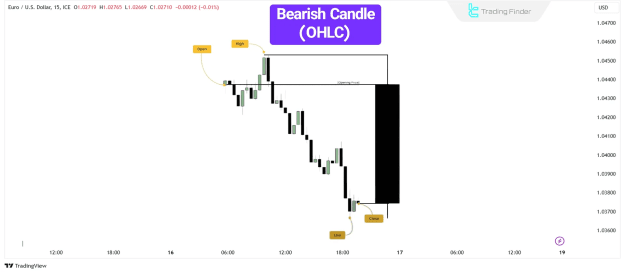
Internal Price Movement of a Bearish OHLC Candlestick
On a lower timeframe, a bearish OHLC candlestick reveals:
- A slight upward move (forming the high).
- A strong downward push (creating the low).
- A minor recovery before closing lower.
This pattern suggests distribution followed by a bearish breakdown.
Types of ICT Candlesticks and Their Significance
1. Directional Candlesticks (Trend Continuation)
- Characteristics: Strong momentum with a large body and small wicks.
- Bullish Directional Candle: Forms a low, then surges upward, closing near the high.
- Bearish Directional Candle: Forms a high, then drops sharply, closing near the low.
- Trading Implication: Consecutive directional candles indicate a strong trend, offering entry opportunities.
2. Reversal Candlesticks (Trend Change Signals)
- Characteristics: Indicate potential trend exhaustion and reversal.
- Bullish Reversal (OLHC): Price drops initially, then reverses to close higher.
- Bearish Reversal (OHLC): Price rises initially, then reverses to close lower.
- Trading Implication: Signals a possible shift in market sentiment, prompting traders to watch for reversals.
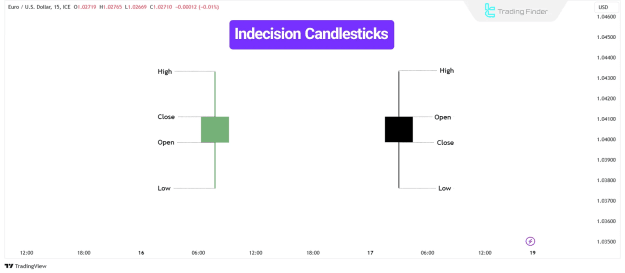
3. Indecision Candlesticks (Market Uncertainty)
- Characteristics: Small body with long upper and lower wicks.
- Bullish Indecision (OLHC): Price fluctuates but closes near the open, slightly bullish.
- Bearish Indecision (OHLC): Price fluctuates but closes near the open, slightly bearish.
- Trading Implication: Suggests consolidation; traders should wait for confirmation before entering.
Practical Trading Applications
- Directional Candles: Used to confirm trend strength and continuation.
- Reversal Candles: Help spot potential trend reversals for counter-trend entries.
- Indecision Candles: Indicate market hesitation, requiring additional confirmation before trading.
Analyzing AMD (Accumulation, Manipulation, Distribution) in Candlesticks
The Power of Three (PO3) model explains candlestick formations through:
- Accumulation: Price consolidates near the open.
- Manipulation: Price breaks out (bullish) or breaks down (bearish).
- Distribution: Price retraces before closing, confirming the trend.
This model helps traders understand market maker strategies and anticipate future price movements.
Conclusion
OHLC and OLHC candlestick patterns are fundamental tools in ICT trading methodology. By analyzing these structures, traders can:
- Identify trend direction (bullish/bearish).
- Spot potential reversals.
- Recognize market indecision periods.
Understanding these patterns enhances decision-making, allowing traders to align their strategies with market sentiment and institutional behavior.
For optimal trading results, combine OHLC/OLHC analysis with other ICT concepts like liquidity zones and order blocks for a comprehensive market approach.