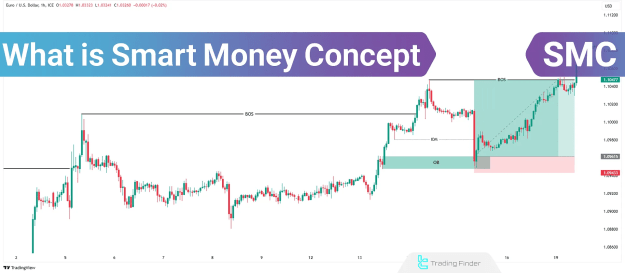


SMC traders analyze institutional behavior to identify high-probability trade setups, aligning their strategies with "smart money"—the capital controlled by major financial institutions.
What Is Smart Money & How Does It Work?
Smart Money refers to the capital controlled by large financial institutions that influence price movements due to their access to:
- Advanced market data
- High liquidity execution
- Large-scale order flow
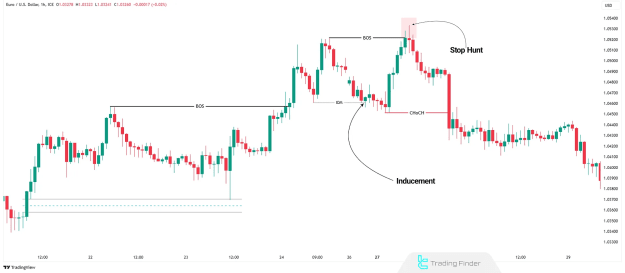
These entities manipulate markets through liquidity grabs, stop hunts, and order block placements, forcing retail traders into unfavorable positions before executing their own trades at optimal levels.
Advantages & Disadvantages of the Smart Money Concept
Advantages of SMC Trading
Accurate institutional entry points via Order Blocks (OBs) & Break of Structure (BOS)
- Tight stop-loss placements based on Fair Value Gaps (FVGs) & Change of Character (CHoCH)
- Detects liquidity sweeps before major price movements
- Works across all timeframes (scalping to swing trading)
- No reliance on lagging indicators—pure price action analysis
Disadvantages of SMC Trading
- Steep learning curve—requires deep understanding of market mechanics
- Risk of misinterpreting liquidity zones without proper experience
- No definitive proof of institutional manipulation (relies on probabilistic analysis)
Key Components of the Smart Money Concept
1. Market Structure (MS)
Market structure defines trends, highs, lows, and accumulation zones. Traders analyze higher timeframes (H1, H4, D1) to determine the dominant trend before executing trades.
2. Break of Structure (BOS)
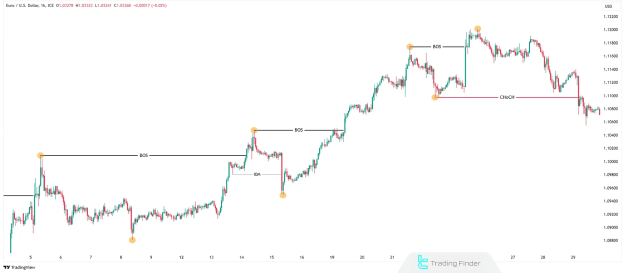
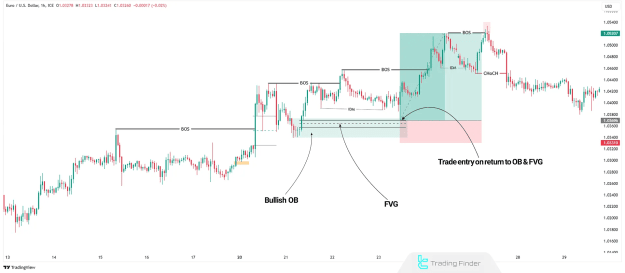
A BOS occurs when price breaks a significant high/low, confirming trend continuation. Traders use BOS to enter trades in the direction of the new trend.
3. Change of Character (CHoCH)
A CHoCH signals a potential trend reversal, often occurring after liquidity sweeps. It helps traders identify reversal zones before institutions enter.
4. Order Blocks (OBs)
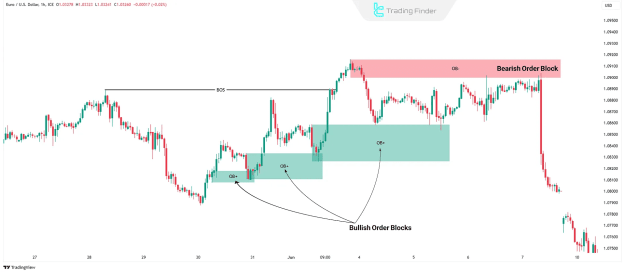
Order Blocks are zones where institutions place large buy/sell orders. These act as key entry levels for SMC traders.
5. Breaker Blocks (BBs)
When price breaks an Order Block and reverses, it forms a Breaker Block, acting as a new support/resistance level.
6. Fair Value Gaps (FVGs)
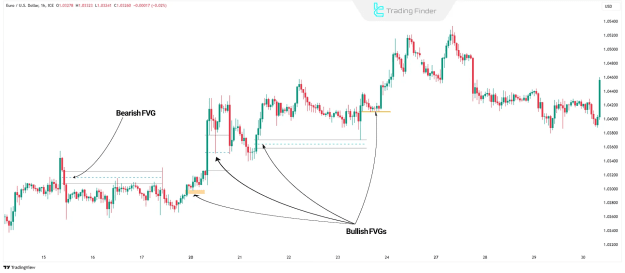
FVGs are price imbalances caused by rapid institutional moves. Traders anticipate price retracements to fill these gaps.
7. Liquidity Sweeps & Runs
Institutions manipulate liquidity by triggering retail stop-losses before reversing price. Traders wait for liquidity absorption before entering.
How Smart Money Controls the Market
Institutions use several strategies to manipulate price:
- Inducement – Trapping retail traders into false moves before reversing.
- Stop Hunts – Running stops to absorb liquidity before executing large orders.
- False Breakouts – Fake breakouts to mislead retail traders.
How to Trade Using the Smart Money Concept
- Determine Market Trend (Higher timeframe analysis – H1, H4, D1)
- Identify BOS & CHoCH (Confirm trend continuation/reversal)
- Locate Order Blocks (Institutional entry zones)
- Analyze FVGs & Liquidity Grabs (Spot imbalances & stop hunts)
- Enter Trades (Lower timeframe confirmation – M15, M5)
Smart Money Concept (SMC) vs. ICT Trading vs. Traditional Analysis
SMC vs. ICT Trading
- ICT focuses on time-based liquidity models (Kill Zones, PD Arrays).
- SMC emphasizes Order Blocks, BOS, CHoCH, and liquidity sweeps.
SMC vs. Traditional Technical Analysis
- Traditional traders rely on indicators & support/resistance.
- SMC traders follow institutional order flow & price structure.
Conclusion
The Smart Money Concept (SMC) provides a pro-level approach to Forex trading by focusing on institutional order flow, liquidity, and market structure. By mastering Order Blocks, BOS, CHoCH, and FVGs, traders can align their strategies with big money movements, increasing their probability of success.
While SMC has a complex learning curve, it offers a more accurate alternative to traditional retail trading methods. By understanding how institutions manipulate markets, traders can anticipate moves and execute high-probability trades.
For traders looking to transition from retail to institutional-style trading, mastering the Smart Money Concept is a crucial step toward consistent profitability.