

What Are Buy Side and Sell Side Liquidity?
Liquidity in trading refers to the accumulation of pending orders, primarily stop losses. Recognizing these zones allows traders to anticipate price movements by analyzing where liquidity is concentrated.
Key Insight:
- A stop loss for a Buy position is a Sell order.
- A stop loss for a Sell position is a Buy order.
Buy Side Liquidity (BSL)
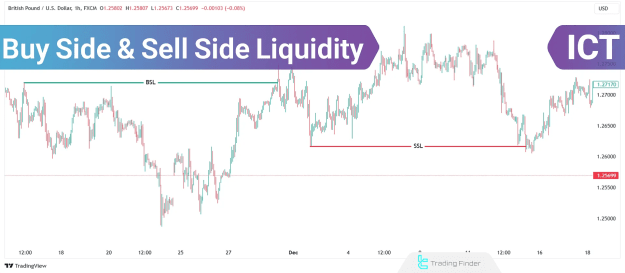
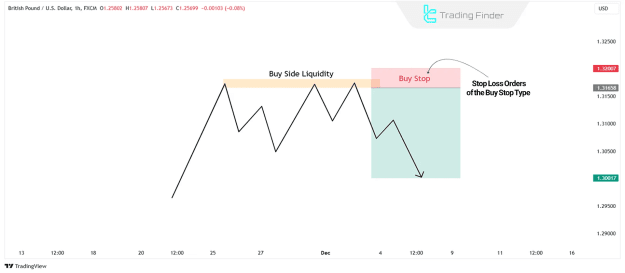
BSL represents clusters of Buy Stop orders placed above key resistance levels. Retail traders often set these stops to protect short positions, making them predictable targets for liquidity sweeps.
Common BSL Zones:
- Previous swing highs
- Equal highs (EQH)
- Daily/weekly highs
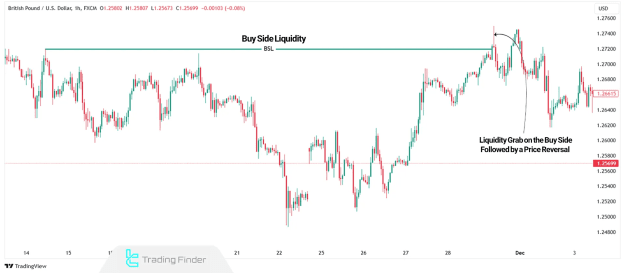
When price sweeps BSL, it often triggers these stops before reversing, creating a bearish pullback.
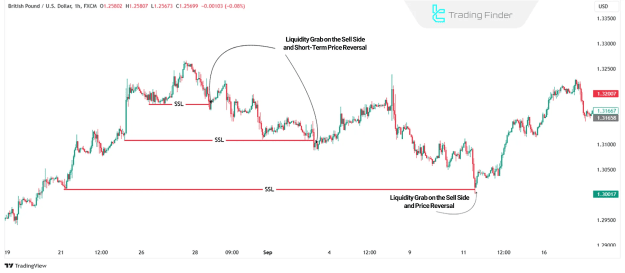
Sell Side Liquidity (SSL)
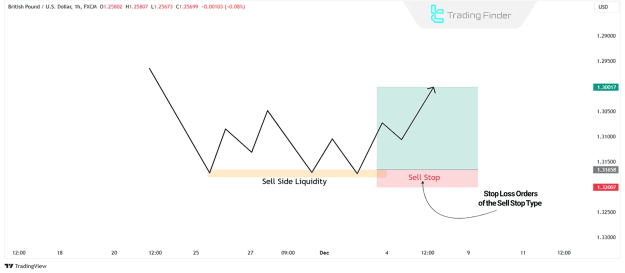
SSL consists of Sell Stop orders placed below support levels. These stops protect long positions and are frequently found near swing lows or equal lows (EQL).
Common SSL Zones:
- Previous swing lows
- Equal lows (EQL)
- Daily/weekly lows
A liquidity sweep below SSL typically triggers stops, leading to a rapid bullish reversal.
Liquidity Sweeps: How Smart Money Manipulates Price
Institutional traders deliberately push price into liquidity zones to trigger retail stop losses. This process, known as a liquidity sweep, provides the necessary liquidity for large orders.
BSL Sweep Example
- Price breaks above a resistance level (BSL).
- Buy Stops are triggered, fueling a short-term rally.
- Once liquidity is absorbed, price reverses downward.
SSL Sweep Example
- Price dips below a support level (SSL).
- Sell Stops are activated, causing a brief drop.
- After liquidity is taken, price reverses upward.
How to Trade BSL and SSL Effectively
To leverage liquidity concepts in trading:
- Identify Key Liquidity Zones
- Mark previous highs/lows, EQH/EQL, and session extremes.
- Focus on higher timeframe levels (daily/weekly).
- Watch for Liquidity Sweeps
- A false breakout above BSL suggests a potential short opportunity.
- A false breakdown below SSL indicates a possible long entry.
- Combine with Market Structure
- Align liquidity sweeps with order blocks and premium/discount zones.
- Confirm reversals using candlestick patterns or momentum shifts.
Conclusion
BSL and SSL represent critical zones where retail stop losses accumulate. By identifying these areas, traders can anticipate institutional liquidity grabs and position themselves for high-probability reversals.
Pro Tip: Avoid placing stops at obvious levels (previous highs/lows, EQH/EQL) to reduce exposure to liquidity sweeps. Instead, use deeper levels or volatility-based stops for better risk management.