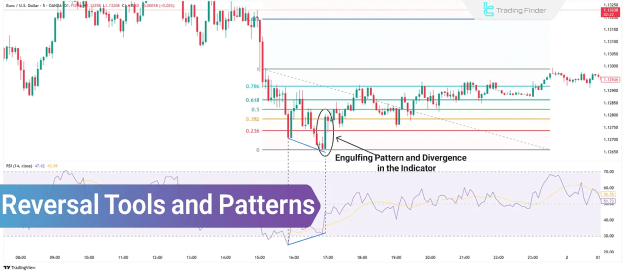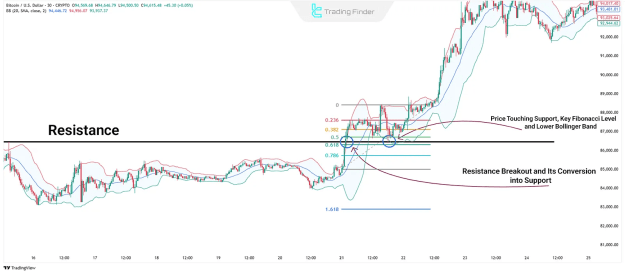


Reversal zones gain significance when multiple indicators align, such as:
- Divergences (RSI, MACD)
- Candlestick patterns (Pin Bars, Engulfing)
- Key support/resistance levels
- Fibonacci retracements
Top Tools for Detecting Trend Reversals
Effective reversal indicators provide timely signals with minimal lag. Below are the most reliable tools:
1. Relative Strength Index (RSI)
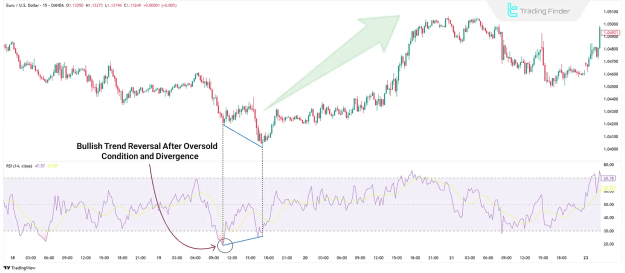
The RSI oscillator measures overbought (above 70) and oversold (below 30) conditions. Divergences between RSI and price often precede reversals.
Key Features:
 Simple interpretation
Early momentum shifts detection
 False signals in strong trends
2. Stochastic Oscillator
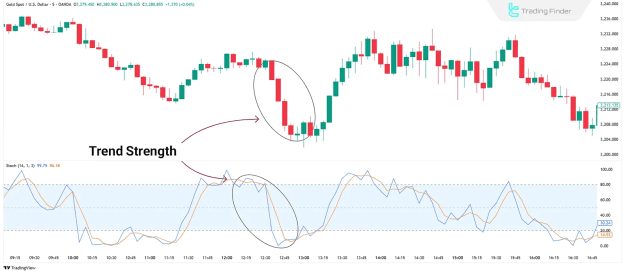
This momentum-based indicator identifies overbought/oversold zones, helping spot weakening trends.
Key Features:
Clear reversal signals
Less effective in volatile markets
3. Fibonacci Retracement Levels
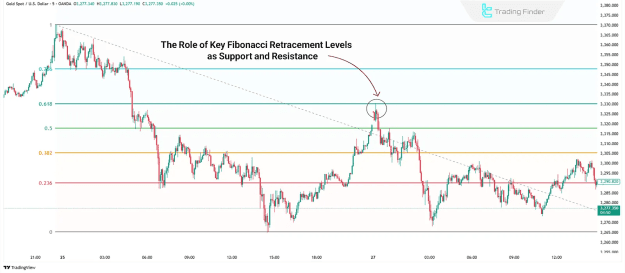
Fibonacci levels (38.2%, 50%, 61.8%) act as reversal zones when price retraces within a trend. It functions as dynamic support and resistance zones.
Key Features:
Beginner-friendly
Confusing with too many levels
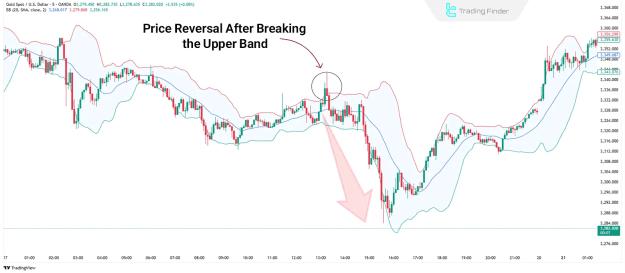
4. Bollinger Bands
Price touching or breaching the bands often leads to mean reversion. It consists of a central moving average and two standard deviation bands above and below it.
Key Features:
Highlights volatility extremes
Requires confirmation
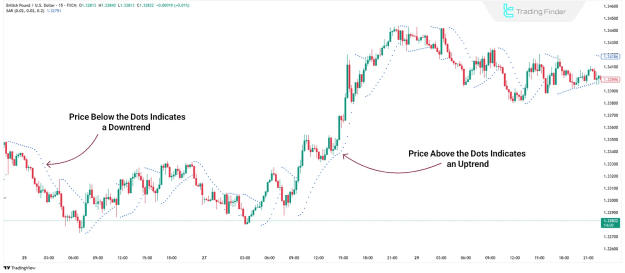
5. Parabolic SAR
Dots above/below price indicate trend direction shifts.
Key Features:
Fast trend detection
Weak in ranging markets
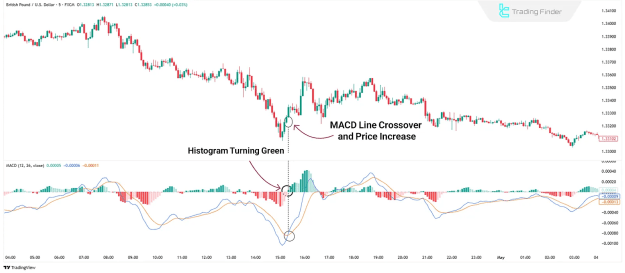
6. MACD (Moving Average Convergence Divergence)
MACD line crossovers and histogram changes signal momentum shifts.
Key Features:
Effective for divergences
Lags in short-term moves
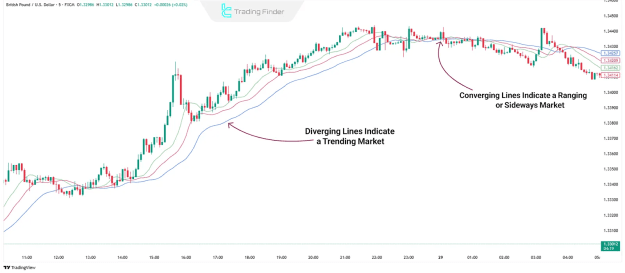
7. Alligator Indicator
Three moving averages (jaw, teeth, lips) reveal trend exhaustion.
Key Features:
Detects market structure
Complex for beginners
5 Key Reversal Chart Patterns
Patterns enhance reversal confirmation when combined with indicators:
1. Pin Bar
A candlestick with a long wick and small body, indicating rejection at key levels.
2. Shooting Star
A bearish candle with a long upper wick, signaling potential downturns.
3. Engulfing Pattern
- Bullish Engulfing: Green candle fully covers prior red candle.
- Bearish Engulfing: Red candle swallows the previous green one.
4. Double Top/Bottom
- Double Top: Two peaks at resistance, signaling bearish reversal.
- Double Bottom: Two troughs at support, indicating bullish reversal.
5. Hammer/Inverted Hammer
- Hammer: Bullish reversal after a downtrend.
- Inverted Hammer: Potential bearish reversal in uptrends.
Key Signs of an Impending Reversal
Watch for:
- Volume spikes in downtrends or fading in uptrends.
- Price breaks of key levels (support/resistance).
- Indicator divergences (RSI, MACD, Stochastic).
How to Trade Reversals Effectively
1. Support & Resistance Strategy
Enter when price reacts at a key level with a reversal signal (e.g., Pin Bar + RSI divergence).
2. Breakout Reversal Strategy
A trendline or level break may trigger a reversal—confirm with volume and candlestick patterns.
3. Pullback Confirmation Strategy
After a breakout, wait for a pullback and enter on confirmation (e.g., Bullish Engulfing).
Combined Reversal Trading Strategy
Step-by-Step Execution:
- Price touches lower Bollinger Band.
- Forms a bullish Pin Bar near 61.8% Fibonacci level.
- Confirm with a bullish engulfing candle.
- Place stop-loss below the Pin Bar low.
- Target 1:2 risk-reward ratio or next resistance.
Final Thoughts
Detecting trend reversals requires a mix of technical indicators, candlestick patterns, and volume analysis. Combining tools like RSI, MACD, and Fibonacci with price action increases accuracy. Always validate signals with multi-timeframe analysis for higher-probability trades.
By mastering these techniques, traders can anticipate market turns and capitalize on emerging opportunities.