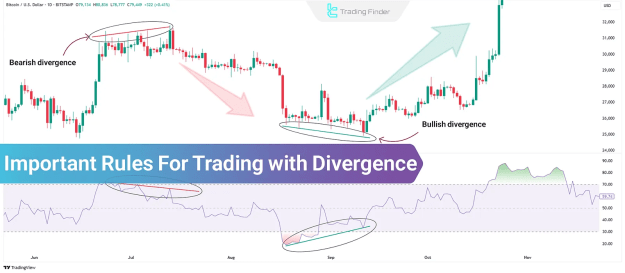


Mastering divergence trading requires a structured approach. Below are the 10 essential rules to trade divergence effectively.
What Is Divergence in Trading?
Divergence in trading happens when:
- Price forms a new high or low, but the indicator fails to confirm it.
- This signals potential trend weakness, suggesting a possible reversal or pause.
Divergence is widely used in Forex, stocks, and other financial markets to improve trading decisions.
Key Rules for Trading Divergence Successfully
1. Specific Price Structures Must Exist
Before analyzing divergence, confirm one of these price patterns:
- Higher High (HH)
- Lower Low (LL)
- Double Top
- Double Bottom
Without these structures, divergence signals are unreliable.
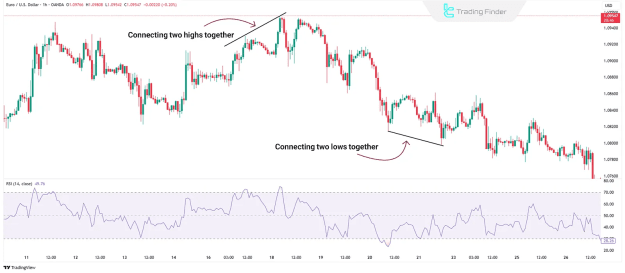
2. Connect Consecutive Highs or Lows
Draw a trendline between two major highs or lows, ignoring minor fluctuations. This helps identify the trend direction.
3. Focus Only on Highs or Lows (Not Both)
Analyze either peaks (highs) or troughs (lows)—never mix them in the same divergence setup.
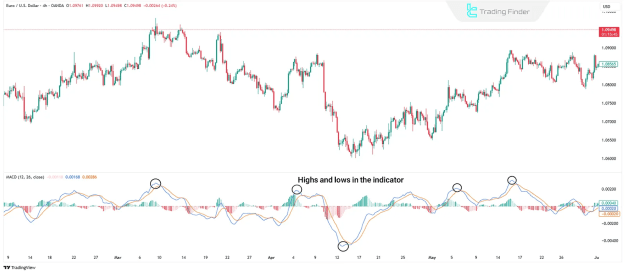
4. Match Points on the Indicator
Align the same highs/lows on the indicator as on the price chart. For multi-line indicators (like MACD), use the main or signal line.
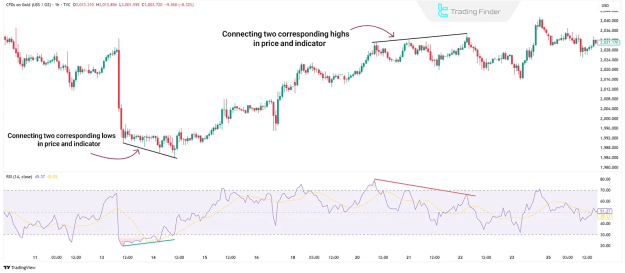
5. Align Comparison Points Between Price and Indicator
If comparing two price highs, the corresponding indicator highs must also be compared. The same applies to lows.
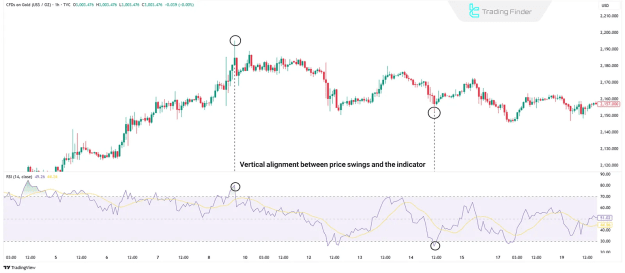
6. Maintain Vertical Alignment
The selected highs/lows on the price and indicator must occur at the same time. Misalignment invalidates the divergence signal.
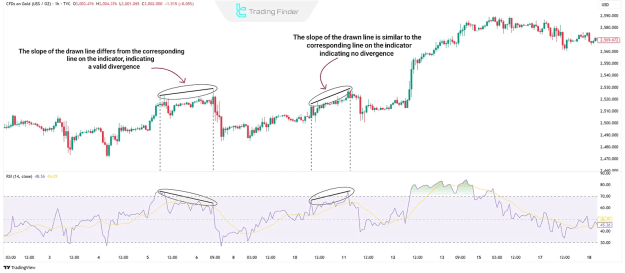
7. Check Slope Differences
Divergence is valid only if:
- The price trendline slope differs from the indicator trendline slope.
- If slopes are identical, no divergence exists.
8. Avoid Late Entries After Price Reaction
If price has already moved significantly after divergence, wait for a new setup—entering late increases risk.
9. Use Higher Timeframes for Better Accuracy
Divergence on H1, H4, or daily charts is more reliable than on lower timeframes (M1, M5).
10. Confirm with Additional Technical Tools
Enhance divergence signals with:
- Support/Resistance levels
- Candlestick reversal patterns
- Volume analysis
- Moving averages
Conclusion
Divergence trading improves when traders follow these 10 essential rules. Combining divergence with other technical tools increases accuracy and helps identify high-probability setups.
For best results, focus on higher timeframes, confirm signals with additional analysis, and avoid late entries. By mastering these principles, traders can enhance their technical analysis and decision-making process.