



The ICT Propulsion Block (PB) is a crucial concept in Institutional Composite Theory (ICT) trading methodology that forms an essential part of comprehensive forex education. It helps traders identify high-probability price movements by analyzing how candles interact with order blocks and generate strong momentum, providing valuable insights into market structure and price action dynamics that every forex trader should understand.
Propulsion Block (ICT) Indicator
Propulsion Block (ICT) Indicator MT4
Propulsion Block (ICT) Indicator MT5
What Is a Propulsion Block?
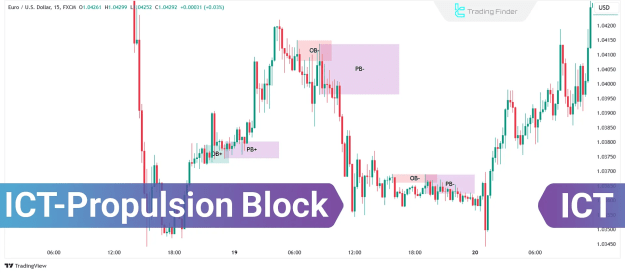
The term "propulsion" refers to the act of driving price forward. In trading, a Propulsion Block is a single candle that trades within an order block and then propels price away from it. This creates a trading opportunity when price retests the block.
Types of ICT Propulsion Blocks
There are two main types of Propulsion Blocks:
1. Bullish ICT Propulsion Block (PB+)
A Bullish PB forms when:
Propulsion Block (ICT) Indicator
Propulsion Block (ICT) Indicator MT4
Propulsion Block (ICT) Indicator MT5
What Is a Propulsion Block?
The term "propulsion" refers to the act of driving price forward. In trading, a Propulsion Block is a single candle that trades within an order block and then propels price away from it. This creates a trading opportunity when price retests the block.
Types of ICT Propulsion Blocks
There are two main types of Propulsion Blocks:
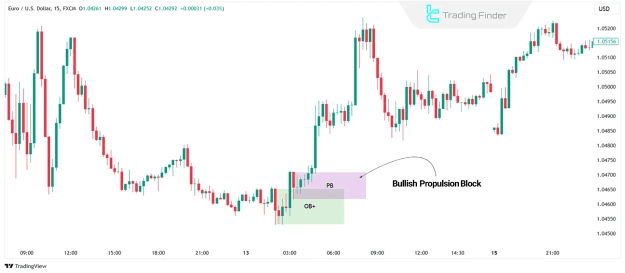
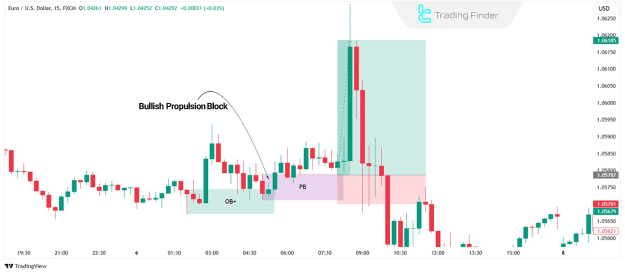
1. Bullish ICT Propulsion Block (PB+)
A Bullish PB forms when:
- The last bearish candle enters a bullish order block.
- Price then reverses upward, leaving the candle behind.
- Upon retesting, the Propulsion Candle acts as support, pushing price higher again.
How to Trade a Bullish PB?
- Identify the Mean Threshold (MT)
- Use Fibonacci retracement (from high to low of the Propulsion Candle).
- The 50% level is the key Mean Threshold.
- Assess Block Quality
- Price should not break below the Mean Threshold.
- Wait for Retest & Enter
- When price returns near the MT, enter a buy trade.
- Stop-Loss: Below the low of the Propulsion Candle.
- Take-Profit: Target the next liquidity level or use Fibonacci extensions.
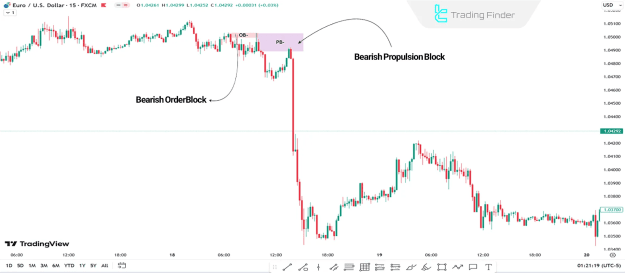
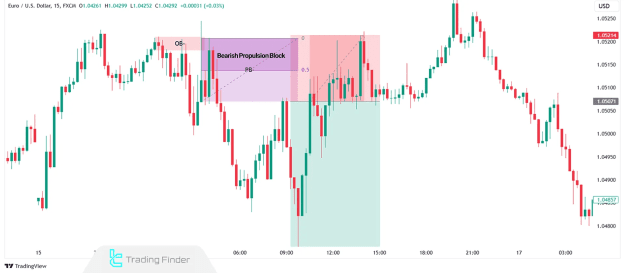
2. Bearish ICT Propulsion Block (PB-)
A Bearish PB forms when:
- The last bullish candle enters a bearish order block.
- Price then reverses downward, leaving the candle behind.
- Upon retesting, the Propulsion Candle acts as resistance, pushing price lower again.
How to Trade a Bearish PB?
- Identify the Mean Threshold (MT)
- Use Fibonacci retracement (from high to low of the Propulsion Candle).
- The 50% level is the key Mean Threshold.
- Assess Block Quality
- Price should not break above the Mean Threshold.
- Wait for Retest & Enter
- When price returns near the MT, enter a sell trade.
- Stop-Loss: Above the high of the Propulsion Candle.
- Take-Profit: Target the next liquidity level or use Fibonacci extensions.
Conclusion
The ICT Propulsion Block is a powerful tool for:
- Scalping
- Day Trading
- Swing Trading
By understanding Bullish (PB+) and Bearish (PB-) setups, traders can capitalize on high-probability reversals with precision.
Key Takeaways:
- Bullish PB: Last bearish candle in a bullish OB → Acts as support.
- Bearish PB: Last bullish candle in a bearish OB → Acts as resistance.
- Mean Threshold (50% Fib) is crucial for entry confirmation.
Integrating this concept into your strategy can significantly improve trade timing and profitability.
Attached Image(s) (click to enlarge)
Attached File(s)
