

Vacuum Block (ICT) indicator
Vacuum Block (ICT) indicator MT4
Vacuum Block (ICT) indicator MT5
What Is a Vacuum Block in Trading?
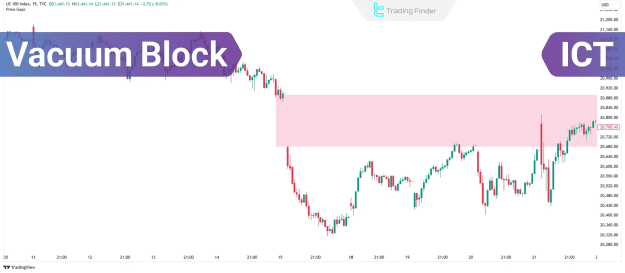
A Vacuum Block, also known as a liquidity gap, is a price void that forms during periods of extreme market volatility. These gaps typically occur due to:
- Major economic news releases (e.g., FOMC, NFP)
- Geopolitical events
- Supply and demand imbalances
- Market session openings
Since no trading activity occurs within these gaps, they represent areas of missing liquidity. Price often retraces to fill these voids before continuing in the original trend direction.
Types of Vacuum Blocks
1. Bullish Vacuum Block
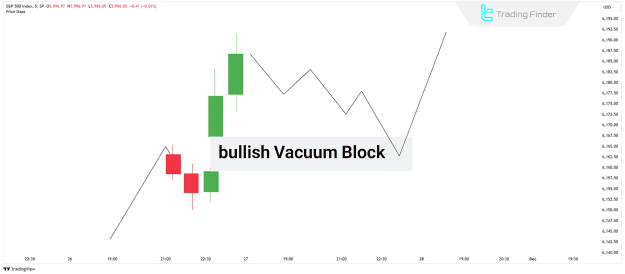
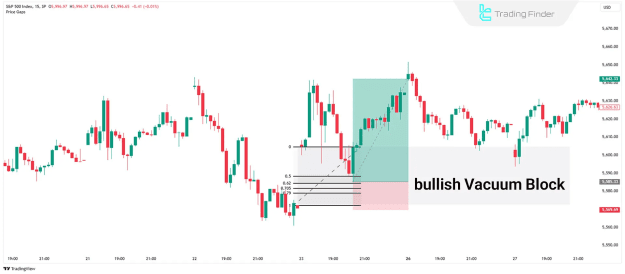
A bullish vacuum block forms when price gaps upward, leaving an unfilled liquidity void below. This indicates strong buying momentum but suggests a high probability of a retracement to fill the gap before resuming the uptrend.
How to Trade a Bullish Vacuum Block?
- Identify the Cause – Determine if the gap resulted from a high-impact event with lasting effects.
- Wait for Retracement – Allow price to return to the vacuum block zone.
- Look for Confirmation – Seek bullish signals such as:
- Market Structure Shift (MSS) on lower timeframes
- Confluence with Optimal Trade Entry (OTE) levels
- Enter Long – Place a buy order with a stop-loss below the vacuum block’s lowest point.
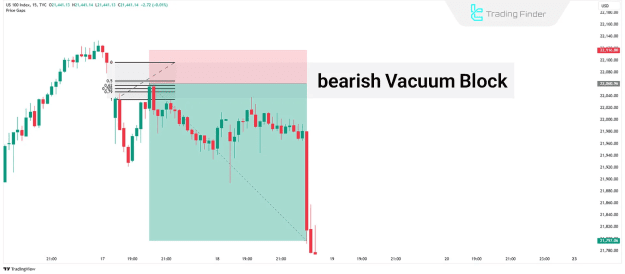
2. Bearish Vacuum Block
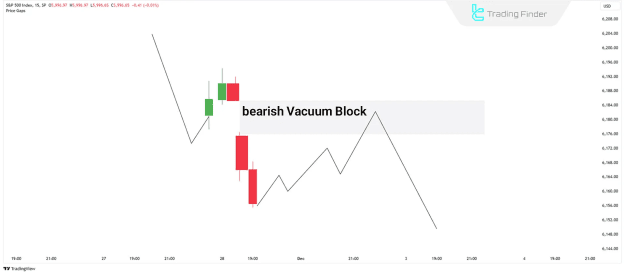
A bearish vacuum block occurs when price gaps downward, creating an unfilled liquidity void above. This signals strong selling pressure but often leads to a pullback into the gap before the downtrend continues.
How to Trade a Bearish Vacuum Block?
- Assess the Catalyst – Confirm whether the gap was caused by a significant bearish event.
- Monitor Retest – Wait for price to revisit the vacuum block area.
- Find Bearish Confirmation – Watch for:
- MSS breakdowns on lower timeframes
- Rejection at OTE levels
- Enter Short – Execute a sell trade with a stop-loss above the vacuum block’s highest point.
Do All Vacuum Blocks Get Filled?
While price often retraces to fill liquidity gaps, there is no absolute guarantee. Possible scenarios include:
- Partial fill – Price only partially retests the gap before continuing the trend.
- Full fill – Price fully closes the gap before resuming the original movement.
- No fill – In rare cases, the gap remains unfilled due to sustained momentum.
Best Assets for Trading Vacuum Blocks
Vacuum blocks frequently appear in highly liquid and volatile markets, including:
- Forex Majors (EUR/USD, GBP/USD)
- Stock Indices (S&P 500, NASDAQ)
- Commodities (Gold, Crude Oil)
- Cryptocurrencies (BTC, ETH)
Key Takeaways
- Vacuum blocks are liquidity gaps caused by high-impact events.
- They often act as support/resistance zones before trend continuation.
- Trading them requires confirmation signals (MSS, OTE).
- Not all gaps get filled, so risk management is essential.
By mastering vacuum block trading, traders can capitalize on high-probability retracement opportunities in volatile markets.